Artikel: Staircase Wall Lighting Guide (2026): Height, Spacing & Sconce Ideas
Staircase Wall Lighting Guide (2026): Height, Spacing & Sconce Ideas
Quick answer: Light a staircase with wall sconces mounted about 66 to 72 inches above the stair treads, measured straight up from the tread edge, and spaced roughly 6 to 8 feet apart along the run. Always light the top and bottom steps, choose shallow fixtures (around 4 inches deep or less) so nobody catches a shoulder, and use warm, shielded bulbs so light falls on the treads without glaring into people's eyes.
Arel Lighting makes handcrafted brass wall sconces, and stairways are one of the trickiest places our customers install them. A staircase needs enough light to see every step safely, but it is also one of the most visible walls in the house. This guide covers height, spacing, fixture depth, bulbs, switching and style, so your stair lighting is both safe and good-looking.
How high should wall sconces be on a staircase?
On a staircase, measure sconce height from the stair treads, not the floor. A good starting point is 66 to 72 inches above the front edge (nosing) of the tread directly below the fixture. Because the stairs rise, each sconce sits higher on the wall than the one before it, following the angle of the staircase. This keeps every fixture at the same apparent height as you climb, which looks deliberate rather than random.
Two practical checks:
- Headroom. The bottom of the fixture should stay well above head height for the tallest person in your home, including on the landing.
- Sightline. Standing at the bottom and looking up, you shouldn't see a bare bulb. If you can, raise the fixture slightly or choose a shaded or up/down design.
For general sconce height rules in other rooms, see our wall sconce height guide.
How far apart should stair sconces be?
Space staircase sconces about 6 to 8 feet apart, measured along the slope of the stairs. That spacing lets the pools of light overlap so there are no dark gaps on the treads. A standard straight staircase in an American home usually needs two or three fixtures:
| Staircase | Typical sconce count | Placement |
|---|---|---|
| Short run (up to about 8 steps) | 1–2 | One near the top; add one near the bottom if the base is dark |
| Standard straight flight (12–15 steps) | 2–3 | Near the bottom, middle and top, evenly spaced |
| Staircase with a landing | 3–4 | One on each flight plus one lighting the landing |
| Long or open staircase | 4+ | Every 6–8 feet along the run |
The most important rule: light the first and last step. Most trips on stairs happen at the top and bottom, where your eyes are adjusting to a change in level.
How deep can a staircase sconce be?
On a staircase, depth matters more than anywhere else, because people pass close to the wall while carrying things. Choose fixtures that project about 4 inches or less from the wall on narrow stairs, and avoid swing arms or long shades that stick out at shoulder height. On wide or open staircases you have more freedom.
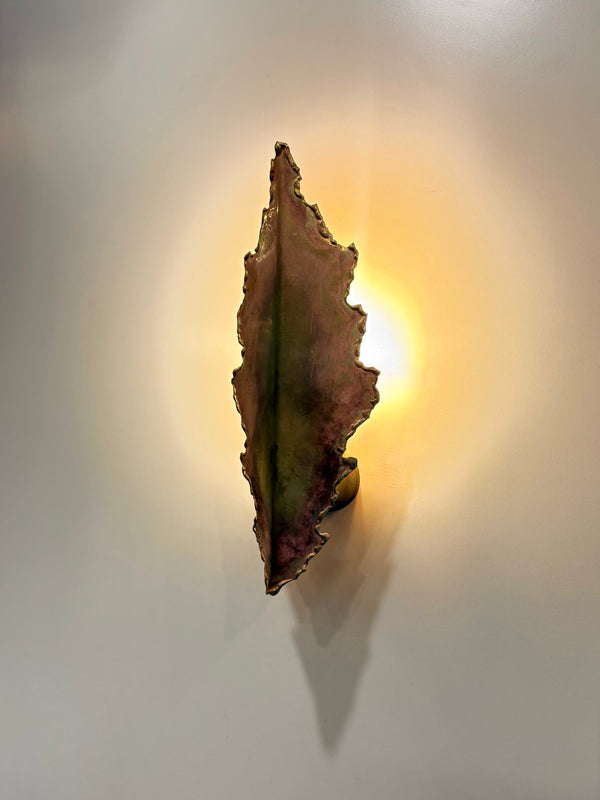
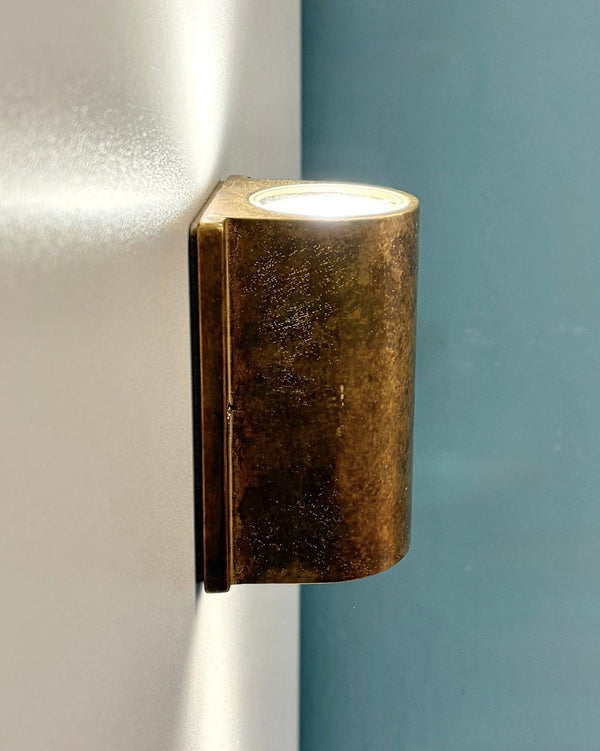
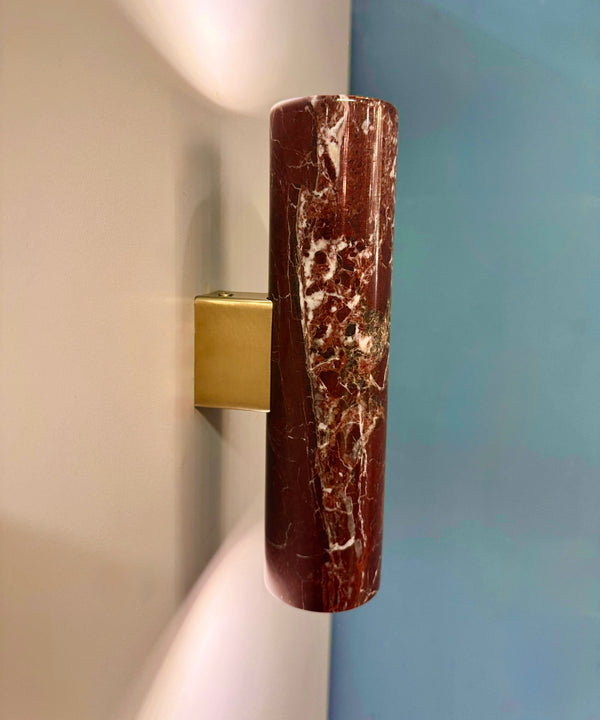
Good shallow options in our collection include the AUGSBURG Single (under 3 inches deep), the LIDAR up/down sconce (about 3 inches deep) and the FUSADA marble two-way sconce (just under 4 inches). Always check your local code and handrail clearance; your electrician can confirm what works for your stair width.
Up/down sconces vs shaded sconces for stairs
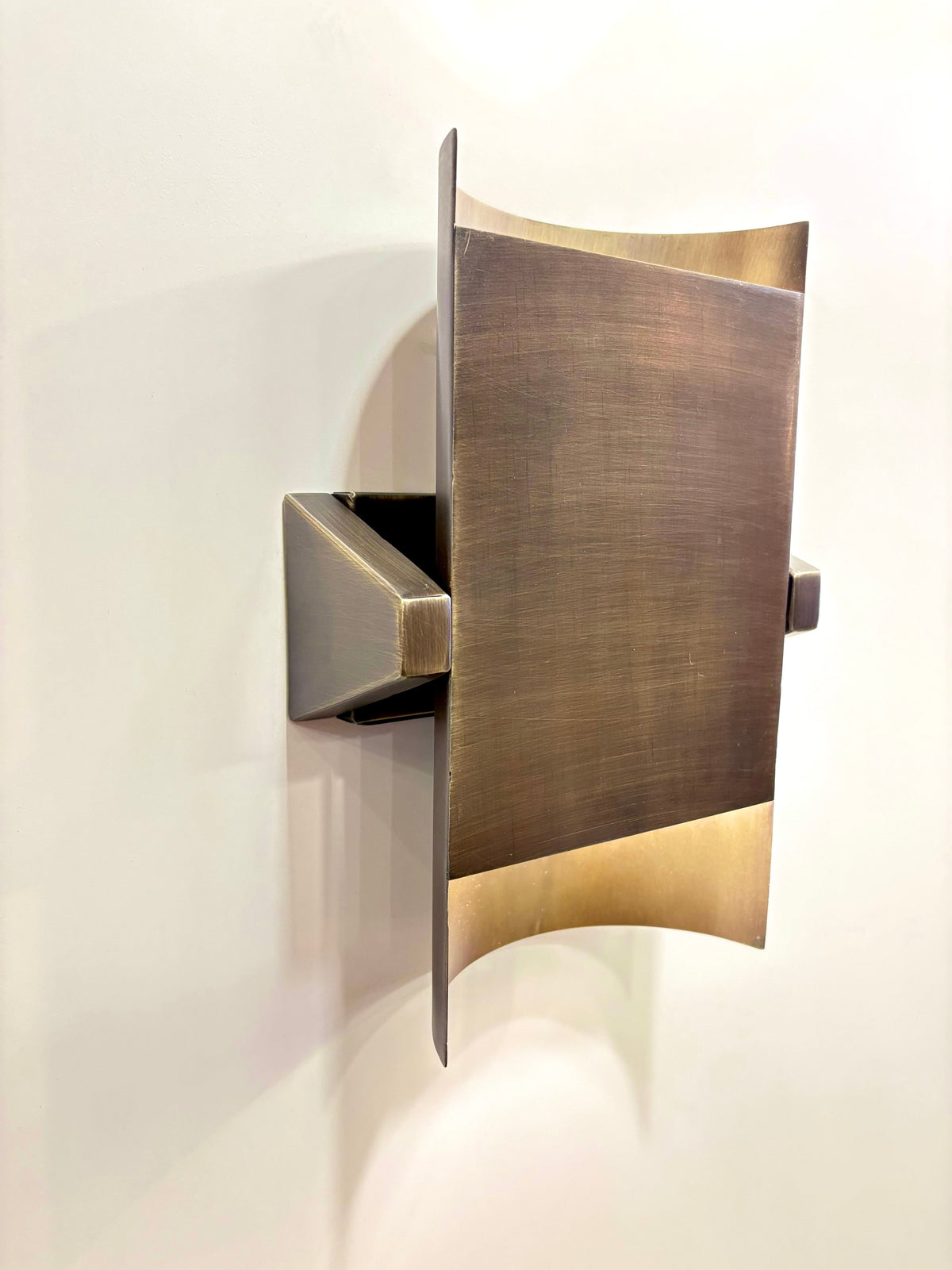
Up/down sconces are often the best choice for stairways. They wash light both up the wall and down onto the treads, the bulbs are hidden inside the fixture, and they stay slim. The result is soft, even light with very little glare, which matters when people look up the stairs.
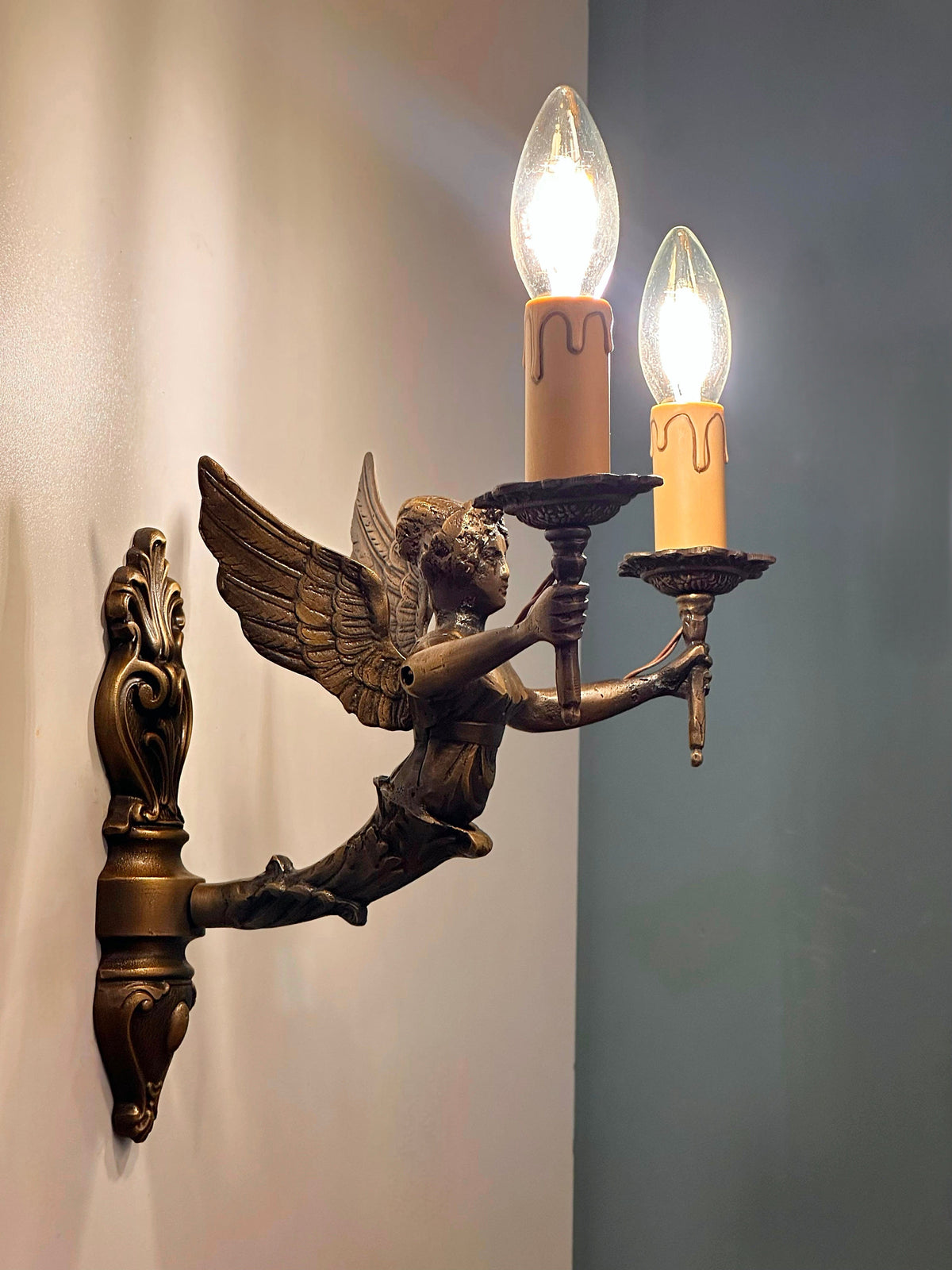
Shaded or candle-style sconces suit traditional homes and grand staircases, but they need more care: keep them high enough that the bulbs are not at eye level from the steps, and use frosted or low-wattage bulbs. A decorative sconce on the landing wall can act as a focal point while slimmer fixtures handle the flight itself.
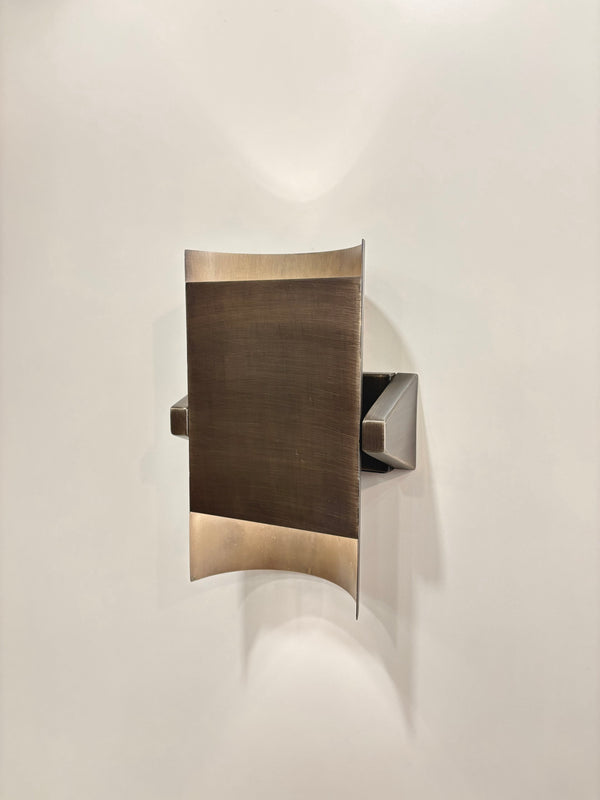
For a contemporary look, the VELENJE layers curved panels around a two-way light and stays close to the wall.
Which bulbs work best on stairs?
- Color temperature: 2700K to 3000K. Warm enough to feel welcoming, bright enough to see step edges clearly. Avoid very blue light at night.
- Brightness: roughly 400 to 800 lumens per fixture is plenty for most home stairs when sconces are spaced correctly.
- Dimmers: useful, but don't dim so low that step edges disappear. Some homeowners leave stair sconces at a low glow overnight as a night light.
- Shielding: bare bulbs at eye level create glare that makes steps harder to see. Choose fixtures that hide the bulb or use frosted bulbs.
Our color temperature guide explains 2700K vs 3000K in more detail.
How should staircase lighting be switched?
Stair lights should be controllable from both the top and the bottom of the stairs, using three-way switches, so nobody has to climb or descend in the dark. In the US, electrical code generally requires a switch at each floor level for stairways with six or more risers. Your electrician will wire this, but plan for it before choosing fixture positions. Smart switches and motion sensors are good additions for night-time trips.
Which style suits your staircase?
- Traditional and Colonial homes: brass candle-style or shaded sconces, mounted in a rising line. Our Victorian sconce guide covers period styles.
- Modern homes: slim up/down sconces in brass, marble or brushed metal that let the staircase architecture stand out.
- Coastal and cottage homes: small bulkhead or nautical sconces work well on narrow cottage stairs, and solid brass handles humidity well.
- Grand or open staircases: combine a statement pendant or chandelier over the stairwell with smaller matching sconces along the wall.
Frequently asked questions
Should staircase sconces all be at the same height?
They should be at the same height relative to the treads, not the floor. Measure up from the tread nosing below each fixture so the sconces follow the slope of the stairs.
Can I use plug-in sconces on stairs?
It's best not to. Cords along a staircase are a trip and snag hazard. Hardwired sconces on proper switching are safer; see our guide to hardwired vs plug-in sconces.
Do I need step lights as well as sconces?
Not usually in a home with well-spaced sconces. Step lights recessed into the wall near the treads are a nice extra on long, dark or outdoor stairs, or for night-time safety.
What about a staircase with a landing?
Treat the landing as its own space. Put one sconce on the landing wall at the normal room height (about 60 to 72 inches above the landing floor), then light each flight from that point.
Related reading
- Shop brass wall sconces
- Wall sconce spacing guide
- Entryway and foyer lighting guide
- How high to hang wall sconces
Handcrafted brass sconces · Slim up/down designs for stairways · Free US shipping · Arel Lighting