Art Nouveau Wall Sconces (2026): How to Recognize, Choose & Style Them
Quick answer: Art Nouveau wall sconces (roughly 1890–1910) are defined by flowing, plant-inspired forms: curving "whiplash" lines, leaves, flowers, stems and dragonflies, usually in cast brass or bronze with stained or opalescent glass. They differ from Art Deco, which came later and is geometric. Choose a sconce with an organic silhouette in warm brass, use 2700K bulbs, and let it stand as a sculptural accent on a calm wall.
Arel Lighting casts several nature-inspired brass sconces by hand, and customers often ask whether a piece is "Art Nouveau" or "Art Deco." The two are easy to confuse and very different in spirit. This guide explains what defines Art Nouveau lighting, how to recognize it, and how to use it in an American home today.
What is Art Nouveau lighting?
Art Nouveau ("new art") was an international design movement from about 1890 to 1910. It rejected heavy Victorian ornament in favor of forms taken directly from nature: plants that seem to grow out of the metal, curving stems, flowers opening into lamp shades. It coincided with the spread of electric light, so designers were free to shape fixtures around a bulb rather than a flame. Famous examples include Louis Comfort Tiffany's leaded glass lamps in New York and Hector Guimard's cast-iron Paris Métro entrances.
The signature features of an Art Nouveau sconce:
- Organic, flowing lines, including the S-shaped "whiplash" curve.
- Nature motifs: leaves, lilies, tulips, vines, ginkgo leaves, dragonflies, peacock feathers.
- Cast metal that looks almost alive, typically brass or bronze with a warm patina.
- Art glass: stained, opalescent or mottled glass shades that glow rather than sparkle.
Art Nouveau vs Art Deco: what's the difference?
| Art Nouveau | Art Deco | |
|---|---|---|
| Era | About 1890–1910 | About 1920–1940 |
| Lines | Curving, asymmetric, organic | Straight, symmetric, geometric |
| Motifs | Flowers, leaves, insects, women's hair | Fans, sunbursts, chevrons, stepped shapes |
| Glass | Stained, opalescent, mottled | Frosted, fluted, etched, smoked |
| Feeling | Romantic, natural, handcrafted | Glamorous, sleek, modern |
If a sconce looks like it grew, it's Art Nouveau. If it looks engineered, it's Art Deco. For the later style, see our Art Deco lighting guide.
Which motifs should you look for?
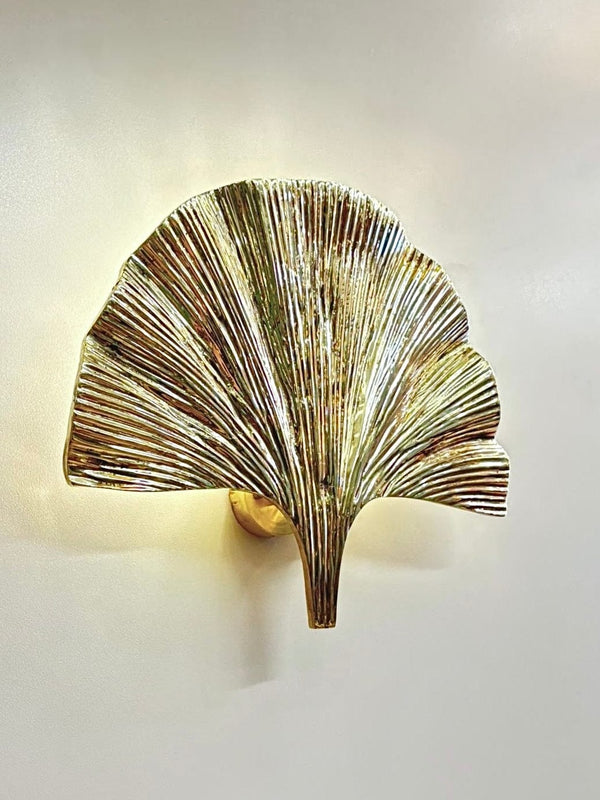
Leaves and ginkgo. The ginkgo leaf, with its fan shape, was a favorite motif of the period, inspired by Japanese art. Our ALMADA sconce is cast in brass in the shape of a ginkgo leaf, and the ALMADA MINI is a smaller version for tight walls.
Flowers and stems. Lily, tulip and bellflower shades on curving stems are classic Art Nouveau. A floral sconce reads as period-inspired even in a modern room.
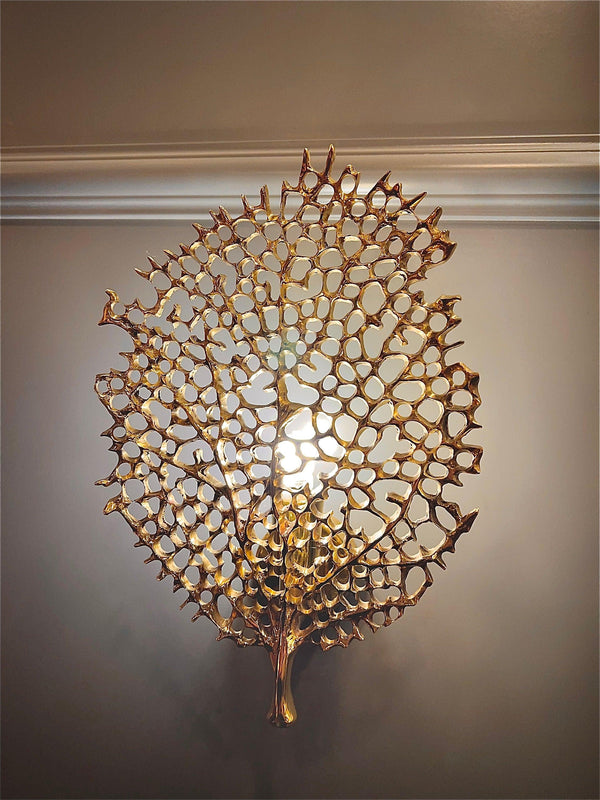
Flowing cast forms. Sconces where the metal itself swirls like water or a plant. The BREDA Art Nouveau sconce is cast in brass with nature-inspired curves in exactly this spirit.
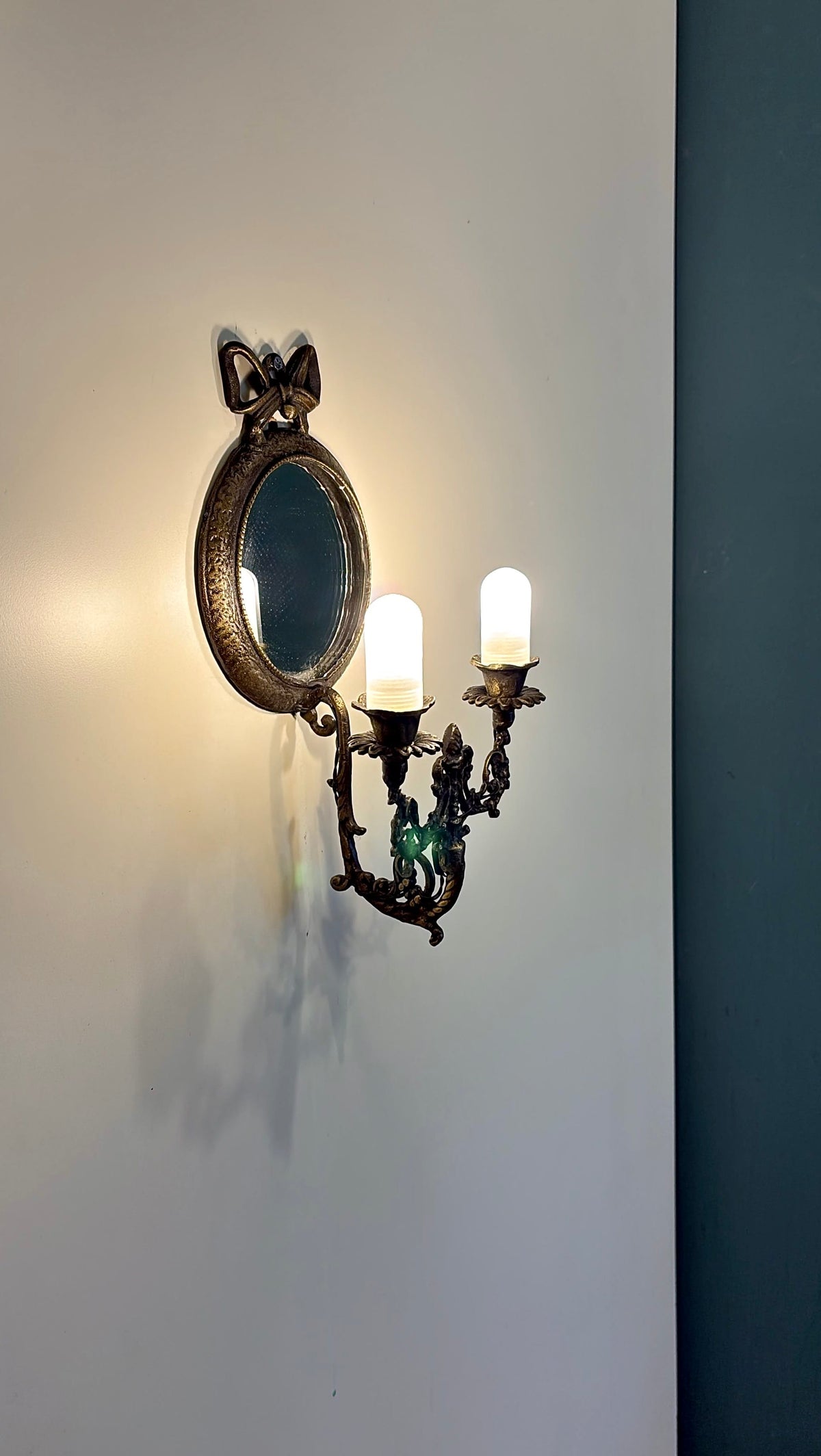
Stained glass. Tiffany-style leaded glass straddles late Victorian and Art Nouveau design. Our Victorian sconce guide covers Tiffany-style pieces.
Where do Art Nouveau sconces work best?
- Entryways and powder rooms. Small rooms where a single sculptural sconce can be the star.
- Living rooms and libraries. A pair flanking a fireplace, bookshelf or artwork.
- Bedrooms. Soft, glowing art glass is ideal beside a bed, where you want atmosphere more than task light.
- Modern rooms. One organic brass piece on a plain wall adds warmth and character to minimal interiors.
Art Nouveau looks best with breathing room. Avoid crowding it with other ornate pieces; let it be the one decorative statement on that wall.
Which finish and bulbs suit Art Nouveau sconces?
Finish: warm brass or bronze tones are the most authentic. Antique brass gives an aged look from day one, while unlacquered brass develops its own patina over time. Our antique vs modern brass guide explains the difference.
Bulbs: use warm 2200K to 2700K bulbs. Art glass and organic metal look their best in amber, candle-like light; cool white makes them look flat. Many Art Nouveau sconces are accent pieces, so moderate brightness (around 300 to 500 lumens) with a dimmer is usually right.
How do you spot a quality Art Nouveau reproduction?
- Cast, not stamped. Organic forms need depth. Cast brass shows crisp edges and real three-dimensional shape.
- Solid metal. Look for "solid brass" or "brass casting," not "brass finish," which usually means plated zinc or steel.
- Real glass. Stained or opalescent glass glows; plastic looks dull and yellows over time.
- Hand finishing. Slight variations in patina and casting are a sign of handwork, not a flaw.
Frequently asked questions
Is Tiffany lighting Art Nouveau?
Largely, yes. Louis Comfort Tiffany's studio produced its famous leaded glass lamps from the 1890s into the early 1900s, the peak of Art Nouveau, and many designs use flowers, dragonflies and other natural motifs.
Can I mix Art Nouveau and Art Deco in one room?
You can, but keep one style dominant. A single Art Nouveau sconce in an otherwise Art Deco room works as a deliberate contrast; equal amounts of both can feel unfocused.
How high should an Art Nouveau sconce hang?
The same as any wall sconce: roughly 60 to 72 inches from the floor to the center of the fixture. Sculptural pieces often look best a little lower, around eye level, so the detail can be seen. See our height guide.
Are Art Nouveau sconces bright enough to light a room?
Usually not on their own. Treat them as accent and atmosphere lighting, paired with ceiling or lamp light for general illumination.
Related reading
- Shop handcrafted brass wall sconces
- How to get the Art Deco lighting look
- Victorian wall sconces guide
- Caring for brass and patina
Hand-cast brass · Nature-inspired designs · Free US shipping · Arel Lighting