Articolo: Mid-Century Modern Wall Sconces (2026): How to Recognize, Choose & Style Them
Mid-Century Modern Wall Sconces (2026): How to Recognize, Choose & Style Them
Quick answer: Mid-century modern wall sconces (roughly 1945 to 1970) are simple, functional and slightly playful: slim brass arms, cones, globes and swing arms, often with opal glass or metal shades. Look for clean geometry, honest materials and adjustable heads. Choose one scaled to the wall, keep the finish warm brass or brass with black or cream, and use 2700K bulbs.
Mid-century modern is one of the most requested looks at Arel Lighting, and many of our handmade brass sconces draw on it. The style is easy to love and easy to fake, so this guide explains what makes a sconce genuinely mid-century in spirit, how to choose one, and how to style it in an American home today.
What makes a wall sconce mid-century modern?
Mid-century modern design grew out of the postwar years, when designers in the US, Scandinavia and Italy favored function, new materials and a lighter touch than the ornament of earlier decades. Lighting from the period tends to share a few traits:
- Simple geometry: cones, domes, globes, cylinders and thin rods.
- Movement: swing arms, pivoting heads and articulating joints that let you aim the light.
- Mixed materials: brass with black or cream enamel, opal glass, sometimes wood or perforated metal.
- Visible construction: arms, joints and back plates are part of the design instead of hidden.
Mid-century vs Art Deco: how do you tell them apart?
| Art Deco | Mid-century modern | |
|---|---|---|
| Era | About 1920 to 1940 | About 1945 to 1970 |
| Shapes | Fans, stepped forms, sunbursts | Cones, globes, rods, swing arms |
| Mood | Glamorous, formal | Relaxed, functional, a bit playful |
| Glass | Frosted, fluted, etched | Opal, plain white or none |
| Ornament | Decorative detailing | Little or none |
If you lean toward the earlier style, see our Art Deco wall sconces guide.
Which mid-century sconce shapes should you know?
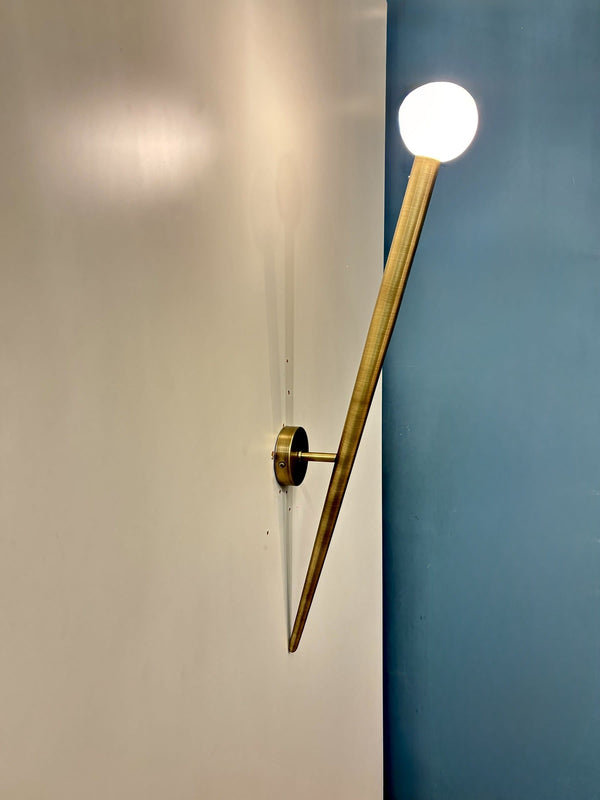
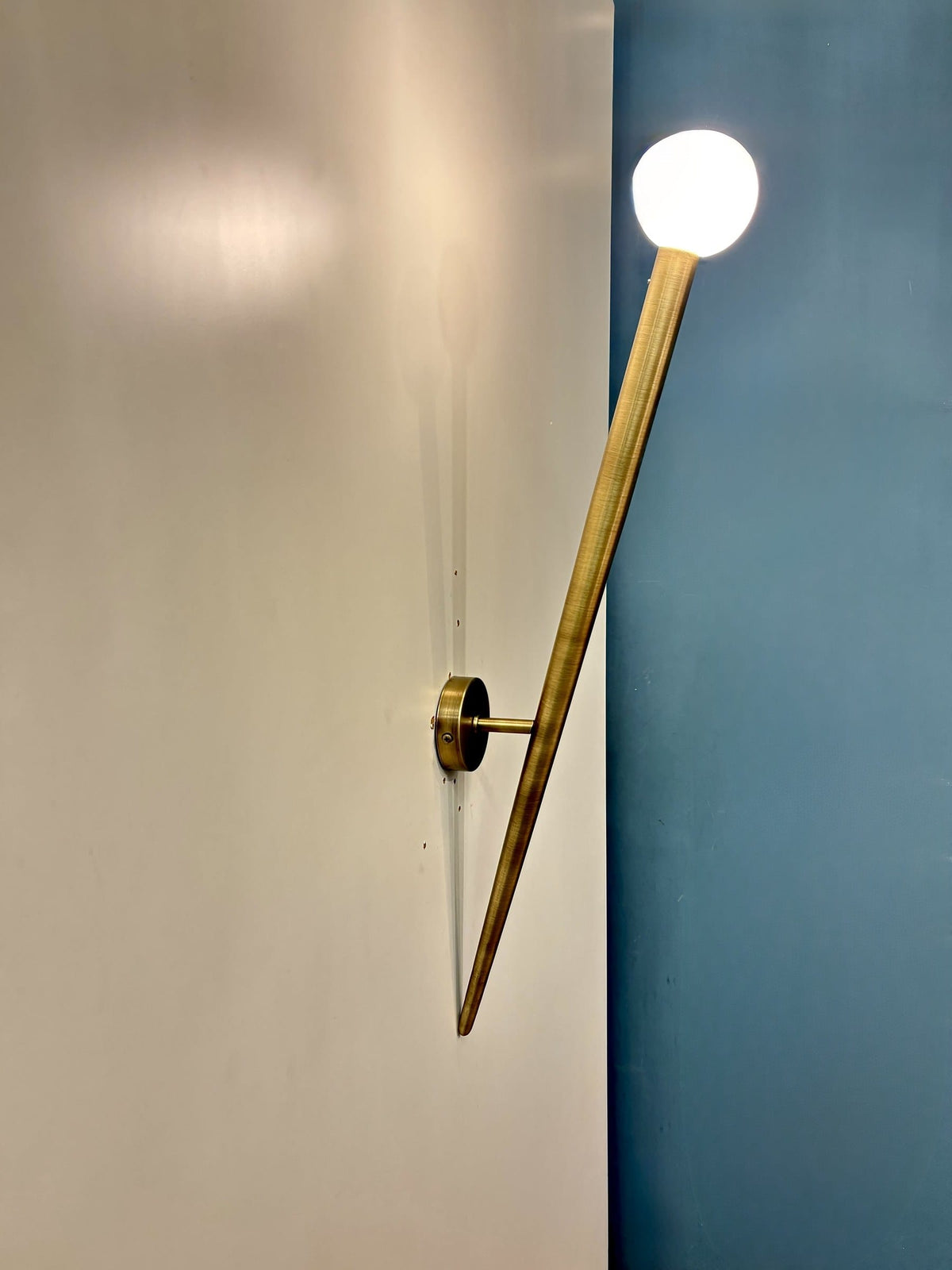
The torch or rod. A slender brass stem topped with a globe or capsule of glass. It reads clean and vertical, which suits narrow walls. The TAVPOL MID-CENTURY TORCH WALL SCONCE follows this form with a tapered brass rod and opal or capsule glass.
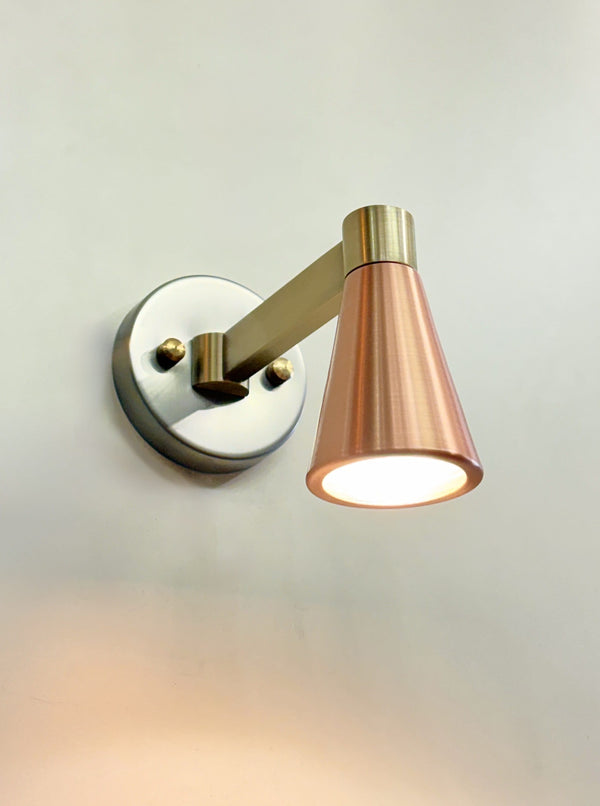
The cone or spot. A conical shade on a short arm that throws light in one direction, good for reading. The NARVA MID-CENTURY COPPER SPOT WALL SCONCE pairs a copper cone with a brass arm.
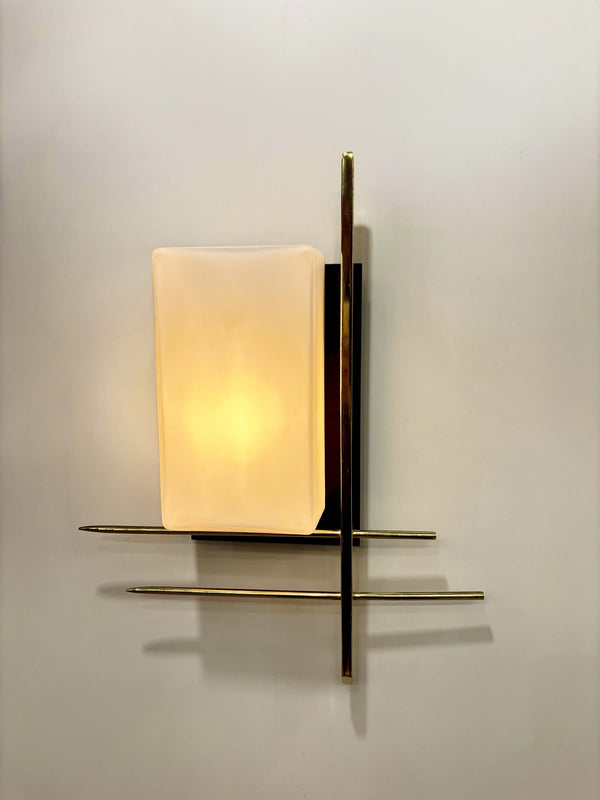
The globe on a plate. An opal glass shade softens the bulb into an even glow, a classic look for hallways and bathrooms. The MINOR MID-CENTURY WALL SCONCE combines polished brass, black and opal glass.
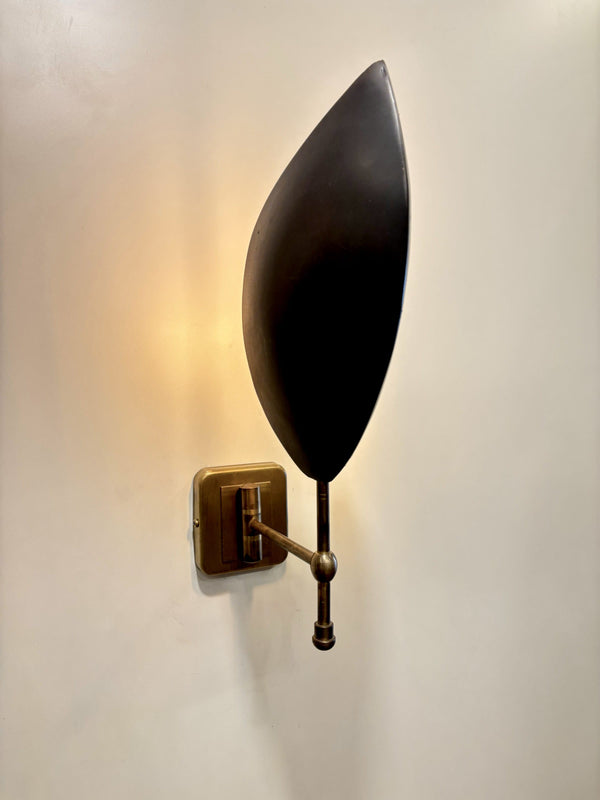
The organic leaf. Later mid-century designers also played with petal and leaf shapes. The SACUA MID-CENTURY LEAF WALL SCONCE has a dark antique brass petal shade on a swing arm.
Browse the full range in our mid-century wall sconces collection.
How do you choose the right mid-century sconce?
- Decide the job first. Reading by a bed or chair calls for an aimable cone or swing arm. Hallways and bathrooms do better with a glass globe that spreads light.
- Scale to the wall. Most mid-century sconces are visually light, so a single piece can look lost on a large wall. Use pairs, or go a size up. Our sizing guide covers the math.
- Check projection. Swing arms can extend well into a room. In a hallway, keep the depth modest so nobody bumps it.
- Look at materials. Brass, real glass and solid joints wear well. Read the listing to see whether a part is brass, steel, copper or painted.
How do you style mid-century sconces in a modern home?
Living room: a pair of swing-arm sconces beside a sofa or flanking a credenza is a very period move, and frees up side tables. See living room lighting ideas.
Bedroom: wall-mounted reading lights on either side of the bed replace lamps and keep nightstands clear. Mount them around 30 inches above the mattress top for reading.
Mixing styles: mid-century brass sits well with walnut, teak, cane, linen and plain plaster walls. It also softens a very minimal modern room without adding fuss.
Bulbs: 2700K LEDs keep brass warm. Opal glass pieces can take a slightly brighter bulb; open cones need a frosted or shaded bulb so you don't see glare.
How high and far apart should you hang them?
For general wall lighting, mount sconces about 60 to 72 inches from the floor to the center. Pairs on a long wall typically sit 6 to 8 feet apart. Full details are in our height guide and spacing guide.
Frequently asked questions
Is mid-century modern lighting still in style in 2026?
Yes. Mid-century shapes have stayed popular for decades because they are simple and functional, and warm brass versions fit current interiors that use wood, stone and soft neutrals.
Can I use mid-century sconces in a traditional home?
Yes, in moderation. One or two clean brass sconces add a lighter note to a traditional room, especially in a bedroom or study.
What finish is most authentic for mid-century sconces?
Brass, often combined with black or cream enamel and opal glass. Copper and walnut accents also appear in the period.
Are swing-arm sconces mid-century?
Many are. Adjustable swing arms were common in mid-century lighting because they let one fixture work as both ambient and reading light.
Related reading
- Shop mid-century wall sconces
- Brass wall sconces buyer's guide
- Bedroom lighting ideas
- Caring for brass and patina
Handmade brass · Mid-century shapes · Free US shipping · Arel Lighting