Makale: Unlacquered Brass Lighting (2026): How It Patinas, Lacquered vs Unlacquered & Care
Unlacquered Brass Lighting (2026): How It Patinas, Lacquered vs Unlacquered & Care
Quick answer: Unlacquered brass is brass with no clear protective coating, so the metal reacts with air, moisture and skin and slowly darkens into a soft, uneven patina. Lacquered brass is sealed and stays bright for years, until the coating wears. Choose unlacquered if you like a "living finish" that ages with the house; choose lacquered if you want it to look the same in ten years. Unlacquered brass needs almost no care unless you want to polish it back to shine.
"Unlacquered brass" has become one of the most searched finishes in American kitchens and bathrooms, and the term now shows up on lighting too. At Arel Lighting we work with brass every day in our Istanbul workshop, and the same questions come up again and again: will it turn green, will it look dirty, do I have to polish it? This guide explains what unlacquered brass actually is, how it changes over time, and where it makes sense in a home.
What is unlacquered brass?
Brass is an alloy of copper and zinc. Fresh from polishing it's a bright yellow-gold. Most brass products are then sprayed or baked with a clear lacquer that seals the surface from air. Unlacquered brass skips that step: the bare metal is exposed, so it oxidizes naturally. Some people call it a "living finish" because it keeps changing.
Unlacquered is about the surface, not about what the fixture is made of. A brass-plated steel lamp can be unlacquered too, although the thin plating wears through faster if you polish it. If you're not sure what you're looking at, our solid vs plated brass guide explains how to tell.
How does unlacquered brass patina over time?
Patina develops gradually, and the speed depends on the air around it. Rough stages you can expect indoors:
- First weeks: the bright shine softens and turns slightly warmer and deeper.
- First months: a golden-brown tone develops, often uneven, darker where hands touch it.
- Over a year or more: a deep, mellow bronze-brown, with lighter highlights on edges and raised detail.
Humidity, salt air, cooking steam and frequent handling all speed things up. A sconce in a dry hallway may change slowly; a light near a shower or a stove will change faster. Green spots (verdigris) usually only appear with persistent moisture, such as outdoors or near water. Heat from the bulb also plays a part, and the area right around the lamp holder often darkens first.
Lacquered vs unlacquered brass: what's the difference?
| Unlacquered brass | Lacquered brass | |
|---|---|---|
| Look when new | Bright, slightly softer shine | Bright, even, often glossier |
| Over time | Darkens into an uneven, natural patina | Stays the same until lacquer wears or chips |
| Fingerprints | Show up, then blend into the patina | Wipe off the coating |
| Care | Leave it, or polish whenever you want shine back | Mild soap and water only, no polish |
| When it goes wrong | Hard to "ruin"; it can always be polished again | Worn lacquer leaves patchy spots that are hard to fix without stripping |
The point people miss: lacquered brass isn't maintenance-free forever. Once the coating scratches, the exposed metal tarnishes while the sealed areas don't, and you get blotches. Unlacquered brass ages evenly by design, which is why many designers prefer it for pieces that get touched.
How is unlacquered different from antique brass?
Antique brass is a finish applied at the factory or workshop to make new brass look old on day one, usually with a chemical darkening step and hand rubbing. Unlacquered brass starts bright and gets there on its own over time. An antique finish may be sealed afterward, so it stays fixed. Our antique vs modern brass guide covers the styles in more detail.
How do you care for unlacquered brass lighting?
You have two options, and both are fine:
- Let it age. Dust with a soft dry cloth now and then. That's it. Avoid household sprays and glass cleaners, which can leave streaks or spots.
- Keep it bright. Polish with a brass polish or a gentle homemade paste whenever you want the shine back, then buff dry.
Always switch off and let the fixture cool before cleaning, and keep liquids away from the socket and wiring. We go through the cleaning methods step by step, including how to remove only part of a patina, in our brass cleaning and patina guide, so we won't repeat them here.
If you want to slow the patina without lacquer, a thin coat of renaissance wax or a similar microcrystalline wax buys you time and can be removed later.
Where does unlacquered brass lighting work best?
- Kitchens. Pairs naturally with unlacquered faucets and cabinet hardware, which age at a similar pace. See our kitchen lighting ideas.
- Living rooms and libraries. A sculptural brass sconce gains character as it darkens, especially one with hammered or cast texture where the patina collects in the recesses.
- Bedrooms. Swing-arm and bedside sconces get touched daily, so they develop that hand-worn look fastest.
- Bathrooms, with care. Moisture speeds up patina. Use fixtures rated for the zone they're in; our IP ratings guide explains what to look for.
- Outdoors. Raw brass outside weathers to a dark brown and can develop green tones near the coast. Some people love it, some don't. Our outdoor brass sconce guide covers what to expect.
Which brass pieces show patina best?
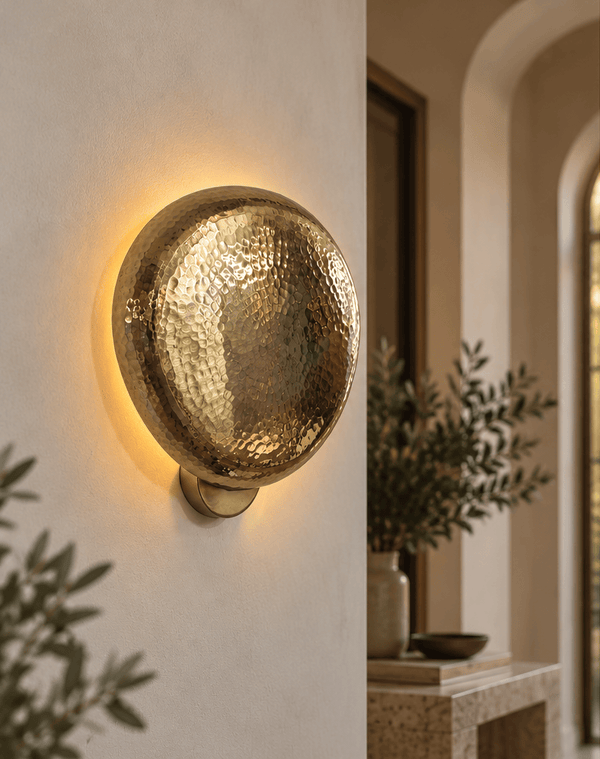
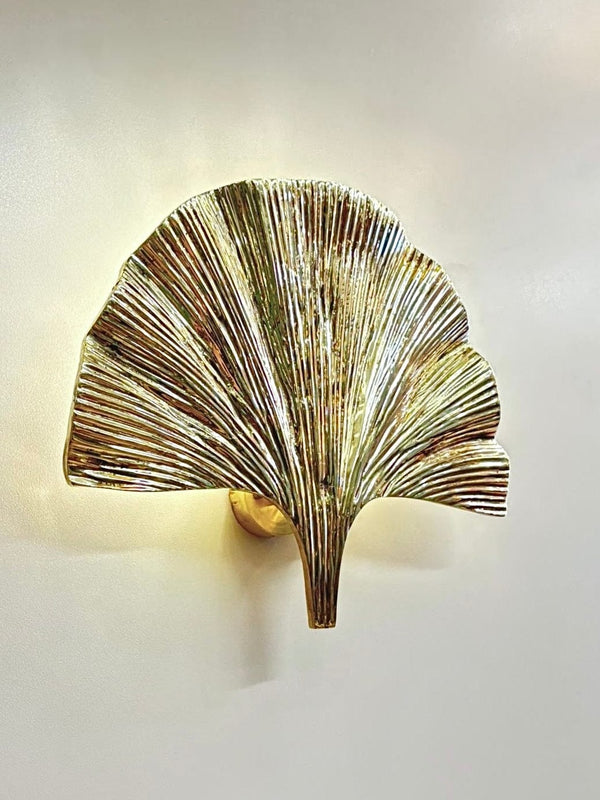
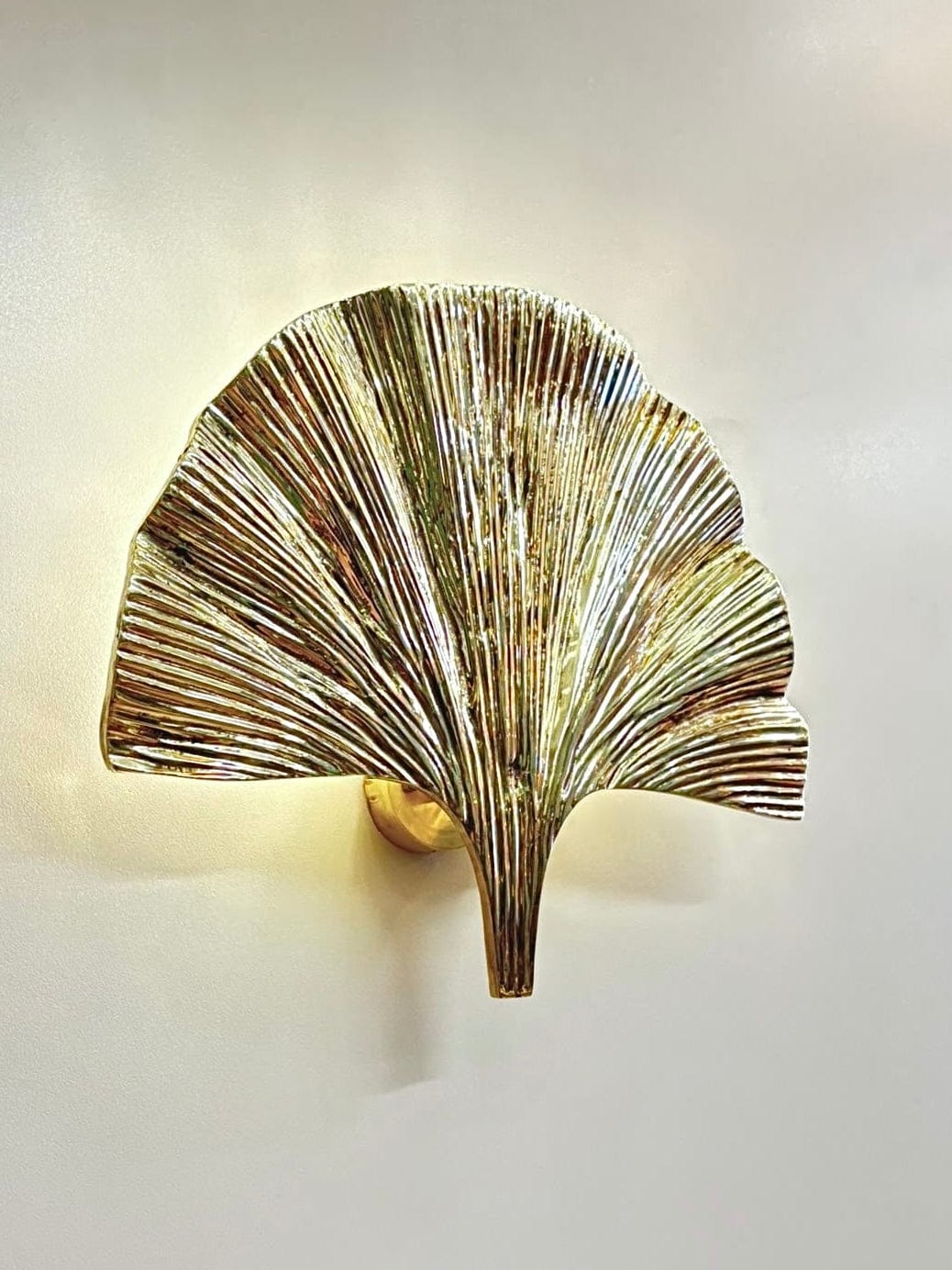
Texture makes a big difference. On a flat polished surface, patina can look like an uneven smudge for a while. On hammered or cast brass, it settles into the dips and leaves the high points lighter, which gives depth. Hand-hammered pieces such as the SOBRA and BALTI sconces, or a cast leaf form like the ALMADA brass casting sconce, are the kind of shapes where an aged brass surface really shows. Finishes vary by product, so check the finish details on each product page or ask us before you order if you specifically want a piece left unlacquered.
Frequently asked questions
Does unlacquered brass turn green?
Indoors, rarely. Green verdigris needs steady moisture, so it mostly shows up outdoors, near the sea, or where water sits on the metal. It can be cleaned off with brass polish.
Can you remove lacquer from brass to make it unlacquered?
Yes, lacquer can be stripped with a lacquer remover or acetone, but it's messy on a lighting fixture with wiring inside. If you try it, disconnect the fixture first and test a hidden spot. On plated brass, be careful not to wear through the plating.
Is unlacquered brass worth the extra care?
It's actually less care, not more, if you're happy to let it age. It only becomes work if you want it to stay shiny.
Does unlacquered brass look good with other metals?
Yes. Its warm, darkening tone sits well with matte black, aged bronze and wood. Next to bright chrome it can look a little mismatched, so keep chrome to another room or a small accent.
Related reading
- Shop handcrafted brass wall sconces
- How to clean brass lighting and manage patina
- Solid brass vs plated brass lighting
- The art of handmade lighting
Handmade brass lighting · Made in our Istanbul workshop · Free US shipping · Arel Lighting