Bulkhead vs Porthole Sconces: Which Nautical Light Is Right for You?
Shopping for a nautical wall light and stuck between two shapes that look similar in a thumbnail? You're not alone. Bulkhead sconces and porthole sconces get mixed up constantly — both are round, both are brass, both scream "coastal." But they light a room differently, suit different spots, and land at different prices. Here's how to tell them apart and pick the one that's actually right for your wall.
What is a bulkhead sconce?
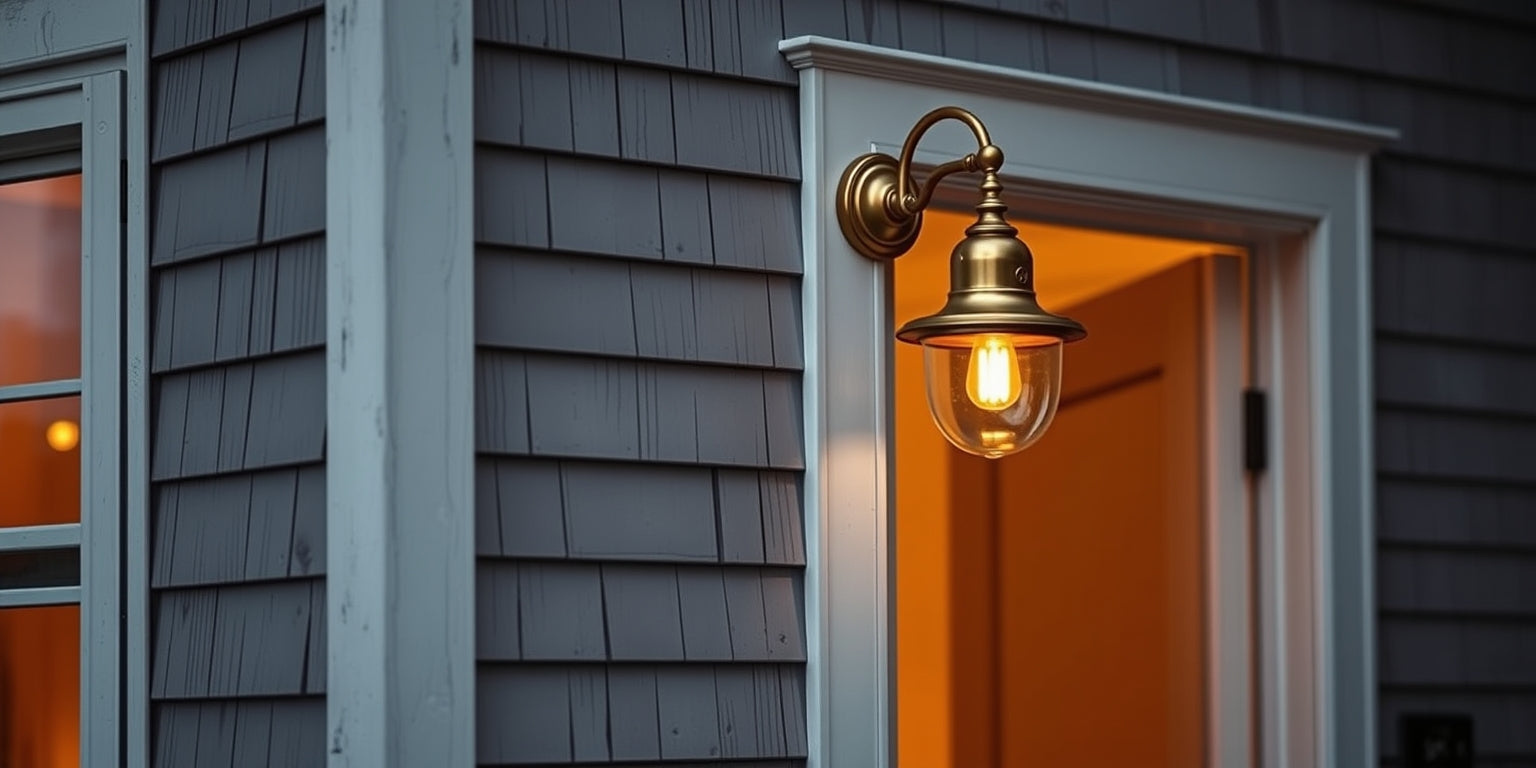
A bulkhead is the original ship's wall light: a compact round or oval fixture with a protective metal cage over the glass, mounted close to the wall. Aboard a vessel it was built to survive spray and knocks in tight passageways, which is exactly why it works so well on an exposed porch or beside a garage door today. Bulkheads are understated by design — they do their job without demanding attention, which makes them the most versatile nautical fixture you can buy. Typical dimensions run 7–11 inches tall with a 5–6 inch projection, they take an E26 medium-base bulb, and they throw a warm, even wash of light. For any outdoor install, confirm a UL wet-location rating.
What is a porthole (cage) sconce?
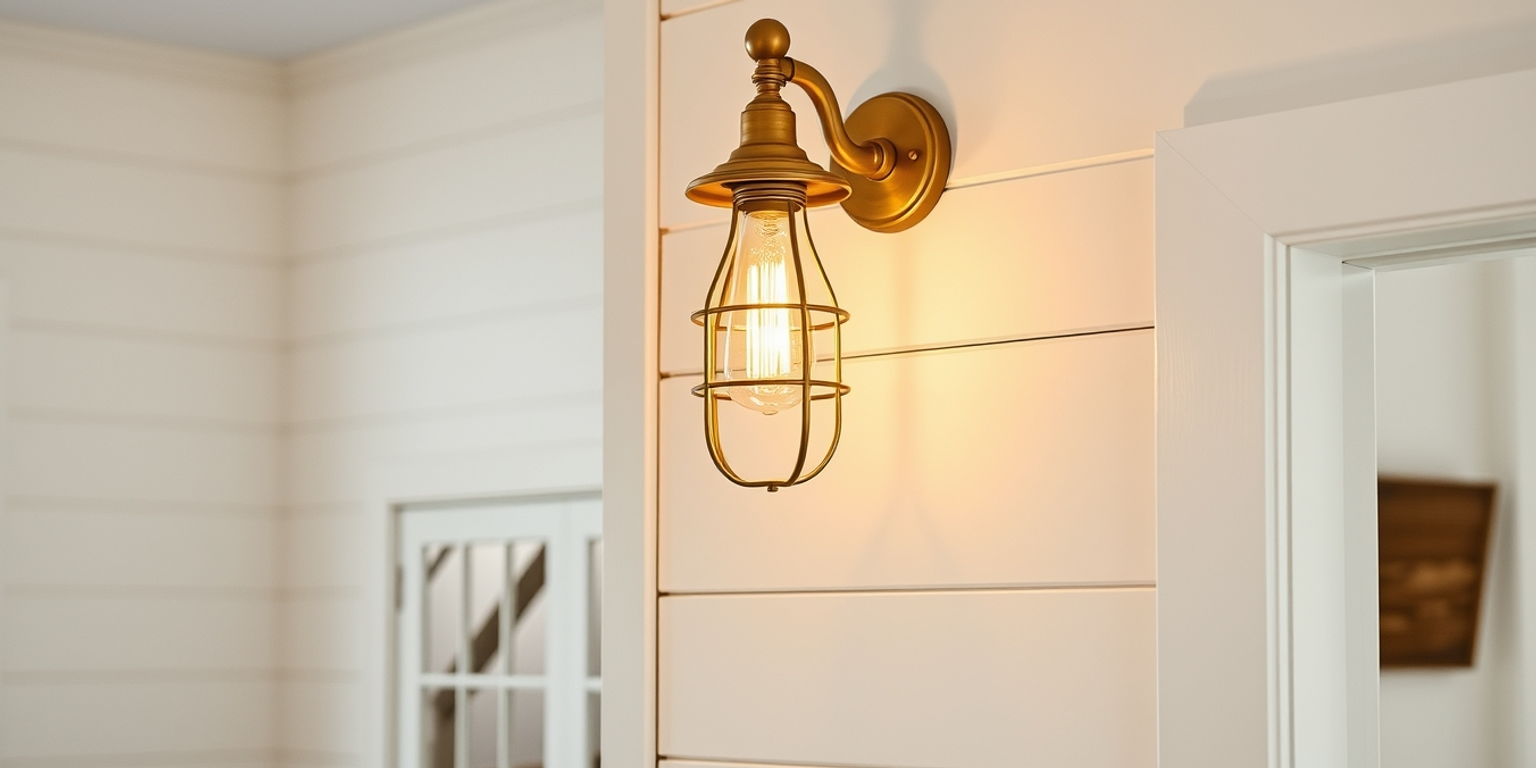
A porthole sconce frames a round glass lens the way a ship's window frames the sea — a heavier ring of brass surrounding the glass, often with a cage guard over the top. The result is more sculptural and more decorative than a bulkhead; the fixture reads as a design object even when it's switched off. These suit spots where you want a focal point rather than quiet function: a powder room, a covered deck, a beach-house living room, a pub-style basement. They typically run 8–14 inches tall with a 6–8 inch projection and take an E26 socket, often with a decorative filament globe that becomes part of the look. A G40 globe at 4–6W LED (roughly equivalent to 40–60W incandescent) gives you 350–470 lumens of warm 2700K light that flatters raw brass.
Head to head: bulkhead vs porthole
The look
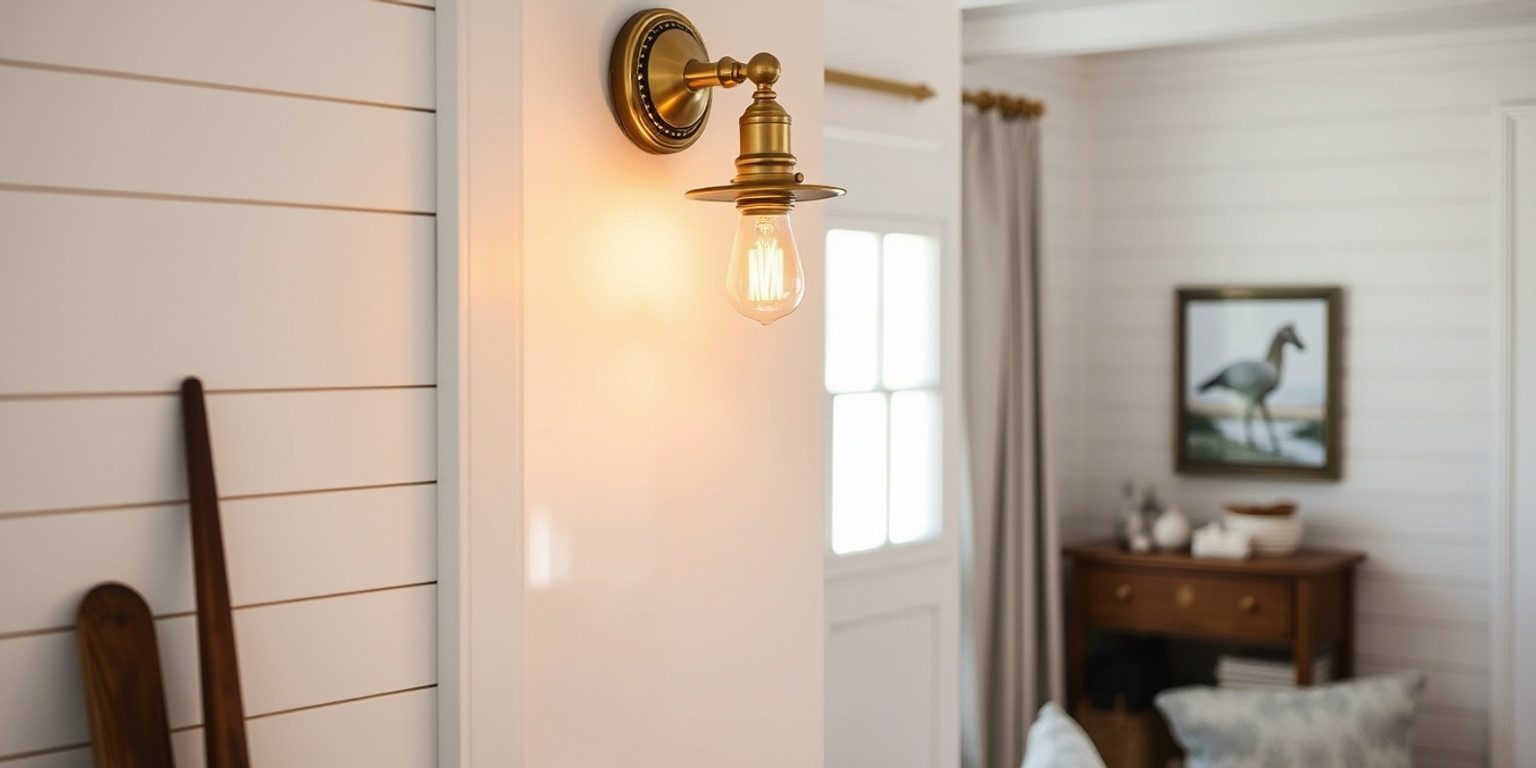
Bulkheads are quiet and utilitarian — a cage over frosted or clear glass, close to the wall, no fuss. They blend in. Portholes are the opposite: a bold brass ring, exposed glass, and often a visible filament that turns the fixture into jewelry for the wall. If you want the light to disappear into the architecture, go bulkhead. If you want guests to notice it, go porthole.
Best rooms
Bulkheads earn their keep at the front door, beside the garage, on a porch, and flanking a bathroom mirror — anywhere you need reliable, weather-ready light. Portholes shine in more decorative settings: powder rooms, covered decks, entry halls, and living rooms where the fixture is meant to be seen. A bulkhead is the fixture you buy in pairs for utility; a porthole is the one you buy as a centerpiece.
Light quality
Bulkheads with frosted glass diffuse the light into a soft, even glow with no glare — good for task-adjacent spots like a bathroom or an entry you walk through in the dark. Portholes with clear glass and an exposed filament give you a warmer, more atmospheric light with visible sparkle from the bulb itself. Both are best at 2700K; avoid cool-white (4000K+) bulbs, which fight the warm brass.
Price
Bulkheads are generally the more affordable entry into solid brass — you can start around $119. Portholes and larger cage designs carry more brass and more casting detail, so they sit higher, from roughly $135 up to $289 for statement sizes. Neither is "better value"; you're paying for a different job.
Compare the fixtures
| Style | Example | Price | Best for |
|---|---|---|---|
| Bulkhead | BARCINI Bulkhead Sconce | $144 | The purest classic bulkhead — entries and porches |
| Bulkhead | LIPNO IP44 Sconce | $119 | Most affordable solid-brass entry point |
| Porthole / cage | KALA Nautical Sconce | $198 | Decorative caged glass for living rooms and decks |
| Porthole / cage | ASOPIA Sconce | $289 | Larger statement porthole for a focal wall |
| Porthole / cage | CATAN Nautical Sconce | $135 | Compact decorative porthole on a smaller budget |
| Porthole / cage | MASTY Nautical Sconce | $192 | Balanced mid-size caged sconce for baths and halls |
If you're outfitting a porch or garage exterior, the BARCINI and LIPNO bulkheads are the safe, versatile picks. If the fixture is meant to be seen — a vanity, an entry hall, a deck you entertain on — the KALA, MASTY, and compact CATAN portholes carry more character, with the ASOPIA as the statement size.
How to choose between them
It comes down to two questions: how much do you want the fixture to stand out, and how exposed is the spot? For a quiet, functional light in a high-exposure location — an open porch, a dock-side wall, a garage exterior — a bulkhead with a confirmed wet rating is the right tool. For a decorative moment in a covered or indoor spot — a powder room, an entry hall, a covered deck — a porthole rewards the extra spend by becoming the thing people notice. Mounting heights are the same for both: 66–72 inches from the floor for outdoor entry fixtures, 66–70 inches when flanking a bathroom mirror.
Shop nautical wall sconces
Browse every bulkhead and porthole in this guide, from $119 up, in the Arel Nautical & Outdoor Collection — all solid brass, all shipped free across the US.
Frequently asked questions
What is the difference between a bulkhead and a porthole sconce?
A bulkhead sconce is a compact caged wall light mounted close to the wall — understated, versatile, and built for function and exposure. A porthole sconce frames a round glass lens in a heavier brass ring, making it more decorative and sculptural. Both are solid brass with an E26 socket; the bulkhead is the workhorse, the porthole is the focal point.
Which is better for a front porch?
A bulkhead sconce is usually the better porch choice. It's compact, weather-ready, and understated enough to pair on both sides of a door without overwhelming the entry. Just confirm a UL wet-location rating for an exposed porch, or a damp rating for a covered one, and mount it at 66–72 inches from the floor.
Can I use a porthole sconce in a bathroom?
Yes. A porthole sconce brings a yacht-cabin character that suits powder rooms and vanities beautifully. Flank the mirror at 66–70 inches, 28–36 inches apart for a standard vanity, and confirm a damp-location rating outside the shower zone. Side lighting from a pair also eliminates the under-eye shadows that overhead fixtures create.
Do both take the same bulb?
Yes — both bulkhead and porthole sconces use the standard American E26 medium-base socket, so any E26 LED bulb fits. For the best look, use a 2700K warm-white filament bulb. In porthole and cage designs where the bulb is visible, a G40 or ST64 filament globe at 4–6W turns the bulb into a visual feature. Avoid cool-white (4000K+) bulbs, which clash with warm brass.
Are they both solid brass?
Every Arel bulkhead and porthole sconce is handcrafted from solid brass — body, cage, ring, and backplate — not brass-plated zinc. Solid brass resists coastal corrosion and develops a living patina over time instead of flaking to reveal a gray base metal. For any home near saltwater, solid brass is the only durable choice.
Is one more expensive than the other?
Porthole sconces generally cost a little more than bulkheads because they carry more brass and more casting detail. Bulkheads start around $119, while portholes range from about $135 to $289 for statement sizes. You're paying for a different job rather than better quality — both are the same solid brass throughout.
Related reading
- Nautical Lighting: The Complete US Buyer's Guide — brass grades, UL ratings, and room-by-room placement.
- Best Nautical Wall Sconces — our top solid-brass picks for US homes.
- Nautical & Outdoor Lights Collection — the full range, handcrafted in solid brass.
Published by
Arel Lighting Editorial Team
Every guide is researched using manufacturer specifications, US electrical and UL location standards, and current market knowledge. Arel Lighting handcrafts solid brass nautical and decorative lighting in Istanbul and ships free across the United States.