Article: How to Light Artwork & a Gallery Wall
How to Light Artwork & a Gallery Wall
How to Light Artwork & a Gallery Wall
Quick answer: The best way to light artwork is with a dedicated picture light mounted just above the frame, sized to about two-thirds the width of the piece, aimed to wash the surface evenly. Use warm 2700–3000K bulbs with a high CRI (90+) so colors stay true, keep the light off the glass to avoid glare, and put it on a dimmer. For a gallery wall, a row of picture lights or a pair of wall sconces gives even, gallery-quality light.
Art deserves to be seen, and the right light is the difference between a piece that fades into the wall and one that stops you in your tracks. Whether you're lighting a single statement painting or a full gallery wall, the principles are the same — and surprisingly simple once you know them. This guide covers how to light artwork like a gallery, in practical terms for US homes.
Why Dedicated Art Lighting Matters
Ordinary room light rarely does art justice. Overhead fixtures cast shadows down the face of a piece, daylight is uneven and can fade colors over time, and lamps light everything except the wall. A dedicated light source — aimed at the art — makes colors richer, brings out texture and brushwork, and gives the piece the sense of importance it has in a gallery. It's one of the highest-impact, lowest-cost upgrades you can make to a room, and it turns a wall of pictures into a curated display.
Picture Lights: The Classic Choice
A picture light is a slim fixture mounted just above (occasionally below) a frame, designed specifically to wash light down across the artwork. It's the traditional, elegant solution and the one that reads most clearly as "this piece matters." A few keys to getting it right:
- Width: choose a picture light about one-half to two-thirds the width of the frame so the light spreads evenly without spilling past the edges.
- Projection: the fixture should extend far enough from the wall to angle light down the full height of the piece — taller art needs more projection.
- Mounting: hardwired above the frame for a clean look, or a plug-in / battery model if you can't run wiring. Cordless LED picture lights have made this easy for renters.
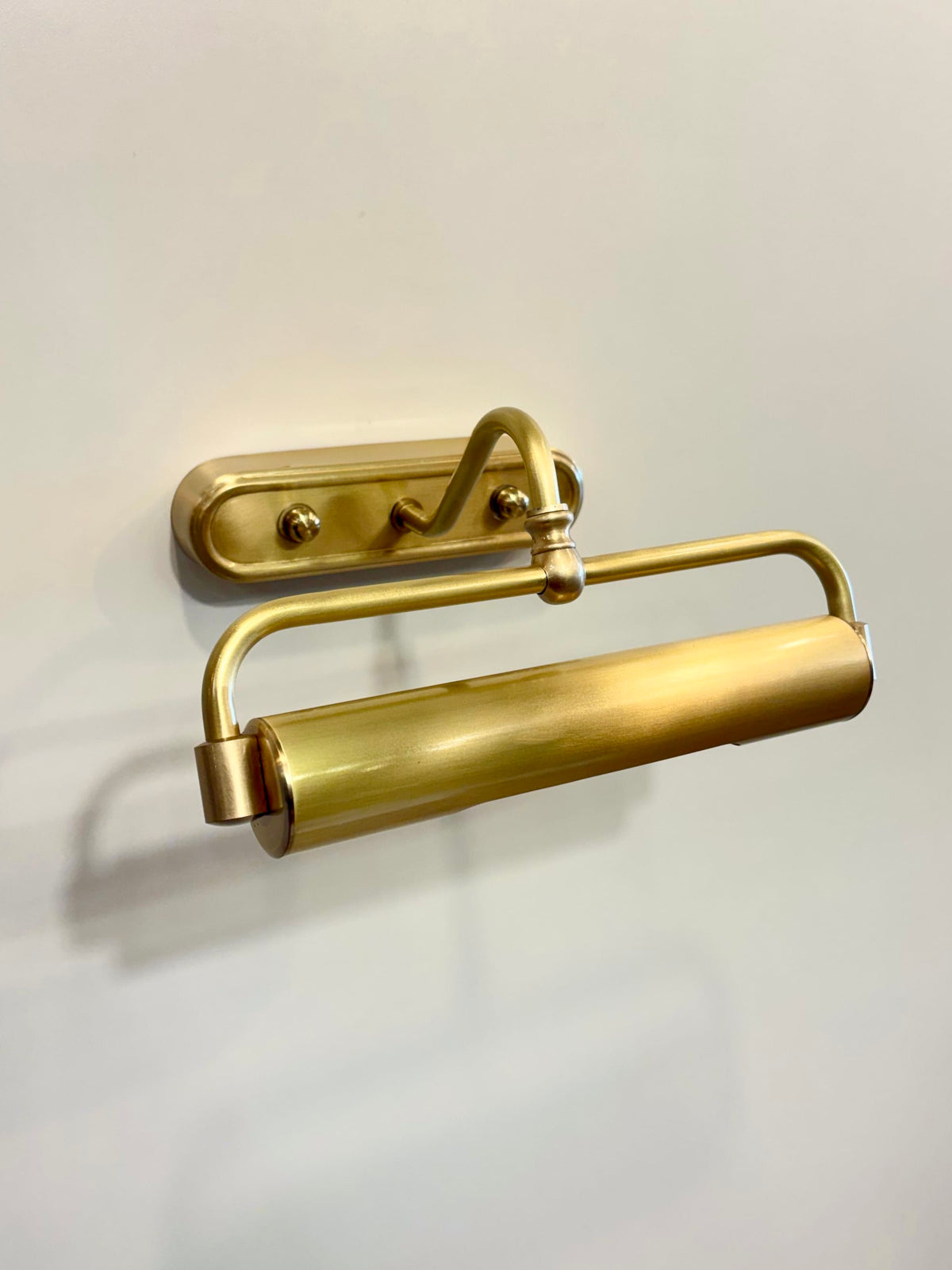
A warm brass picture light also adds a note of craftsmanship above the art, complementing the frame rather than competing with it.
Get the Angle Right
Aim matters as much as the fixture. The goal is to wash the art evenly without glare bouncing back at the viewer. For most framed pieces, light angled at roughly 30 degrees from the wall hits the surface cleanly while keeping reflections off glass and out of eyes. Too steep and you exaggerate the frame's shadow and any canvas texture; too shallow and you get glare and hot spots. If the piece is behind glass, a slightly steeper angle or a matte/non-reflective glazing helps kill reflections. Adjustable fixtures let you fine-tune the angle after hanging.
Bulbs: Warmth and Color Accuracy
Two bulb specs decide how good the art looks:
- Color temperature: warm-white 2700–3000K flatters most art and keeps the room cohesive. 3000K adds a touch of clarity for pieces with cool tones; 2700K suits warm, traditional work.
- CRI (Color Rendering Index): this is critical for art — choose 90 or higher so reds, blues, and skin tones render truly. A low-CRI bulb dulls and distorts the very colors you're trying to show off.
Also favor LED bulbs that emit little to no UV, since UV fades pigments and paper over time — one of the reasons dedicated LED art lighting is kinder to your pieces than sunlight.
Lighting a Gallery Wall
A gallery wall — a grouping of many frames — needs even light across the whole arrangement rather than a spotlight on one piece. A few approaches:
- A row of picture lights: one above each major piece for a formal, gallery-like effect (best for a curated grid).
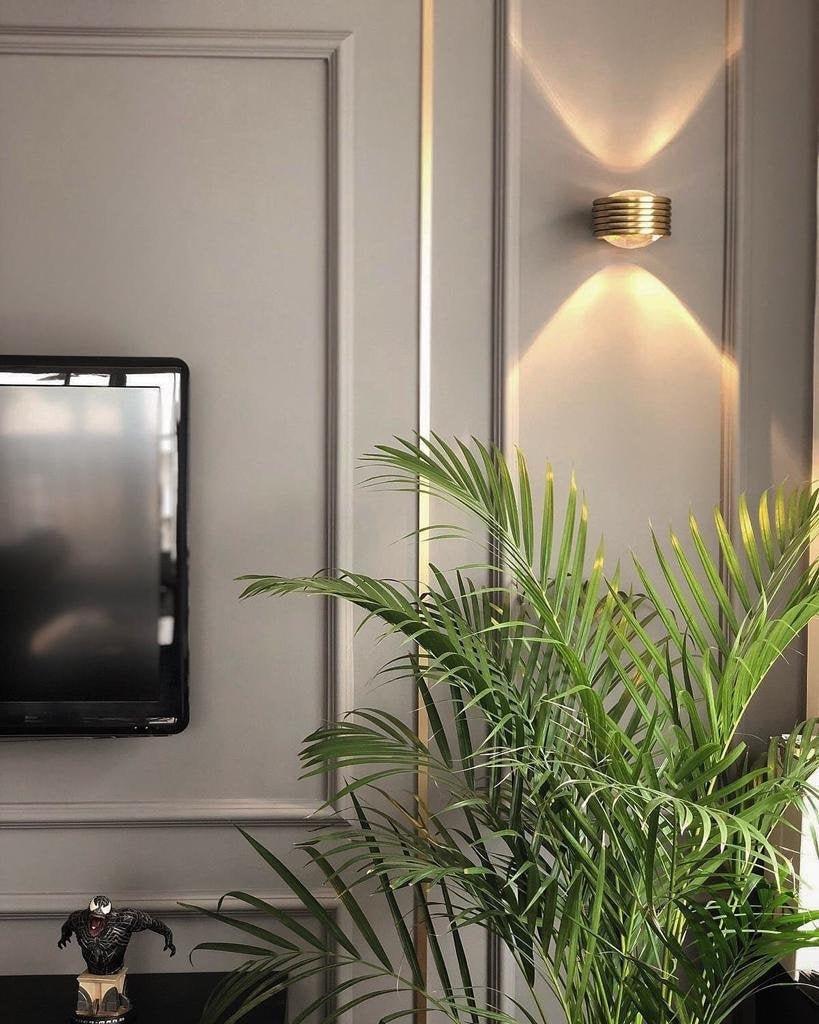
- Flanking wall sconces: a pair of sconces on either side of the grouping washes the whole wall in even light and adds warmth — often the most practical choice for a dense gallery wall.
- Adjustable track or recessed accent lights: ceiling-mounted spots angled onto the wall light a large arrangement evenly, though they require wiring.
For most homes, a pair of sconces framing the gallery wall — or a couple of picture lights on the standout pieces — delivers that curated look without over-complicating the install.
How High and Where to Mount
Hang your art so its center sits around 57–60 inches from the floor (standard gallery eye level), then mount the picture light directly above the frame, close enough that it angles cleanly down the piece. For a gallery wall, treat the whole grouping as one unit and center that unit at eye level, then position lights relative to the arrangement. Sconces flanking a gallery wall follow the usual sconce height — center around 60–66 inches — so they wash the wall from the sides.
Art Lighting at a Glance
| Situation | Best light | Note |
|---|---|---|
| Single painting | Picture light above frame | 2/3 the frame width |
| Large statement piece | Picture light or accent spot | More projection for tall art |
| Gallery wall (grid) | Row of picture lights | Formal, curated look |
| Gallery wall (dense) | Flanking wall sconces | Even wash + warmth |
| Renter / no wiring | Cordless LED picture light | Battery or plug-in |
Protecting Your Art
Good lighting also means kind lighting. Heat and UV are the enemies of pigment and paper, so favor cool-running LED fixtures with low UV output and keep bright light off delicate works on paper or photographs for long stretches. A dimmer helps here too — you rarely need art at full brightness, and dimming both sets the mood and reduces exposure. Positioned and specified well, dedicated LED art lighting is far gentler on your pieces than the alternative of harsh daylight or hot halogen spots.
Lighting Different Types of Art
The medium changes the approach. Oil paintings and textured canvases come alive with a slightly raking light that catches the brushwork — a picture light angled down does this beautifully. Works on paper, watercolors, and photographs are more delicate and fade-prone, so keep light gentler, strictly low-UV, and dimmed when possible. Framed pieces behind glass are all about killing reflections: angle the light carefully, or choose anti-reflective glazing. Mirrors and metallic art bounce light, so aim to wash the surrounding wall rather than hitting the reflective surface head-on. Matching the light to the medium is what separates a display that looks professional from one that fights the very piece it is meant to show.
Cordless & Smart Options for Renters
You no longer need to hardwire to light art well. Modern cordless LED picture lights run on rechargeable batteries, mount with a small bracket or adhesive, and last weeks per charge — ideal for renters or for art on a wall with no nearby outlet. Many include a remote or app so you can dim them and set a timer, and some clip directly onto the frame. Plug-in picture lights and plug-in wall sconces are the other renter-friendly route, hiding the cord in a paintable cover. However you power it, the goal is the same: dedicated, warm, high-CRI light aimed at the piece — the wiring method is just a detail you can now solve without an electrician.
Common Art Lighting Mistakes
- Wrong width. A picture light too narrow lights only the center; too wide spills past the frame. Aim for about two-thirds the frame width.
- Glare on glass. A bad angle bounces light back at viewers — aim around 30 degrees and consider matte glazing.
- Low-CRI bulbs. They dull colors; insist on CRI 90+.
- Cool, harsh light. 4000K+ light feels clinical; stay warm at 2700–3000K.
- No dimmer. Art rarely needs full brightness; dimming sets the mood and protects the piece.
Frequently Asked Questions
What is the best way to light artwork?
Use a dedicated picture light mounted above the frame, sized to about two-thirds the width of the piece and angled to wash it evenly. Use warm 2700–3000K, high-CRI (90+) bulbs, keep light off the glass, and add a dimmer.
How do you light a gallery wall?
Use a row of picture lights over the standout pieces for a formal look, or a pair of wall sconces flanking the grouping to wash the whole wall evenly with added warmth.
What size picture light do I need?
Choose a picture light about one-half to two-thirds the width of the frame so light spreads evenly without spilling past the edges. Taller art needs more projection.
What color temperature is best for art lighting?
Warm-white 2700–3000K with a high CRI of 90 or more, so colors render truly. 2700K suits warm, traditional work; 3000K adds clarity for cooler-toned pieces.
How do I light art without wiring?
Use a cordless, battery-powered or plug-in LED picture light, or flank the piece with plug-in wall sconces — both give gallery-quality light with no electrician.
Explore our handcrafted brass picture lights & sconces
Each cast and finished by hand in solid brass by Arel Lighting, with free US shipping.
Browse the wall sconce collection, or read our wall sconce sizing guide.