Article: Handmade Lighting (2026): What It Is, How It's Made & Is It Worth It?

Handmade Lighting (2026): What It Is, How It's Made & Is It Worth It?
Quick answer: Handmade lighting is a light fixture that is cast, shaped, assembled and finished largely by hand in a workshop, usually in small batches or to order, rather than stamped out on an automated production line. It typically uses solid materials like brass, glass and marble, can be customized, and can be repaired and refinished for decades. It costs more than mass-produced lighting, so it's worth it when you want a fixture that lasts, ages well and doesn't look like everyone else's.
Arel Lighting is a family workshop in Istanbul that has been making lighting by hand for three generations. We cast, finish and assemble brass sconces, pendants and ceiling lights for homes across the US. This guide brings together everything we're asked about handmade lighting: what the term really means, how a handmade fixture is made, how it compares with mass-produced lighting, how to tell genuine handwork from marketing, and how to choose and care for a piece.
What does "handmade lighting" actually mean?
"Handmade" means people, not just machines, do the work that defines how the fixture looks and lasts. In practice, a handmade light usually involves:
- Hand casting or forming of the metal body, for example pouring brass into a mold, or hammering and shaping sheet metal.
- Hand finishing: filing, polishing, brushing, hammering or patinating the surface.
- Hand assembly of the parts, glass and wiring.
- Small batches or made to order, rather than tens of thousands of identical units.
Machines and power tools are still part of a modern workshop. What matters is that a craftsperson controls each piece and that the finish, details and quality come from skilled hands. "Handcrafted," "artisan" and "artisanal" are used to mean much the same thing.
How is a handmade light fixture made?
Every workshop works differently, but most handmade metal lighting follows a similar path:
- Design and pattern. A model or pattern is made for each part, often refined over many prototypes.
- Casting or forming. Brass parts are cast in molds or formed from sheet and tube. Casting gives sculptural, three-dimensional shapes; hand hammering gives the textured surface of a hammered brass piece.
- Cleaning and refining. Cast parts are cut, filed and ground by hand to remove casting marks and sharpen the detail.
- Finishing. The surface is polished, brushed, hammered or treated to create finishes such as raw, antique or brushed brass.
- Assembly and wiring. Glass, marble or fabric shades are fitted, sockets are wired, and each fixture is checked.
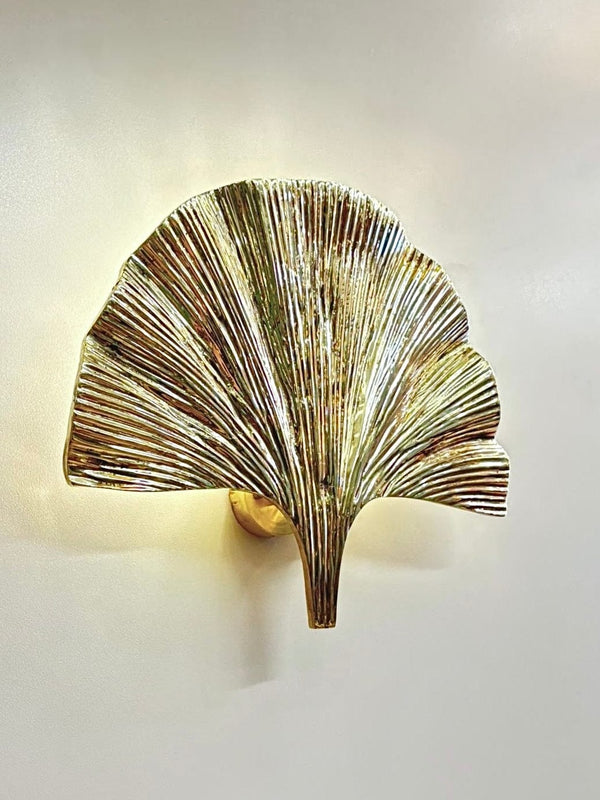
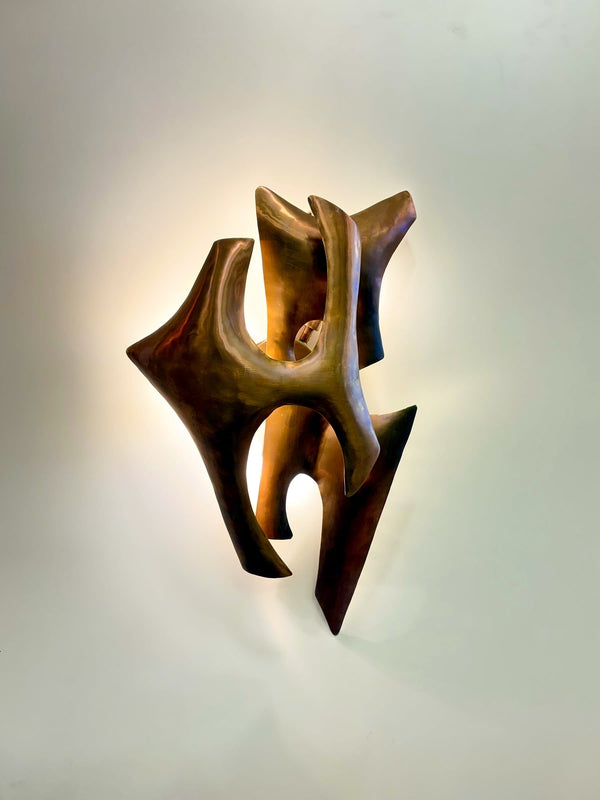
Because each step involves a person, no two pieces are perfectly identical. Small variations in casting texture or patina are a sign of handwork, not a defect. Sculptural designs like our DREUX and the ginkgo-leaf ALMADA show what hand casting can do.
Handmade vs mass-produced lighting: what's the real difference?
| Handmade | Mass-produced | |
|---|---|---|
| Materials | Usually solid brass, bronze, glass, marble | Often zinc, steel or aluminum with a plated or painted finish |
| Detail | Deep, crisp, three-dimensional | Shallow, molded or printed |
| Finish | Applied by hand; can be refinished | Thin coating that can chip, peel or wear |
| Lifespan | Decades; repairable | Often replaced when the finish fails |
| Customization | Finishes, sizes and canopies on request | What's in stock |
| Lead time | Longer, often made to order | Ships immediately |
| Price | Higher upfront | Lower upfront |
The biggest practical difference is material. A mass-produced "brass" fixture is often a different metal with a thin brass-colored coating. Once that coating scratches or wears, especially in bathrooms or outdoors, there is nothing to polish back. Solid brass can be cleaned, polished or left to patina for as long as you own it. Our guide to solid vs plated brass explains how to tell them apart.
Is handmade lighting worth the money?
It's worth it when longevity, character or a specific look matter to you. A handmade sconce in solid brass can outlast several cheaper fixtures, keep its value, and become part of the character of a home. It also makes sense where fixtures take a beating: coastal homes, bathrooms and outdoor walls, where plated finishes fail fastest.
It's less important for purely functional lighting that nobody sees, like a closet or utility room. Many people mix the two: handmade pieces where they're seen and felt (entry, living room, bedroom, bathroom vanity) and simple fixtures elsewhere.
How can you tell if lighting is genuinely handmade?
- Material is named precisely: "solid brass" or "brass casting," not "brass finish" or "brass tone."
- Weight: cast brass is noticeably heavy for its size.
- Detail depth: handmade casting has crisp edges and real relief; molded zinc looks soft and rounded.
- Small variations in texture, hammer marks or patina between pieces.
- Made-to-order lead times and customization options, which mass producers rarely offer.
- A real maker: a workshop or brand that shows how and where its pieces are made.
Which handmade lighting styles are most popular?
- Sculptural brass sconces: statement pieces that work like wall art. See our sculptural and Art Deco sconce guide.
- Hammered brass: hand-hammered texture catches light beautifully, as on the BALTI sconce.
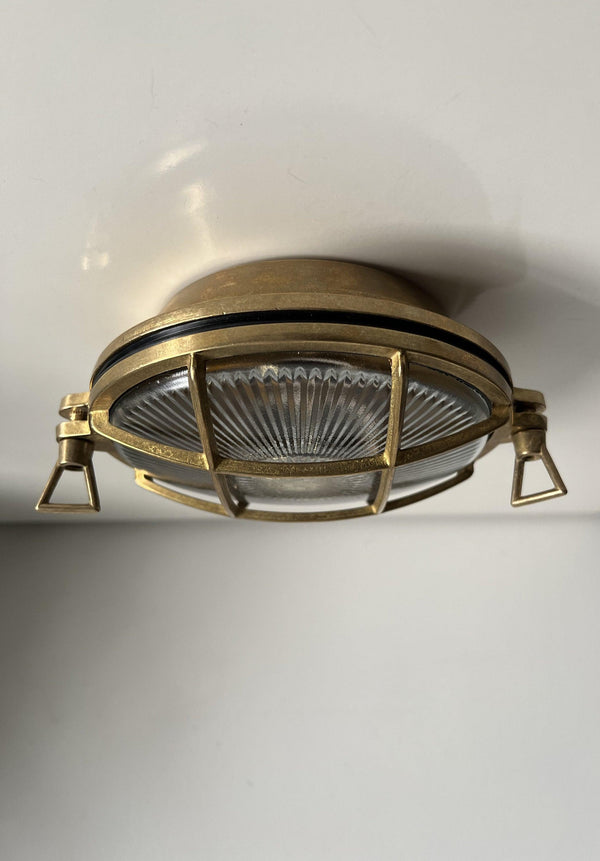
- Nautical and bulkhead lights: cast brass built to survive salt air, like the PATIN MINI.
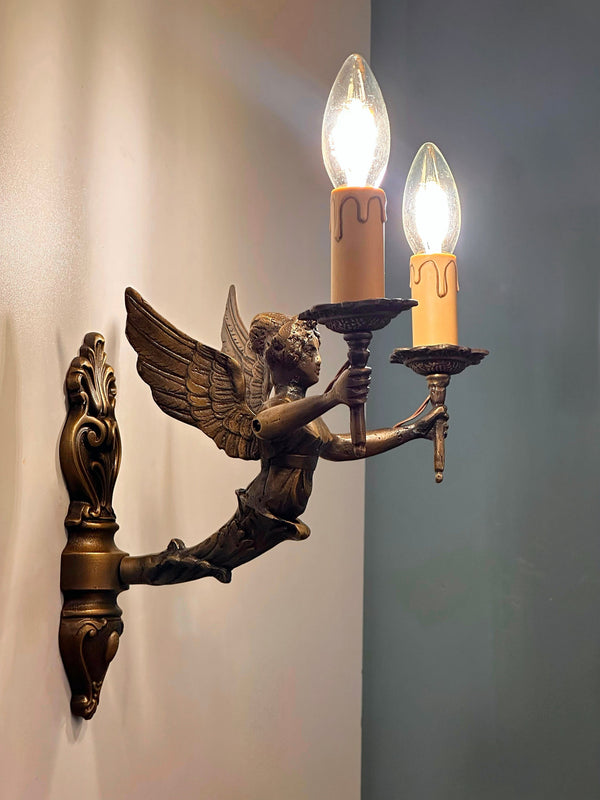
- Traditional and Victorian: cast brass arms and decorative glass. See our Victorian sconce guide.
- Marble and brass: natural stone paired with brass for a modern, luxurious look.
Can handmade lighting be customized?
Often, yes, and that is one of its biggest advantages. Workshops can usually change the finish (raw, antique, brushed or polished brass, copper, nickel), adjust the canopy or backplate size to cover an existing junction box, alter arm length or proportions, or seal raw brass if you prefer it not to patina. At Arel Lighting we take custom requests on most pieces; just contact us before ordering.
Designers and architects working on larger projects can also ask about trade pricing and bespoke pieces through our trade program.
How do you care for handmade brass lighting?
- Dust regularly with a soft, dry cloth, with the power off.
- Decide on patina: leave raw brass to darken naturally, or polish it occasionally with a brass cleaner to keep it bright.
- Avoid abrasive pads and harsh chemicals, which scratch casting detail and strip finishes.
- Outdoors and by the sea, rinse with fresh water every few weeks; see our coastal durability guide.
Our full brass cleaning and patina guide covers both approaches step by step.
Frequently asked questions
Why does handmade lighting take longer to arrive?
Many pieces are made or finished to order, which takes time in the workshop before shipping. Check the estimated delivery date on each product page before you order if you have a deadline.
Is handmade lighting safe to install in the US?
A handmade fixture is wired like any other, and a licensed electrician should install it to local code. Check each product's specifications for bulb type and voltage, and ask your electrician to confirm the fixture suits the location, especially in bathrooms and outdoors.
Will two handmade fixtures look exactly the same?
Very close, but not identical. Expect small variations in casting texture and patina, which is part of the appeal. For pairs, order at the same time so they're finished together.
Does handmade lighting hold its value?
Solid brass fixtures can be cleaned, refinished and rewired, so they tend to last and are often reused when people move or renovate, unlike plated fixtures that are usually thrown away once the finish fails.
Related reading
- Shop handcrafted brass wall sconces
- Solid brass vs plated brass lighting
- How to clean brass lighting and manage patina
- Victorian wall sconces guide
Handmade in our Istanbul workshop · Solid brass · Custom finishes on request · Free US shipping · Arel Lighting