
Article: What Is a Bulkhead Light? A Complete Guide
What Is a Bulkhead Light? A Complete Guide
What Is a Bulkhead Light? A Complete Guide
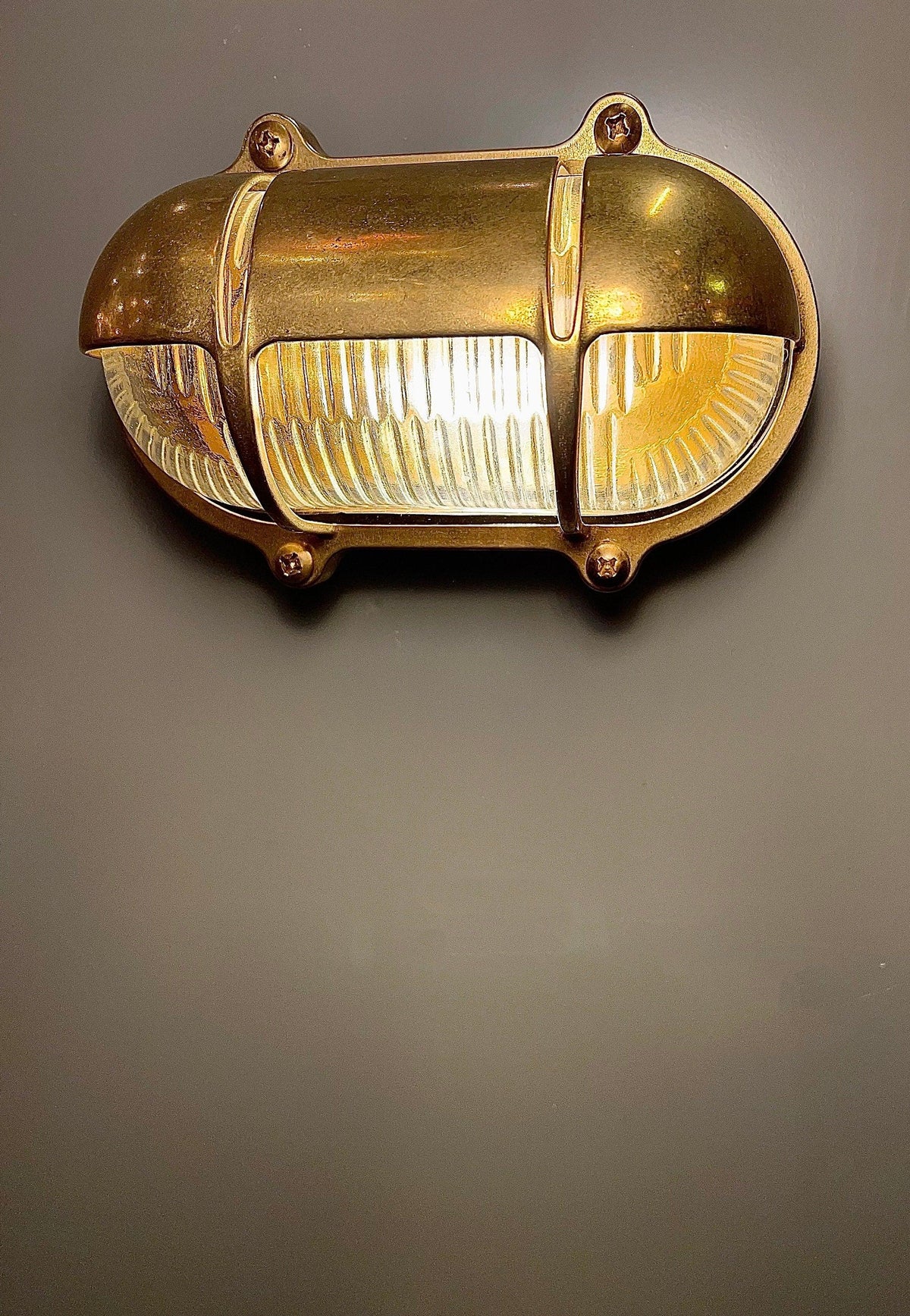
Quick answer: A bulkhead light is a rugged, sealed wall or ceiling fixture originally designed for ships — named after the bulkhead (dividing wall) of a vessel. It has a protective cage or sturdy housing over the glass, is built to resist water and impact, and is rated for outdoor and marine use. Today bulkhead lights are popular for porches, exteriors, bathrooms, and industrial-style interiors, prized for their durability and nautical character. In solid brass, they last for decades.
If you've browsed outdoor or nautical lighting, you've seen bulkhead lights — those tough, round or oval fixtures, often with a protective cage over the glass, that look like they belong on a ship. But what exactly is a bulkhead light, where did it come from, and where should you use one? This guide answers all of it, from the origin of the name to how to choose and place one in a modern home.
Bulkhead lights sit at an interesting crossroads of function and style. On the one hand they are among the most practical fixtures you can buy — sealed, tough, and built for the elements. On the other, their maritime-industrial character has made them a genuine design choice, showing up on stylish porches and in trend-forward interiors far from any harbor. Understanding what a bulkhead light actually is helps you choose one that delivers on both fronts.
Where the Name Comes From
The term comes straight from shipbuilding. A bulkhead is one of the upright dividing walls inside a ship's hull that create separate watertight compartments. The lights mounted on and around these walls had to survive a harsh marine environment — salt spray, humidity, knocks, and constant vibration — so they were built sealed, sturdy, and often protected by a metal cage. Those fixtures became known as "bulkhead lights," and the name stuck even as the design moved ashore into homes and industrial buildings.
What Defines a Bulkhead Light
A few features distinguish a true bulkhead light:
- Rugged, sealed housing that keeps out water and dust, rated for outdoor and often marine use.
- A protective cage or grille over the glass on many designs — originally to shield the glass from impact on a ship.
- Durable materials — traditionally solid brass or bronze for corrosion resistance, though modern versions also come in steel and aluminum.
- A compact, functional shape — usually round or oval, mounted flush to a wall or ceiling.
The result is a fixture built to endure, with a distinctive maritime-industrial look that has become a design statement in its own right.
Bulkhead Light vs. Other Nautical Fixtures
Bulkhead lights are often confused with related nautical styles:
- Bulkhead vs. porthole light: a porthole light mimics a ship's round window, often with a heavy hinged frame; a bulkhead light is the sealed, sometimes caged wall/ceiling fixture. Both are nautical, but the bulkhead is the workhorse.
- Bulkhead vs. general outdoor sconce: a bulkhead is a specific rugged, sealed type; not all outdoor sconces are bulkheads, though many nautical outdoor sconces share the look.
- Bulkhead vs. cage light: the cage is a feature many bulkheads have, but a caged fixture isn't automatically a sealed, weather-rated bulkhead.
Where to Use a Bulkhead Light
Bulkhead lights have moved far beyond ships. Popular uses include:
- Front porches and entryways — durable, characterful, and welcoming.
- Exterior walls, garages, and outbuildings — weatherproof and rugged.
- Coastal and waterfront homes — the nautical look feels right at home, and solid brass resists salt air.
- Bathrooms — the sealed, damp-rated designs suit steamy environments (choose an appropriate rating).
- Industrial-style interiors — hallways, kitchens, and lofts where the utilitarian look is a feature.
Their versatility is a big part of the appeal: one rugged fixture works indoors and out.
Why Solid Brass Bulkhead Lights Last Longest
Because bulkhead lights were born to survive the sea, material matters enormously. Solid brass is the traditional and best choice: it naturally resists corrosion, forms a protective patina, and endures salt air, rain, and humidity for decades — exactly the qualities a ship demanded. Plated or painted steel bulkheads look similar at first but corrode and flake in the same conditions that solid brass shrugs off. If you want a bulkhead light that lives up to its rugged heritage — especially outdoors or by the coast — solid brass is the material to choose.
How to Choose a Bulkhead Light
- Material: solid brass for longevity and corrosion resistance, especially outdoors and coastal.
- Rating: check the IP or damp/wet rating for the location — exposed walls and bathrooms need higher protection.
- Caged or not: a cage adds classic maritime character and glass protection; a clean sealed design looks more modern.
- Size and mounting: confirm it suits the wall or ceiling and mounts at a sensible height (around 66–72 inches for wall mounting).
- Bulb: warm-white 2700K gives the cozy, traditional glow that suits the style.
Placement & Installation
Mount an exterior wall bulkhead at roughly 66–72 inches from the ground so light falls at a useful height, and use a pair flanking a door for symmetry. For coastal or fully exposed spots, choose a higher-rated, solid-brass fixture and rinse off salt occasionally to keep it looking its best. As with any outdoor or bathroom wiring, have a qualified electrician handle installations near water. Fit warm 2700K bulbs and, ideally, a dusk-to-dawn timer so the light is always on when you need it.
A Brief History of the Bulkhead Light
Bulkhead lights trace back to the age of steamships, when interior and deck lighting had to withstand one of the harshest environments imaginable. Fixtures mounted on a ships bulkheads faced salt spray, pounding waves, vibration, and knocks from cargo and crew, so they were engineered sealed, compact, and often protected by a heavy cast cage. Solid brass and bronze were the metals of choice because they resisted the corrosion that quickly destroyed lesser materials at sea. As industrial design influenced homes through the twentieth century, these tough, honest fixtures migrated ashore — first to factories, docks, and warehouses, then into homes drawn to their rugged character. Today the bulkhead light is as much a design statement as a utility, but every one carries a little of that seafaring heritage.
Bulkhead Light Styles
Within the bulkhead family there is more variety than you might expect. Caged bulkheads wear the classic protective grille over the glass, the most recognizably nautical look. Clean sealed bulkheads drop the cage for a smoother, more modern silhouette. Round versus oval shapes change the character — round reads more traditional and porthole-like, oval more contemporary. And the finish matters: warm solid brass suits coastal and heritage homes and ages into a patina, while the same form in a darker finish leans industrial. Choosing among them comes down to how much maritime character you want and whether the fixture is playing a traditional or modern role in the space.
The Takeaway
A bulkhead light is one of those rare fixtures that is both deeply practical and genuinely characterful — engineered to survive a ship, yet handsome enough to define the look of a porch, bathroom, or industrial interior. The key to buying one that lives up to its rugged heritage is material: choose solid brass for corrosion resistance and a patina that only improves with age, match the rating to the location, and pick the caged or clean silhouette that suits your style. Do that, and a single bulkhead light will light your home beautifully — and keep doing it for decades.
Frequently Asked Questions
What is a bulkhead light?
A bulkhead light is a rugged, sealed wall or ceiling fixture originally designed for ships — named after a ship's bulkhead (dividing wall). It resists water and impact, often has a protective cage, and is used today for porches, exteriors, bathrooms, and industrial interiors.
Why is it called a bulkhead light?
Because it was designed to mount on the bulkheads — the internal dividing walls — of ships, where fixtures had to survive salt spray, humidity, and impact. The name carried over as the design moved into homes.
Are bulkhead lights only for outdoors?
No. While they're popular outdoors and rated for it, bulkhead lights also suit bathrooms (choose a damp/wet rating) and industrial-style interiors like hallways and kitchens.
What's the difference between a bulkhead and a porthole light?
A porthole light mimics a ship's round window with a heavy hinged frame; a bulkhead light is the sealed, often caged wall or ceiling fixture. Both are nautical, but the bulkhead is the rugged workhorse.
What material is best for a bulkhead light?
Solid brass — it resists corrosion, forms a protective patina, and endures salt air and rain for decades, unlike plated or painted steel that corrodes in the same conditions.
Explore our handcrafted brass nautical & outdoor lighting
Bulkhead-style solid brass fixtures, cast and finished by hand by Arel Lighting, with free US shipping.
- SLATINA Nautical Wall Sconce
- NAPOLI LOZENGE Maritime Wall Sconce
- MOTRU Outdoor Brass Casting Wall Sconce
Browse the nautical outdoor lights collection, or read our fall front porch lighting ideas.
%20of...)