Artikel: Home Office Lighting Guide (2026): Task Light, Glare & Video Calls
Home Office Lighting Guide (2026): Task Light, Glare & Video Calls
Quick answer: A good home office needs two layers: soft ambient light that fills the room and a directed task light on the desk. Put the task light to the side of your screen (opposite your writing hand), never behind the monitor or directly overhead in a way that reflects off the glass. For video calls, face a window or a diffused light at eye level. Use 3000K to 4000K bulbs for work and keep everything on dimmers.
More Americans now work from a spare bedroom, a corner of the living room or a nook under the stairs than ever before, and most of those spaces were never planned as offices. A single ceiling fixture usually leaves the desk in shadow and puts glare straight onto the screen. This guide covers how to layer light for long workdays, how to stop reflections, and how to look natural on camera.
What is the difference between task and ambient light in an office?
Ambient light is the general glow that lets you move around the room and keeps your eyes from straining against a bright screen in a dark space. It can come from a ceiling fixture, wall sconces or a floor lamp bounced off the ceiling.
Task light is focused light where you read, write or sketch. It should be adjustable, so you can aim it at paper without lighting up the monitor.
The common mistake is relying on one or the other. A desk lamp alone in a dark room creates harsh contrast that tires your eyes by late afternoon. Overhead light alone casts your own shadow onto the desk. You want both, and ideally a third layer of accent light (a picture light or a sconce on a shelf wall) to make the room feel less like a cubicle.
How do you avoid glare on your computer screen?
- Keep bright sources out of the screen's reflection. If you can see a lamp or window in the dark monitor when it is off, it will glare when it is on.
- Light from the side. Position the task light to the left if you are right-handed (and the reverse if left-handed) so your hand doesn't shadow the page.
- Put windows to the side, not behind the screen or behind you. A window behind the monitor forces your eyes to adjust between bright and dark; a window behind you reflects straight into the screen.
- Choose shaded or directional fixtures. An exposed bulb near eye level is the worst glare source. A fabric shade or an angled metal head keeps the light pointed down.
- Match the room to the screen. Ambient light that is roughly as bright as your monitor is far more comfortable than working in a dark room.
How should you light yourself for video calls?
Camera light follows simple rules. The main light should be in front of you, slightly above eye level, and soft. A window you face is the best option during the day. After dark, a lamp or sconce with a fabric or opal shade placed behind the laptop, a little off to one side, gives an even, flattering light.
- Avoid backlighting. A bright window or lamp behind you turns you into a silhouette.
- Avoid pure overhead light. It creates dark shadows under the eyes.
- Add some background light. A warm sconce or shelf light behind you separates you from the wall and makes the frame look intentional.
- Keep color temperature consistent. Mixing a cool daylight window with a very warm 2200K lamp makes skin tones look odd on camera.
Desk lamp or swing-arm wall sconce?
| Desk or table lamp | Swing-arm wall sconce | |
|---|---|---|
| Desk space | Takes up surface area | Frees the whole desk |
| Adjustability | Depends on the lamp | Arm extends and pivots over the work area |
| Installation | Plug in and go | Hardwired or plug-in versions |
| Best for | Renters, large desks, flexible layouts | Small desks, built-ins, desks against a wall |
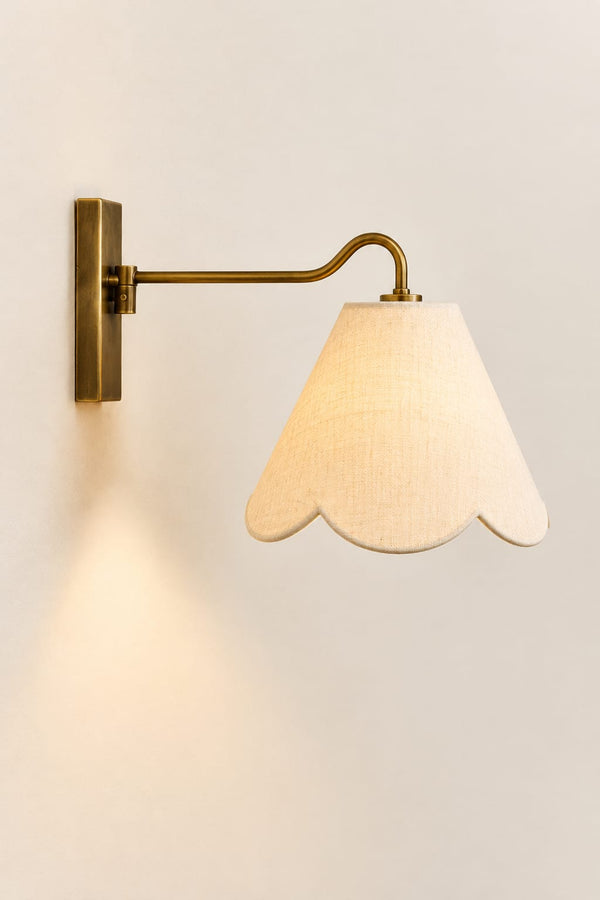
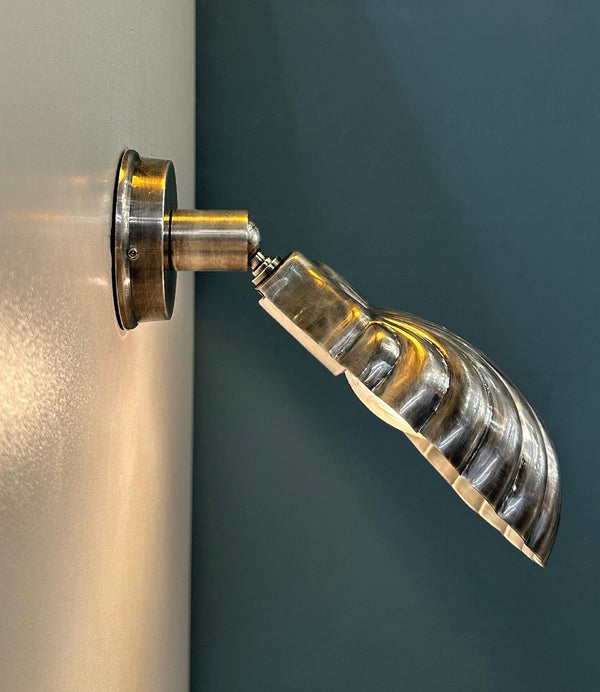
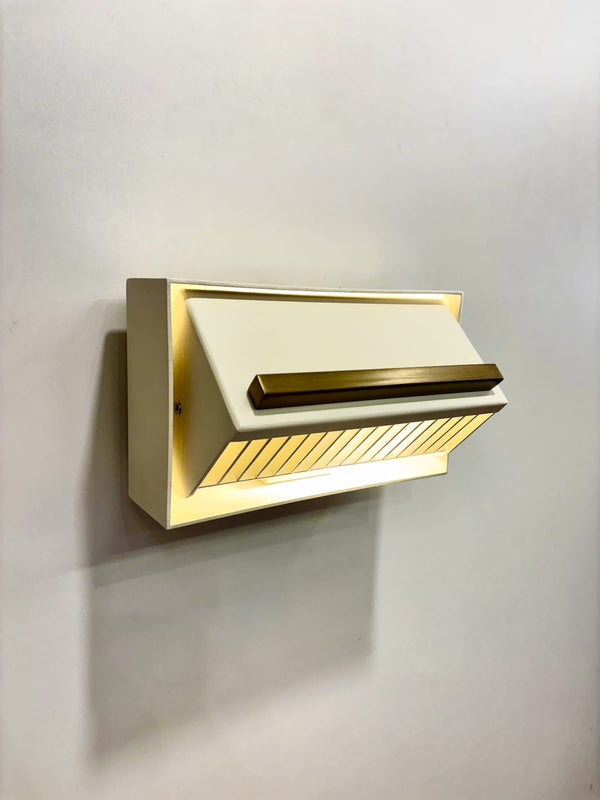
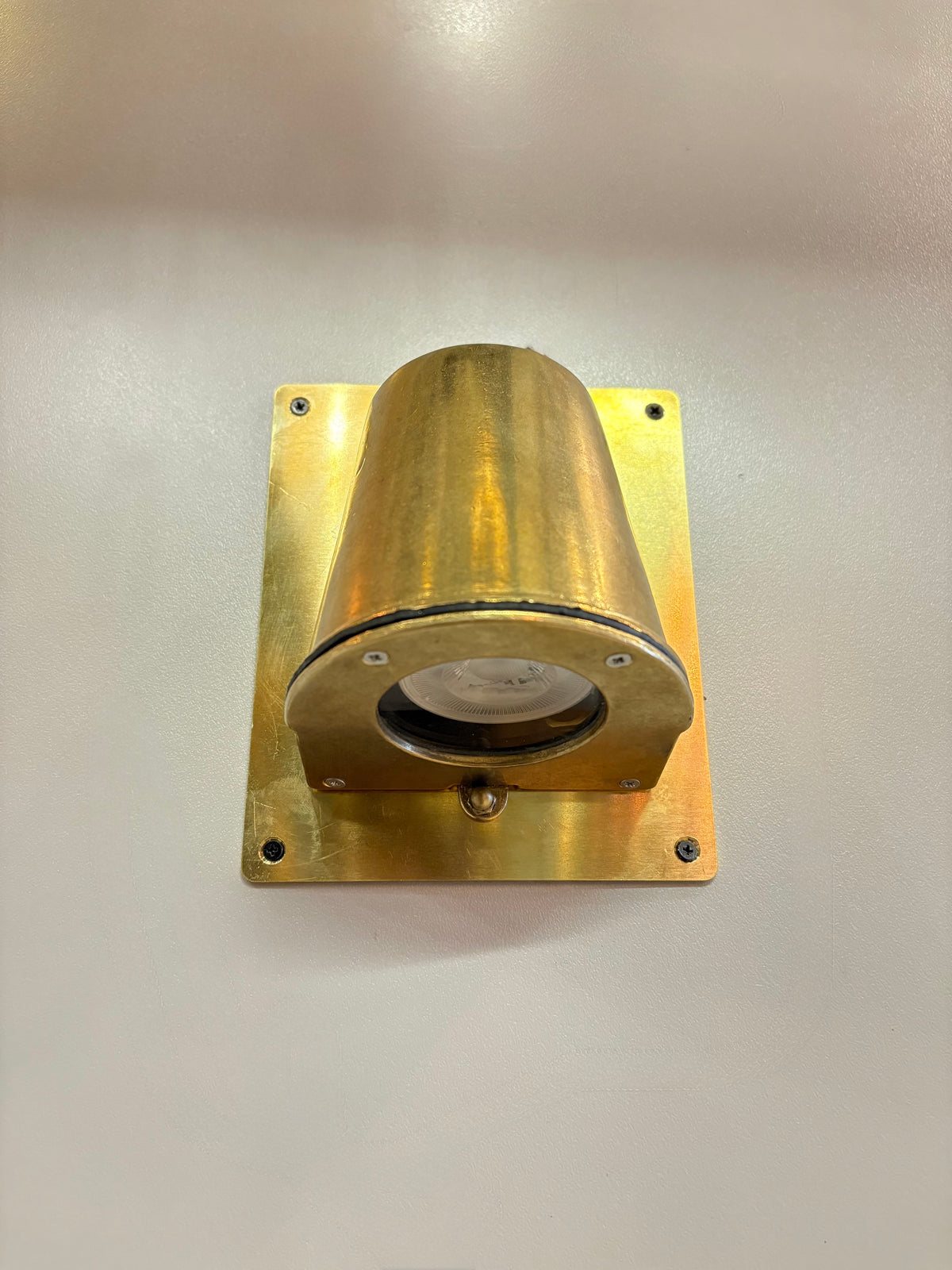
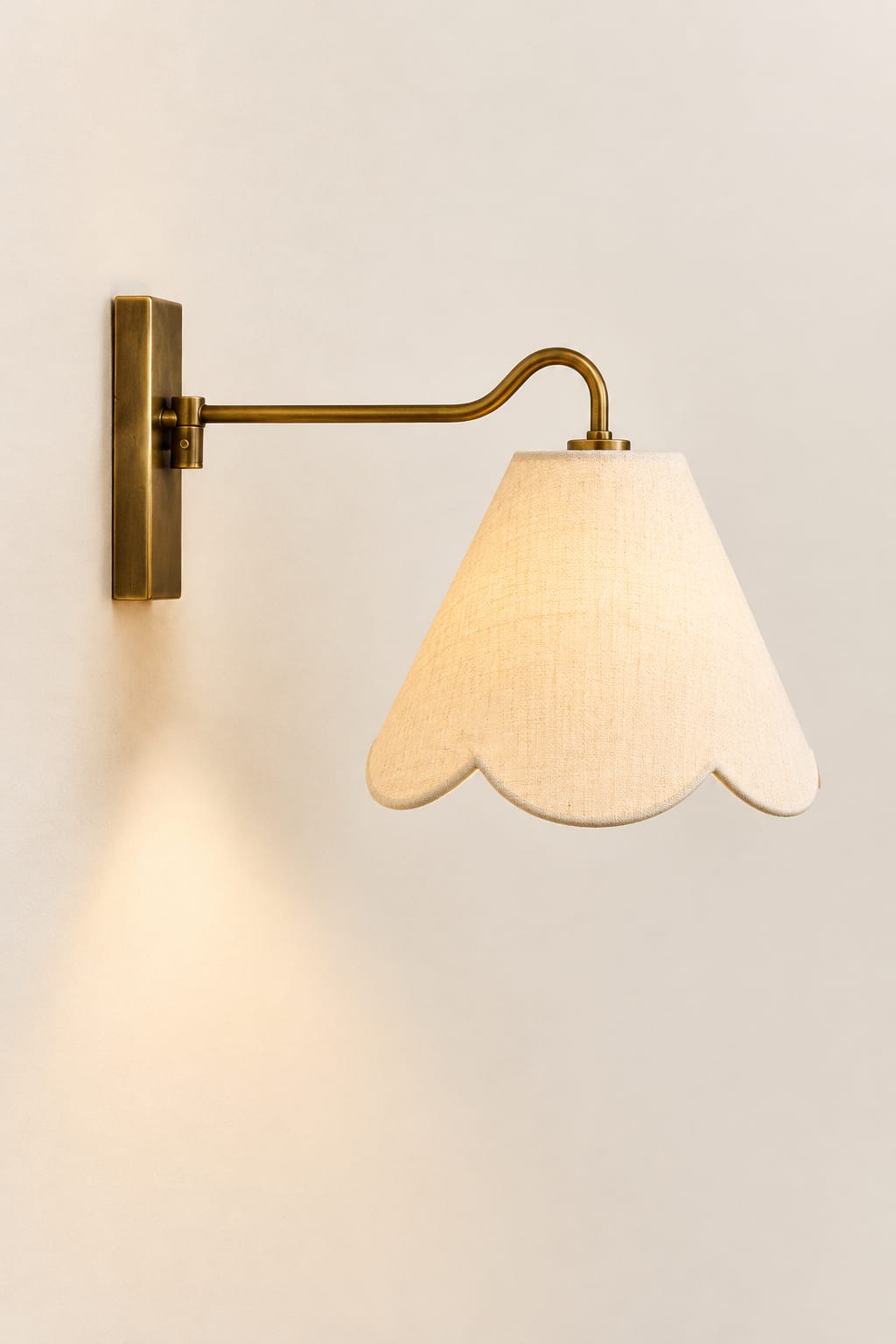
If your desk sits against a wall, a swing-arm sconce is often the better choice. Our RUDA swing-arm sconce in antique brass has a fabric shade that softens the light and an arm you can pull over the desk or push back against the wall. The MANDAR adjustable sconce has a pivoting head that works well for aiming light down at paperwork. For a more designed look, the MURAFA mid-century sconce has a louvered, adjustable head that cuts sideways glare. Read more in our swing-arm sconce guide and our comparison of hardwired vs plug-in sconces.
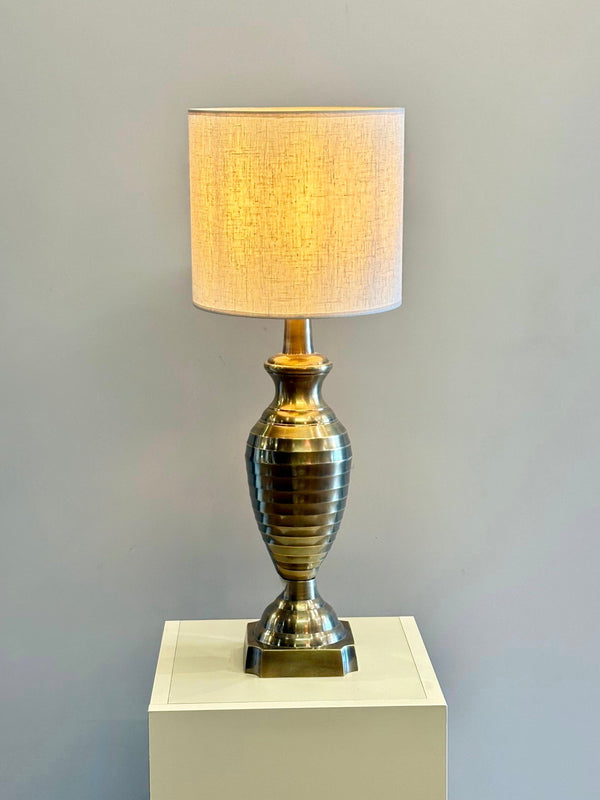
If you prefer a lamp, choose one with a shade that hides the bulb from your eyes when seated. A brass table lamp like GIRON on a side credenza can also serve as the soft front light for video calls.
What color temperature is best for a home office?
- 3000K: warm but clear. A good choice if the office is also a guest room or part of the living space.
- 3500K to 4000K: neutral white that helps with focus and reading detail during the day.
- 5000K and above: very cool. It can feel clinical at home and is hard on the eyes in the evening.
Many people do well with neutral task light (around 4000K) and warmer ambient light (2700K to 3000K), all on dimmers so you can wind down at the end of the day. Look for bulbs with a CRI of 90 or higher so paper, fabric samples and your face on camera look true to color. Our color temperature guide covers this in more depth.
How bright should home office lighting be?
For reading and writing, aim for a task light of roughly 450 to 800 lumens aimed at the desk surface, plus enough ambient light that the room doesn't feel dark around the screen. If your office has no ceiling fixture at all, see how to light a room with no overhead lighting.
Frequently asked questions
Where should the light be placed relative to the monitor?
To the side of the monitor and slightly in front of it, aimed down at the desk. Avoid placing any bright source directly behind the screen or where it reflects in it.
How high should a wall sconce be mounted over a desk?
Usually around 15 to 20 inches above the desk surface, which puts the shade just above seated eye level. Check our sconce height guide for general rules.
Is warm light bad for working?
Not necessarily. Warm light around 3000K is perfectly workable for most tasks. Very warm light (2200K to 2400K) can feel sleepy for detailed work, so save it for evening ambient light.
Do I need a ring light for video calls?
Not if you have good front light. A window you face or a shaded lamp behind your laptop gives a softer, more natural look than most ring lights.
Related reading
- Shop handcrafted brass wall sconces
- Swing-arm and articulating sconces
- Best color temperature for home lighting
- How to brighten a dark room
Handmade brass lighting · Crafted in Istanbul · Free US shipping · Arel Lighting