Dining Room Lighting Ideas & How to Size a Chandelier
Quick answer: To size a dining room chandelier, add the room's length and width in feet and use that sum in inches as the ideal diameter — a 12 × 14 ft room suits a chandelier about 26 inches wide. Hang the bottom 30–36 inches above the table (add 3 inches per foot of ceiling over 8 ft), and keep the fixture about 12 inches narrower than the table on every side. Put it on a dimmer.
The dining room is where lighting does the most emotional work — it sets the mood for family dinners and holidays alike. A well-sized chandelier centered over the table anchors the whole room; the wrong size throws everything off. Here's exactly how to size, hang, and light a dining room so it feels warm and intentional.
Sizing a chandelier can feel like guesswork, but it comes down to two simple formulas and one height rule — all in the feet and inches US homes are measured in. Get those right and the fixture looks like it was chosen by a designer; get them wrong and even a beautiful chandelier feels off. Below you'll find the exact numbers, a sizing chart, how to adapt the rules for round versus rectangular tables, and how to layer the chandelier with sconces and dimmers so the whole room feels considered rather than lit by a single bulb.
How to Size a Dining Room Chandelier
There are two proven rules, and the best fixtures satisfy both.
Rule 1: Size to the Room
Add the room's length and width in feet, then use that number in inches as the chandelier's ideal diameter. A 12 × 14 ft dining room (sum of 26) suits a fixture around 26 inches wide. This keeps the chandelier in proportion to the space as a whole.
Rule 2: Size to the Table
The chandelier should be about one-half to two-thirds the width of the table, and never wider than the table itself — leave at least 12 inches of clearance on each side so no one bumps it when seated. For a 40-inch-wide table, aim for a fixture 20–27 inches across.
When the two rules disagree, favor the table rule for round or narrow tables and the room rule for large open spaces.
The Right Hanging Height
Hang the bottom of the chandelier 30–36 inches above the tabletop for a standard 8-foot ceiling. This lights faces and the table without blocking the view across it. For higher ceilings, raise the fixture about 3 inches for every additional foot of ceiling — so a 10-foot ceiling puts the chandelier around 36–42 inches above the table. Because it hangs over a table (not a walkway), you have more freedom to go lower here than with a hallway fixture.
Centering: Table First, Not the Room
Always center the chandelier over the table, not the room. Tables are frequently off-center relative to the walls, and a fixture centered on the ceiling but floating beside the table is one of the most noticeable lighting mistakes. If you may rearrange the room later, a fixture on a swag chain or an adjustable canopy gives you flexibility.
Dining Room Chandelier Sizing Chart
| Room (L + W) | Table width | Chandelier diameter |
|---|---|---|
| ~20 ft sum | 36 in | 18–22 in |
| ~24 ft sum | 40 in | 22–26 in |
| ~28 ft sum | 44 in | 26–30 in |
| ~32 ft sum | 48 in | 30–34 in |
Layering Dining Room Light
A chandelier alone rarely lights a dining room well. The most inviting rooms layer it with other sources:
- The chandelier for the centerpiece glow over the table.
- Wall sconces on either side of a buffet or artwork to add mid-height warmth and depth.
- Recessed or accent lighting to fill the corners the chandelier can't reach.
Sconces flanking a sideboard are an especially elegant addition — they echo the chandelier's finish and make the room feel considered rather than lit by a single fixture.
Bulbs & Dimming: The Dining Room Essential
Dining is the room where warm, dimmable light matters most. Fit warm-white 2700K bulbs so skin and food look their best, and always put the chandelier on a dimmer — the same fixture should carry you from a bright family breakfast to a low, candlelit dinner. If the chandelier has exposed bulbs, choose filament-style LEDs for a soft, flattering glow. Warm light also makes solid-brass fixtures glow rather than look flat, which is exactly the effect you want over a table.
Style: Choosing a Chandelier That Lasts
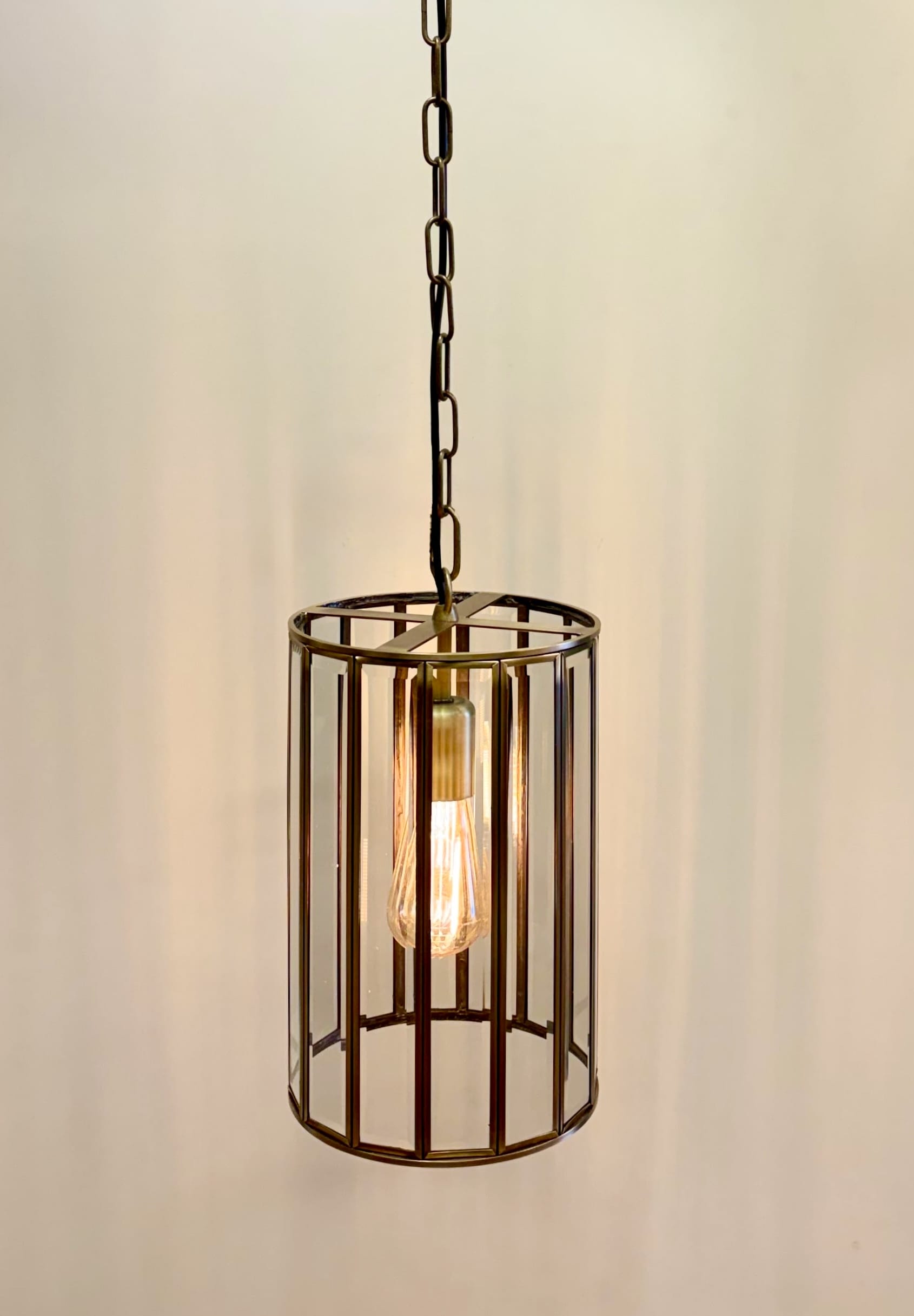
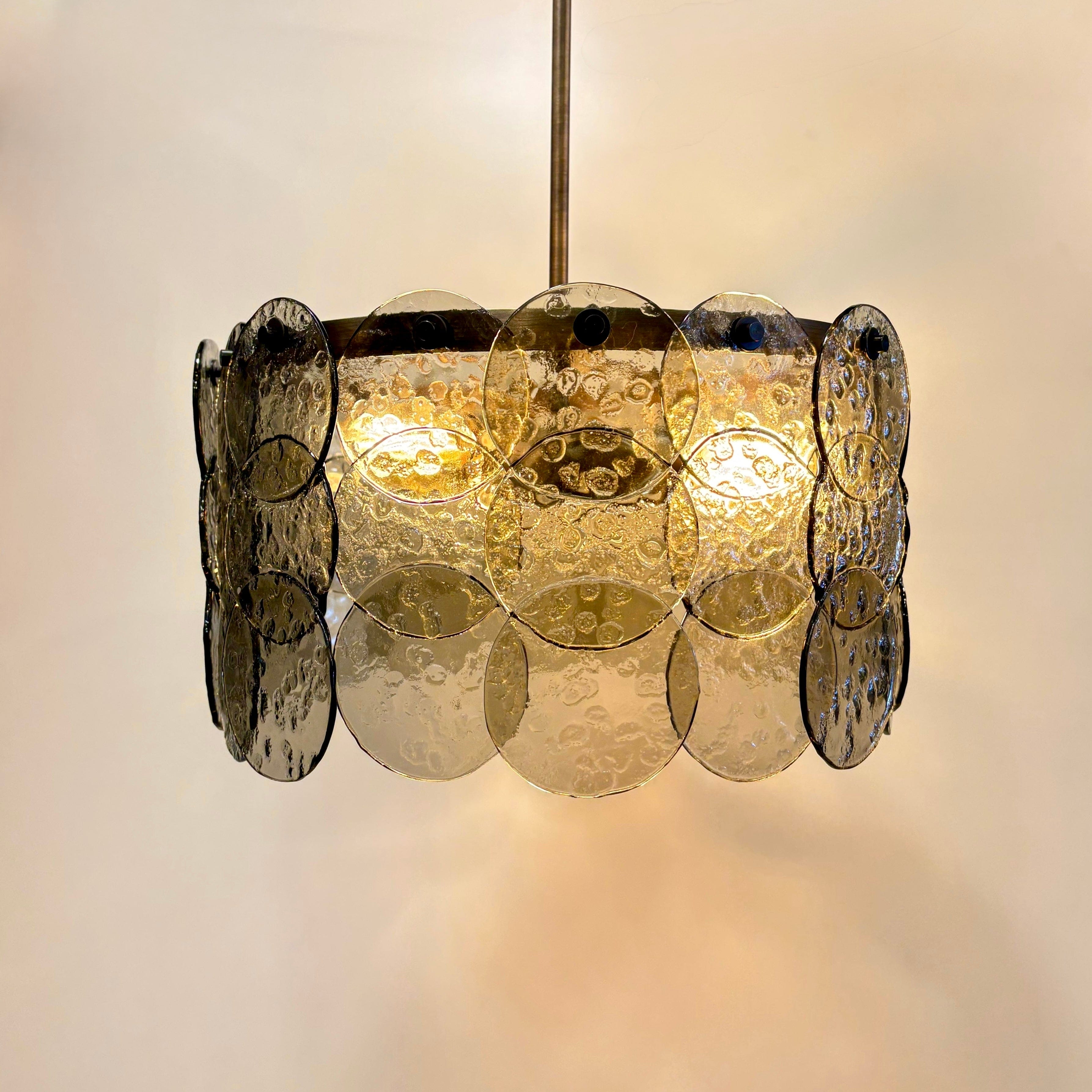
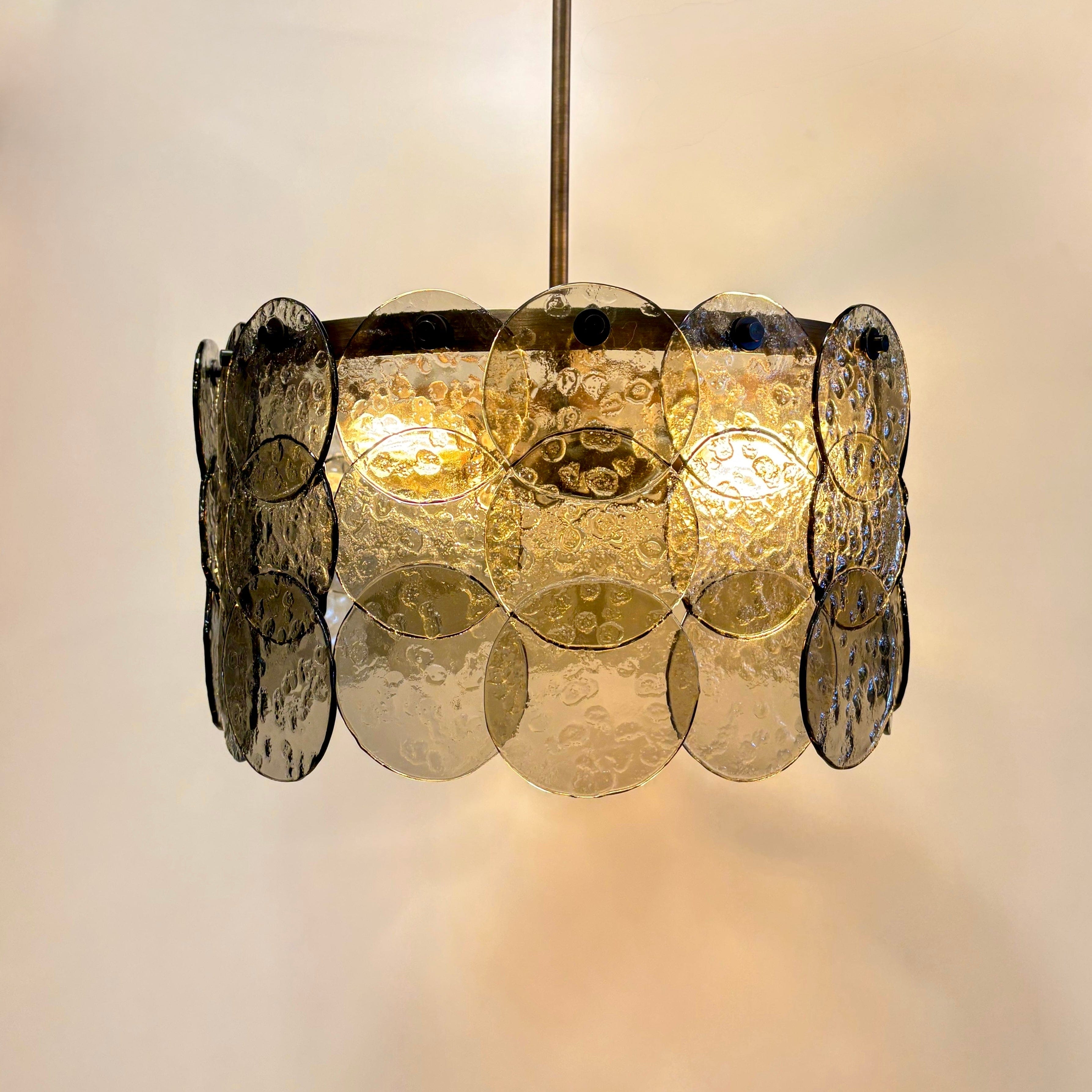
A dining chandelier is a long-term centerpiece, so material matters as much as shape. Handcrafted solid-brass and glass fixtures develop a living patina and stay beautiful for decades, unlike plated pieces that wear at the edges. Choose a silhouette that echoes your table and chairs — sculptural and organic for modern rooms, more structured for traditional ones — and let the chandelier be the one place you make a statement.
Round vs. Rectangular Tables
Table shape changes how you apply the sizing rules. Over a round or square table, a single round or drum chandelier centered on the table looks best — match its diameter to about half the table's width. Over a long rectangular table, a single round fixture can look undersized; instead use a linear chandelier or two matching pendants spaced evenly down the table's length. For a table seating eight or more, two fixtures almost always look more balanced than one, and they light the full surface rather than leaving the ends dim. Whatever the shape, the fixture (or pair) should stay about 12 inches narrower than the table on each side so seated guests have clearance.
Chandelier Styles for Different Dining Rooms
The right silhouette depends on your room's character. Modern and transitional dining rooms suit sculptural brass-and-glass fixtures with clean, organic lines. Traditional rooms carry more structured, candle-style or tiered chandeliers. Coastal and farmhouse spaces lean toward warmer, hand-finished materials and simpler forms. Across all of them, a solid-brass frame is the throughline that keeps the fixture from looking cheap — plated finishes betray their age at the edges, while cast brass develops a living patina. Pick a finish that repeats elsewhere in the room (chair legs, hardware, a sideboard tray) so the chandelier feels woven into the space rather than dropped in.
Bringing It All Together: A Dining Room Lighting Plan
A beautifully lit dining room follows a simple sequence. Start with the chandelier, sized to both the room and the table and centered precisely over the table, hung 30–36 inches above the surface. Then layer: add a pair of sconces beside a sideboard or artwork for mid-height warmth, and fill the corners with recessed or accent light so the room never relies on a single source. Next, warm it up — 2700K bulbs across every fixture, on dimmers, so the whole room can shift from bright and practical to soft and intimate with one dial. Finally, tie the finishes together so the chandelier, sconces, and any hardware share a metal tone and read as one considered scheme.
The payoff is a room that works for a bright Sunday lunch and a candlelit dinner party without changing a bulb — just the dimmer. Because the chandelier is the centerpiece you'll look at every day, it's the one fixture worth investing in: a handcrafted solid-brass piece holds its beauty for decades and becomes the anchor the rest of the room is styled around. Get the size, the height, and the warmth right, and the dining room becomes the most inviting space in the house.
Frequently Asked Questions
What size chandelier for a dining room?
Add the room's length and width in feet and use that sum in inches as the diameter — a 12 × 14 ft room suits about a 26-inch chandelier. It should also be roughly half to two-thirds the table's width and never wider than the table.
How high should a dining room chandelier hang?
Hang the bottom 30–36 inches above the tabletop for an 8-foot ceiling, adding about 3 inches per extra foot of ceiling height.
Should a chandelier be centered on the table or the room?
Always center it over the table. Tables are often off-center to the walls, and a chandelier aligned to the ceiling but not the table looks noticeably wrong.
How wide should a chandelier be compared to the table?
About one-half to two-thirds the table's width, with at least 12 inches of clearance on each side so seated guests never bump it.
What bulbs are best for a dining chandelier?
Warm-white 2700K LED bulbs on a dimmer, ideally filament-style if the bulbs are exposed, for a flattering, adjustable glow.
Explore our handcrafted brass chandeliers & pendants
Every piece is cast and finished by hand in solid brass by Arel Lighting, with free US shipping.
Browse the pendant & hanging lights collection, or read our kitchen island pendant sizing guide.