What Size Wall Sconce Do I Need?
Quick answer: As a rule of thumb, a wall sconce should be about one-quarter to one-third the height of the wall space it occupies, and no more than a third as wide as the surface beside it (like a mirror or headboard). For a standard 8 ft wall, that usually means a sconce 12–20 inches tall. Size up for tall ceilings, large mirrors, and grand entryways; size down for narrow walls and powder rooms. When in doubt, go slightly larger — undersized is the most common mistake.
Choosing the right wall sconce size is the difference between a fixture that looks custom-made for the spot and one that feels lost or overbearing. Get it right and the sconce anchors the wall; get it wrong and it either disappears or dominates. The good news is that sizing comes down to a few simple proportions you can apply with a tape measure. This guide walks through them room by room, in the inches US homes are measured in.
The Two Rules That Govern Sconce Size
Almost every sizing decision follows two proportions:
- Wall height rule: the sconce should be roughly one-quarter to one-third the height of the wall area it sits on. On a standard 8 ft (96-inch) wall, that points to a fixture around 12–20 inches tall.
- Adjacent object rule: when a sconce flanks something — a mirror, headboard, or doorway — it should be no more than about a third of that object's width, and its height should feel balanced beside it.
When the two rules disagree, favor the object rule for sconces framing a mirror or bed, and the wall rule for sconces standing alone on an open wall.
Match the Sconce to the Wall Space
Start by looking at the blank wall the sconce will occupy, not just the room. A tall, narrow wall between two windows calls for a more vertical fixture; a wide, low wall suits something more compact or horizontal. The sconce should fill its share of the space without crowding the edges — leave breathing room on all sides. A quick test: cut a paper template to the fixture's size, tape it to the wall, and step back. If it looks timid, size up; if it feels crammed, size down.
Sizing Sconces by Room
Living Room & General Walls
On open living-room walls, medium to large sconces (14–20 inches tall) hold their own and cast a useful pool of light. Pairs look balanced flanking a fireplace, sofa, or artwork.
Bedroom & Bedside
Bedside sconces should relate to the headboard and nightstand — typically 12–18 inches tall, mounted so the light falls on the page. A grand upholstered headboard can carry a larger fixture; a slim frame wants something more modest.
Bathroom Vanity
Flanking a mirror, choose sconces that are roughly one-third the mirror's height and spaced to frame it — usually 12–20 inches tall for a standard vanity mirror. A pair almost always beats a single fixture here.
Hallways & Entryways
Corridors suit medium sconces (12–18 inches) spaced evenly; a tall or two-story entryway can carry larger, more sculptural fixtures that read as a centerpiece.
Powder Rooms & Small Spaces
Compact walls want compact fixtures — a mini sconce (8–12 inches) keeps a powder room or narrow nook from feeling crowded.
Wall Sconce Size Chart
| Location | Typical sconce height | Notes |
|---|---|---|
| Powder room / small nook | 8–12 in | Mini scale |
| Bedside | 12–18 in | Match the headboard |
| Bathroom vanity | 12–20 in | Flank the mirror, in pairs |
| Hallway / corridor | 12–18 in | Space evenly |
| Living room / feature wall | 14–20 in | Pairs look balanced |
| Tall / two-story entry | 18–24 in+ | Size up to fill height |
Sizing for Pairs and Groupings
When you use sconces in pairs — flanking a mirror, bed, or fireplace — the individual size matters, but so does the gap between them. Leave enough space that the two fixtures frame the object rather than crowd it: roughly 6–12 inches of clearance on each side of a mirror or headboard is a good target. For a run of sconces down a hallway, keep them identical in size and space them 8–10 feet apart so the light pools overlap evenly. Consistency is what makes groupings look deliberate.
When to Size Up vs. Size Down
Size up for high ceilings, large mirrors, grand entryways, and open feature walls — small fixtures get swallowed by big spaces, and undersizing is by far the most common mistake. Size down for narrow walls, powder rooms, tight nooks, and anywhere a fixture would crowd a doorway or bump a shoulder. If you're genuinely between two sizes, lean larger for a statement or in a big room, and smaller only when space is truly tight.
Don't Forget Projection and Depth
Height and width get the attention, but how far a sconce projects from the wall matters too — especially in hallways, above stairs, and beside doorways where people pass. In tight circulation spaces, choose a shallower fixture (or an ADA-style low-projection sconce) so it doesn't intrude into the walkway. On open walls you have more freedom for a deeper, more sculptural fixture that casts light forward as well as up and down. Always picture the fixture from the side, not just head-on.
How Style and Finish Change Perceived Size
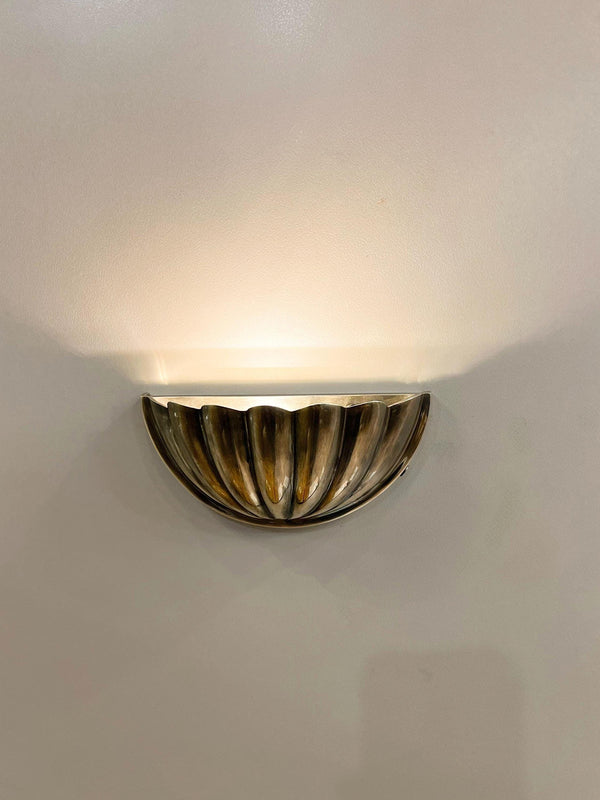
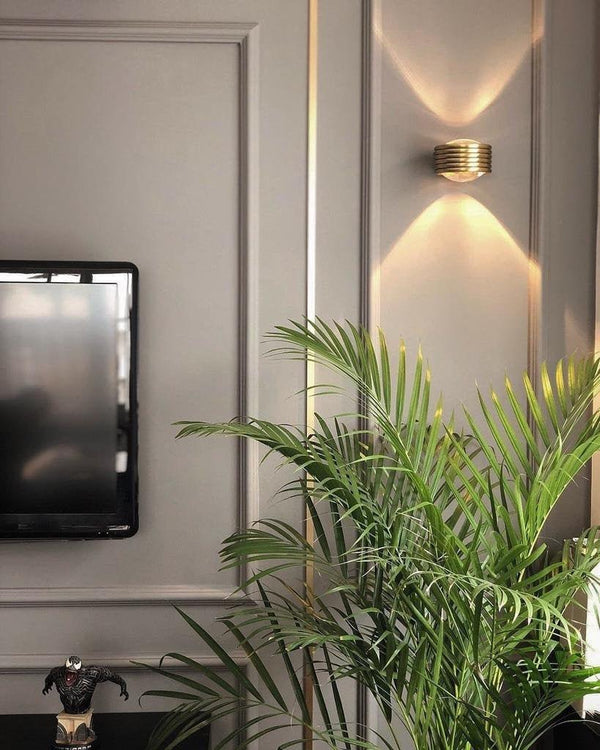
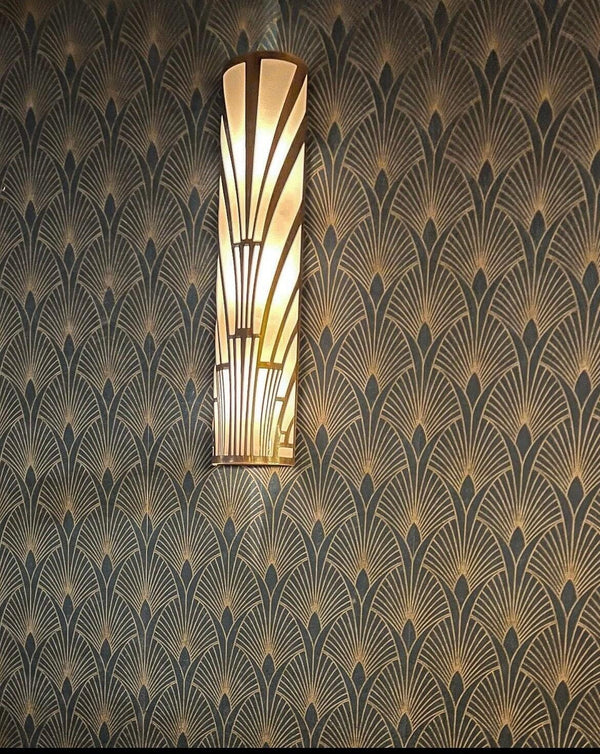
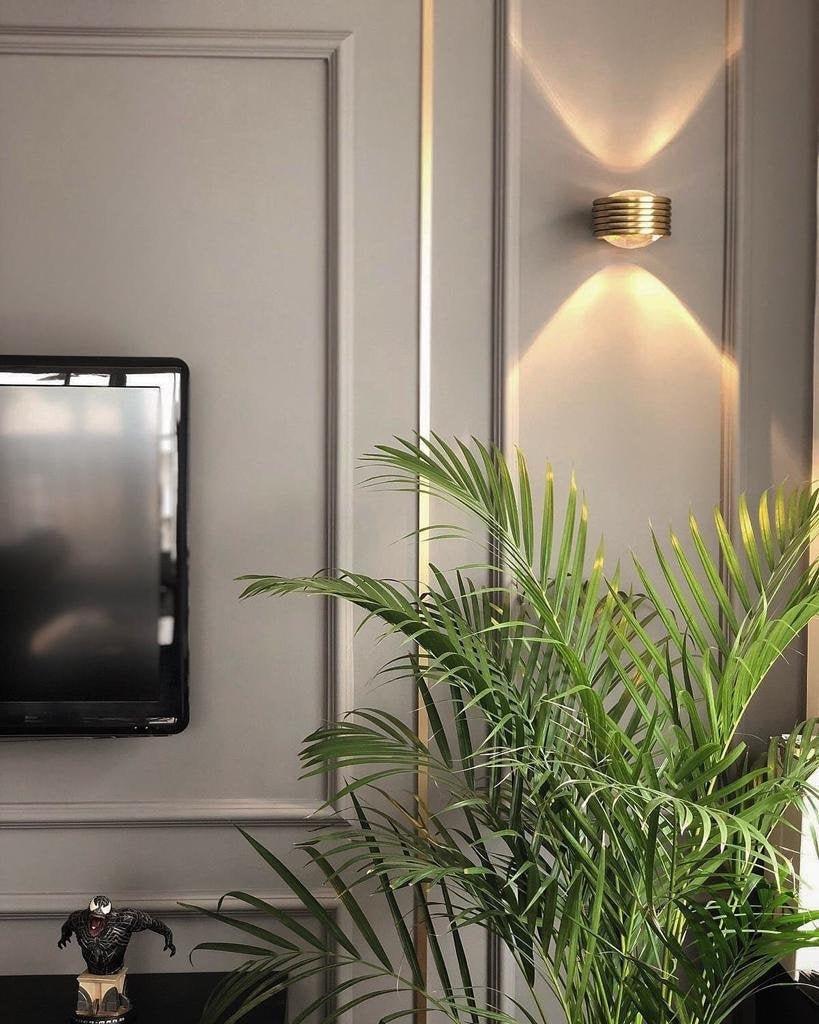
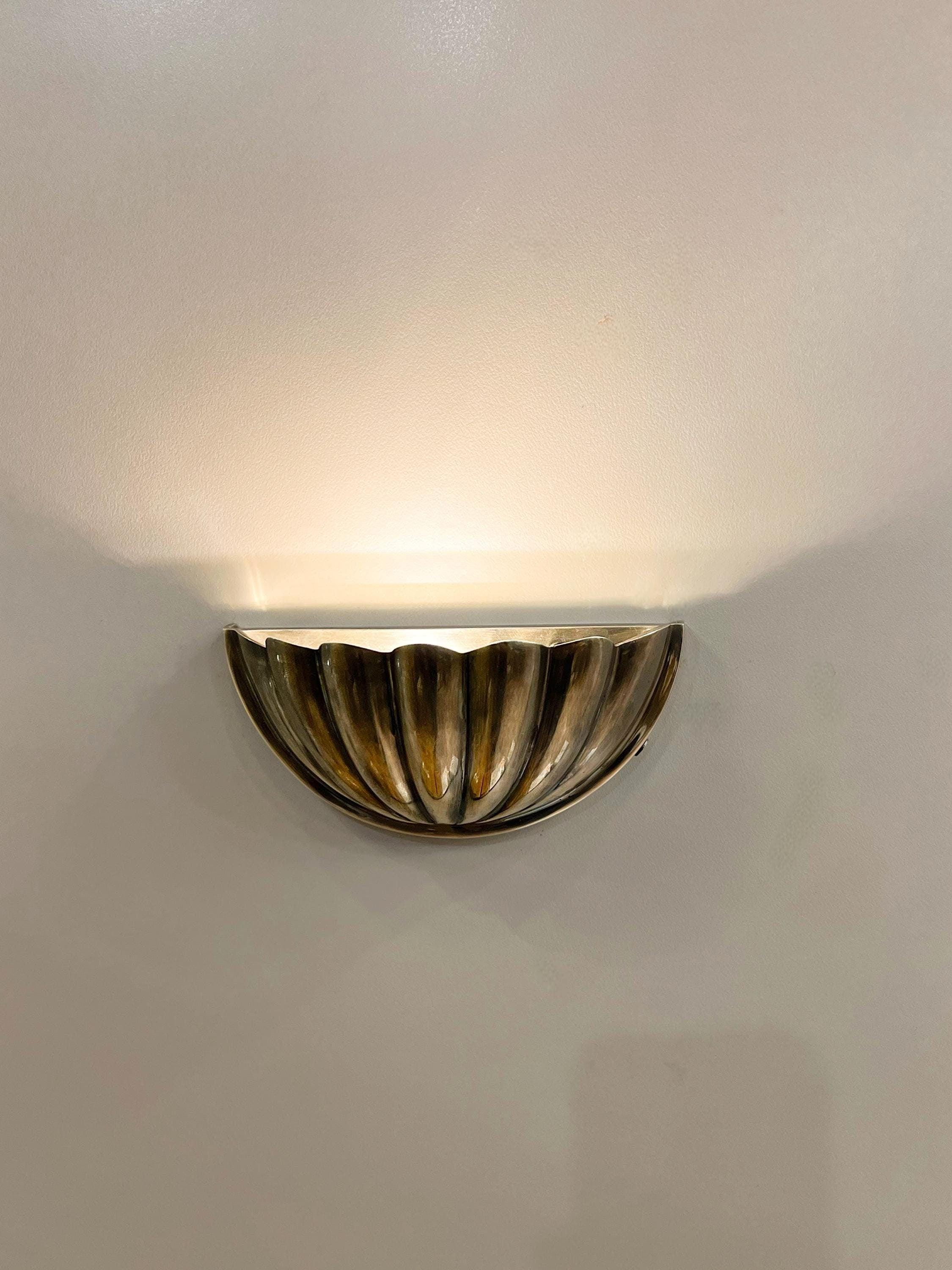
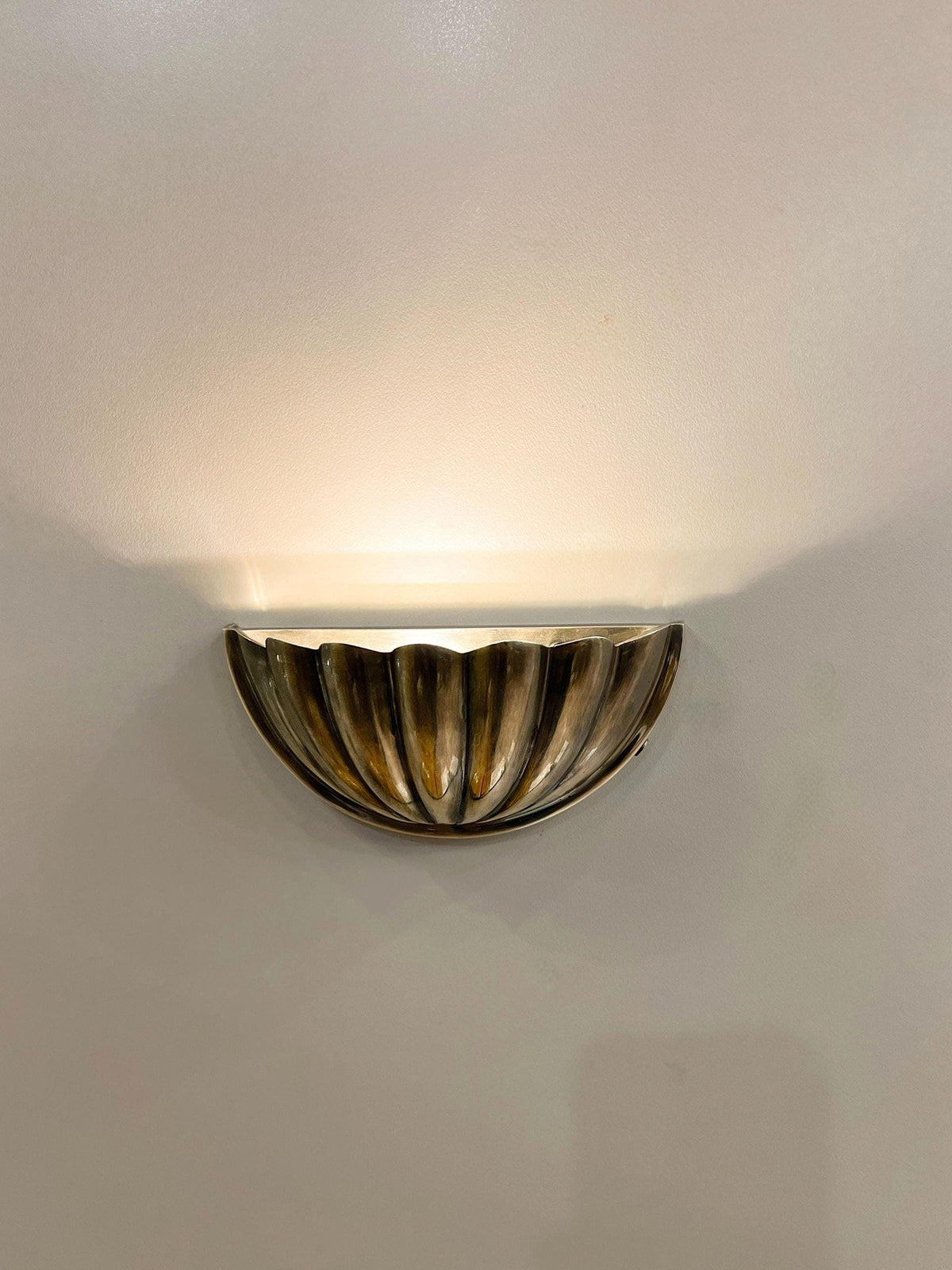
Two sconces with identical dimensions can read very differently depending on their design, so the number on the box is only part of the story. A bold, solid form — a wide backplate, a large shade, a heavy cast body — reads bigger and fills more visual space than its measurements suggest, so you can often go slightly smaller than the rules imply. An open, airy design — a thin arm, a clear glass shade, a delicate frame — reads lighter and can disappear on a large wall, so lean toward the upper end of the size range. Finish plays a part too: a warm brass or dark fixture stands out against a pale wall and carries more visual weight, while a light or reflective finish blends in and may need to be larger to register. When you shortlist a fixture, picture it against your actual wall color, not the white studio background of a product photo — that context is what determines whether it reads as just right or too timid.
Sizing for Different Fixture Types
The rules flex a little by fixture type. A traditional lantern or shaded sconce is measured mostly by height and suits the height-based rule directly. A picture light is sized to the artwork it lights — aim for roughly one-half to two-thirds the width of the frame. A swing-arm sconce should be judged by its reach as well as its size, since the arm extends its footprint when in use. And a linear or horizontal sconce is governed by width rather than height, so measure the wall space side to side. Knowing which dimension matters for your fixture type keeps you from over-focusing on the wrong measurement.
Common Sizing Mistakes
- Going too small. The number-one error — a dainty sconce disappears on a large wall or beside a big mirror.
- Ignoring the adjacent object. A sconce beside a mirror or bed has to relate to it, not just the wall.
- Mismatched pairs. Two different sizes flanking the same object look accidental.
- Forgetting projection. A deep fixture in a narrow hallway becomes a hazard.
- Sizing to the room, not the wall. The blank wall space, not the overall room, sets the scale.
Frequently Asked Questions
What size wall sconce do I need?
Aim for a sconce about one-quarter to one-third the height of its wall space — roughly 12–20 inches tall on a standard 8 ft wall. Beside a mirror or bed, keep it to about a third of that object's width. Size up for tall or grand spaces.
How big should bathroom vanity sconces be?
Choose sconces about one-third the height of the mirror, typically 12–20 inches for a standard vanity, and use a matching pair flanking the mirror rather than a single fixture.
What size sconce for a bedside?
Bedside sconces are usually 12–18 inches tall, scaled to the headboard, and mounted so the light falls on the page — larger for a grand upholstered headboard, smaller for a slim frame.
Is it better to go bigger or smaller with a sconce?
When in doubt, go slightly bigger. Undersized sconces are the most common mistake and leave a wall looking unfinished. Only size down when the wall is genuinely narrow or the fixture would crowd a walkway.
How much space between paired sconces?
Leave roughly 6–12 inches of clearance on each side of a mirror or headboard, and space a row of hallway sconces 8–10 feet apart so the light overlaps evenly.
Explore our handcrafted brass wall sconces
Available in mini to grande scales, each cast and finished by hand in solid brass by Arel Lighting, with free US shipping.
Browse the brass wall sconces collection, or read our wall sconce placement & height guide.