
Artículo: Coastal Lighting Durability Guide (2026): Which Materials Survive Salt Air
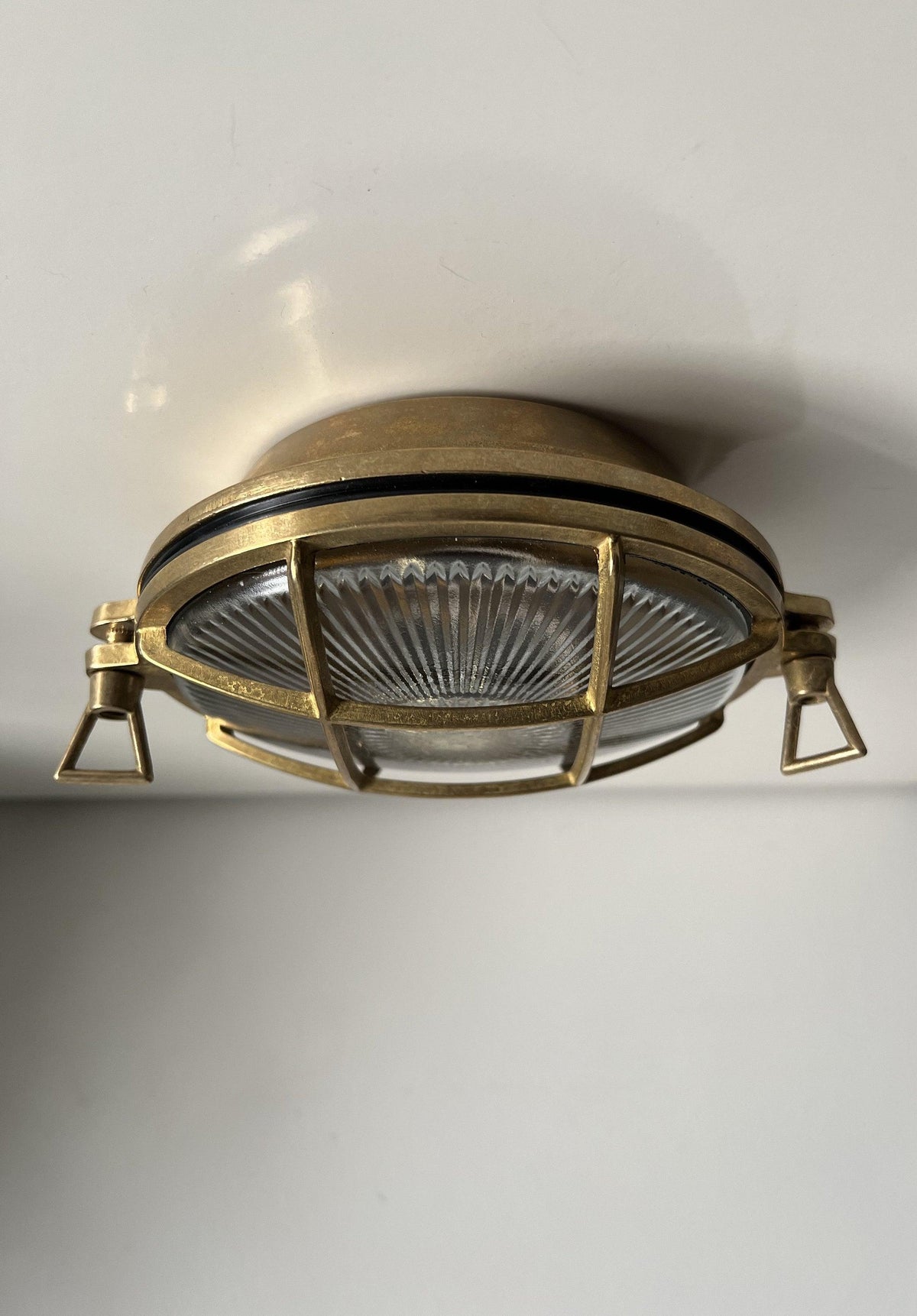
Coastal Lighting Durability Guide (2026): Which Materials Survive Salt Air
Coastal Lighting Durability Guide (2026): Which Materials Survive Salt Air
Quick answer: Near the ocean, choose fixtures made from solid brass, bronze, or 316 marine-grade stainless steel, and avoid plated steel, zinc die-cast, and bare aluminum, which pit, bubble, or rust quickly in salt air. Material decides how long a fixture lasts; the IP rating only decides whether water gets inside. Install with corrosion-compatible screws, caulk the top and sides but not the bottom, and rinse the fixture with fresh water every few weeks.
Arel Lighting makes handcrafted solid brass nautical fixtures, and the question coastal buyers ask us most is simple: will it survive the salt? This guide answers that properly. It covers which metals hold up in salt air and why, what really fails first on an outdoor light, and how to install and maintain a fixture so it lasts on a beach house, dock, or porch a block from the water. If you need a refresher on what IP numbers mean, our IP ratings guide covers that in detail. This article focuses on materials and installation.
Why does salt air destroy outdoor lights so fast?
Salt air destroys outdoor lights because airborne sea salt is chloride, and chloride attacks the thin protective layer that most metals rely on to resist corrosion. Ocean spray and onshore wind carry fine salt crystals inland, where they settle on fixtures and draw moisture out of the air. The result is a damp, salty film that sits on the metal day and night.
Three things make it worse on the coast:
- Constant moisture. Humidity, fog, and dew keep the salt film wet, so corrosion never pauses.
- Hidden salt. Rain rinses the top of a fixture, but salt builds up in sheltered spots like under a porch roof or behind a wall plate, where it is never washed off.
- Mixed metals. When two different metals touch in a salty, wet film, one of them corrodes much faster. This galvanic corrosion is why a good fixture can still fail at its screws.
That is why a fixture that lasts a decade inland can look tired within a season or two on the shore. The fix is choosing a metal that resists chloride in the first place.
Which light fixture materials hold up best near the ocean?
Solid brass, bronze, and 316 stainless steel hold up best near the ocean, while plated and painted metals hold up worst. Here is how the common options compare in salt air:
| Material | Salt-air durability | How it ages | Watch out for |
|---|---|---|---|
| Solid brass | Excellent | Darkens to a brown or green patina; never rusts | Patina is part of the look; polish if you want shine |
| Bronze | Excellent | Deepens to a dark brown patina | Usually the most expensive option |
| 316 stainless steel | Very good | Stays bright; can show light surface staining | Needs rinsing; check it's 316, not 304 |
| 304 stainless steel | Fair | Can develop rust-colored "tea staining" and pits | Often sold just as "stainless" |
| Powder-coated aluminum | Fair to poor | Fine until the coating chips | Once chipped, white corrosion bubbles under the paint |
| Plated steel or zinc die-cast ("brass finish") | Poor | Plating wears or flakes; base metal rusts or turns white | Looks like brass in photos; fails first on the coast |
The key distinction is solid versus finish. A "brass finish" or "bronze finish" fixture is usually steel or zinc with a thin colored coating. On the coast, that coating is the only thing protecting a metal that corrodes easily, and salt finds every scratch.

Is solid brass good for coastal lighting?
Yes. Solid brass is one of the best materials for coastal lighting, which is why it has been used on ships, docks, and lighthouses for centuries. Brass is an alloy of copper and zinc. Instead of rusting, it forms a stable surface layer, called patina, that slows further corrosion. On a salty coast, that patina forms faster and can include green tones from copper compounds.
What to expect from solid brass by the sea:
- It changes color, it doesn't fall apart. Bright brass darkens to a warm brown within months outdoors and may pick up green highlights in crevices. That is surface patina, not structural damage.
- Unlacquered brass ages most evenly. Lacquered brass looks bright at first, but once salt gets under a scratch in the lacquer it can patina in patches. Raw, unlacquered brass weathers as one surface. We cover the difference in our brass cleaning and patina guide.
- You can always reverse it. If you prefer shine, solid brass can be polished back to bright metal as many times as you like, because there is no plating to wear through.
Every Arel Lighting nautical fixture is cast and finished by hand in brass, and our raw brass options are left unlacquered on purpose so they age naturally on the coast.
What's the difference between 316 and 304 stainless steel outdoors?
316 stainless steel contains molybdenum, which makes it far more resistant to chloride and salt than 304 stainless. That is why 316 is called "marine grade." 304 is perfectly good inland, but near salt water it can develop rust-colored staining and small pits, especially in sheltered spots that rain doesn't rinse.
The problem for buyers is labeling. Many fixtures are sold simply as "stainless steel" without stating the grade, and that usually means 304. If you're buying stainless for a coastal home, look for 316 or "marine grade" stated explicitly on the spec sheet. If it doesn't say, assume it's 304.
Even 316 benefits from a regular freshwater rinse on the coast. It resists salt well, but a heavy salt film left for months can still stain the surface.
Does a high IP rating mean a light will survive the coast?
No. An IP rating tells you how well a fixture keeps water and dust out, but it says nothing about how the housing itself handles salt. An IP65 fixture made of plated steel will keep its bulb dry while its body rusts. An IP64 fixture in solid brass will keep its bulb dry and keep its body intact.
Think of it as two separate decisions:
- Material decides lifespan. Pick solid brass, bronze, or 316 stainless for anything exposed to salt air.
- IP rating decides placement. As a general guide, IP44 suits covered porches and sheltered walls, while exposed walls, docks, and spots that take direct rain or spray need IP64 to IP65 or higher.
In the US, outdoor fixtures are also described as damp-rated (covered locations) or wet-rated (direct exposure to rain and spray). These are code terms tied to UL or ETL listing, and your electrician will look for them. Arel Lighting fixtures are rated to IP standards and are not UL listed, so check your local code and have a licensed electrician confirm the right fixture for each location before installation.
How should you install a light fixture near the ocean?
Install a coastal light so that salt and water can't get trapped behind it and different metals don't touch. Most early coastal failures happen at the mounting, not in the fixture itself. Ask your electrician to follow these steps:
- Use compatible screws. Use 316 stainless, brass, or bronze fasteners. Avoid zinc-plated or galvanized steel screws on a brass fixture: in salt air the zinc corrodes quickly and leaves rust streaks down the wall.
- Caulk the top and sides, leave the bottom open. Sealing the top keeps rain from running behind the fixture. Leaving a gap at the bottom lets any moisture that does get in drain out instead of pooling against the wiring.
- Check the gasket. The rubber gasket between the fixture and the wall is what earns the IP rating. Make sure it sits flat and isn't pinched or twisted.
- Protect the connections. Use wire connectors rated for damp or wet locations. Many electricians add dielectric grease to slow corrosion at the terminals.
- Mount on a solid, flat surface. Uneven siding such as lap or shingle can leave gaps behind the plate. A mounting block creates a flat, sealable surface.
- Pick the right location. Mount under an overhang where you can. A fixture protected from direct spray will always outlast one that faces the ocean wind head-on.
Most Arel nautical sconces are designed for surface mounting with a sealed back plate, and we can adjust the canopy size to fit your junction box on request.
How do you maintain outdoor lights in a salt-air climate?
The single most effective habit is a regular freshwater rinse. Salt only does damage while it sits on the surface, so washing it off resets the clock. Here is a simple routine for coastal homes:
| When | What to do |
|---|---|
| Every few weeks (more often in direct spray) | Rinse with fresh water or wipe with a damp cloth; pay attention to sheltered undersides that rain misses |
| Every season | Check the gasket, the caulk line, and the screws for rust streaks; replace any corroded fasteners |
| Once a year | Open the fixture, check the socket and connections for green or white deposits, and replace the bulb if you see moisture inside |
| Optional, for brass | Polish with a brass cleaner for shine, or let the patina develop; a thin coat of paste wax slows patina if you want a middle ground |
Avoid harsh chemicals, abrasive pads, and pressure washers. They strip protective patina from brass, scratch stainless steel, and can force water past the gasket.
What fails first on a coastal light, and how do you spot it?
On a well-made fixture, the parts that fail first are almost never the body. Here's what to watch for and what each sign means:
- Rust streaks below the fixture: the screws are steel. Swap them for 316 stainless or brass.
- White powder or bubbling paint: aluminum or zinc is corroding under a coating. This usually means the fixture body itself is failing, and replacement is the only real fix.
- Condensation inside the glass: the gasket has hardened or the caulk has failed. Reseal it before the socket corrodes.
- Flickering or a bulb that won't light: often corrosion on the socket or connections. Turn off the power and have it checked.
- Brown or green surface color on brass: normal patina, not a defect. Leave it or polish it.
How to choose a coastal fixture: a quick checklist
- Material: solid brass, bronze, or 316 stainless, stated clearly on the spec sheet. Avoid "finish" or "plated."
- IP rating: IP44 minimum for covered spots, IP64 to IP65+ for exposed walls, docks, and spray zones.
- Glass: real glass rather than plastic, which yellows and crazes in sun and salt.
- Hardware: stainless or brass screws included, or buy them separately.
- Finish choice: unlacquered brass if you want even, natural aging; polished if you're happy to maintain the shine.
- Code: confirm damp or wet-location requirements with a licensed electrician.
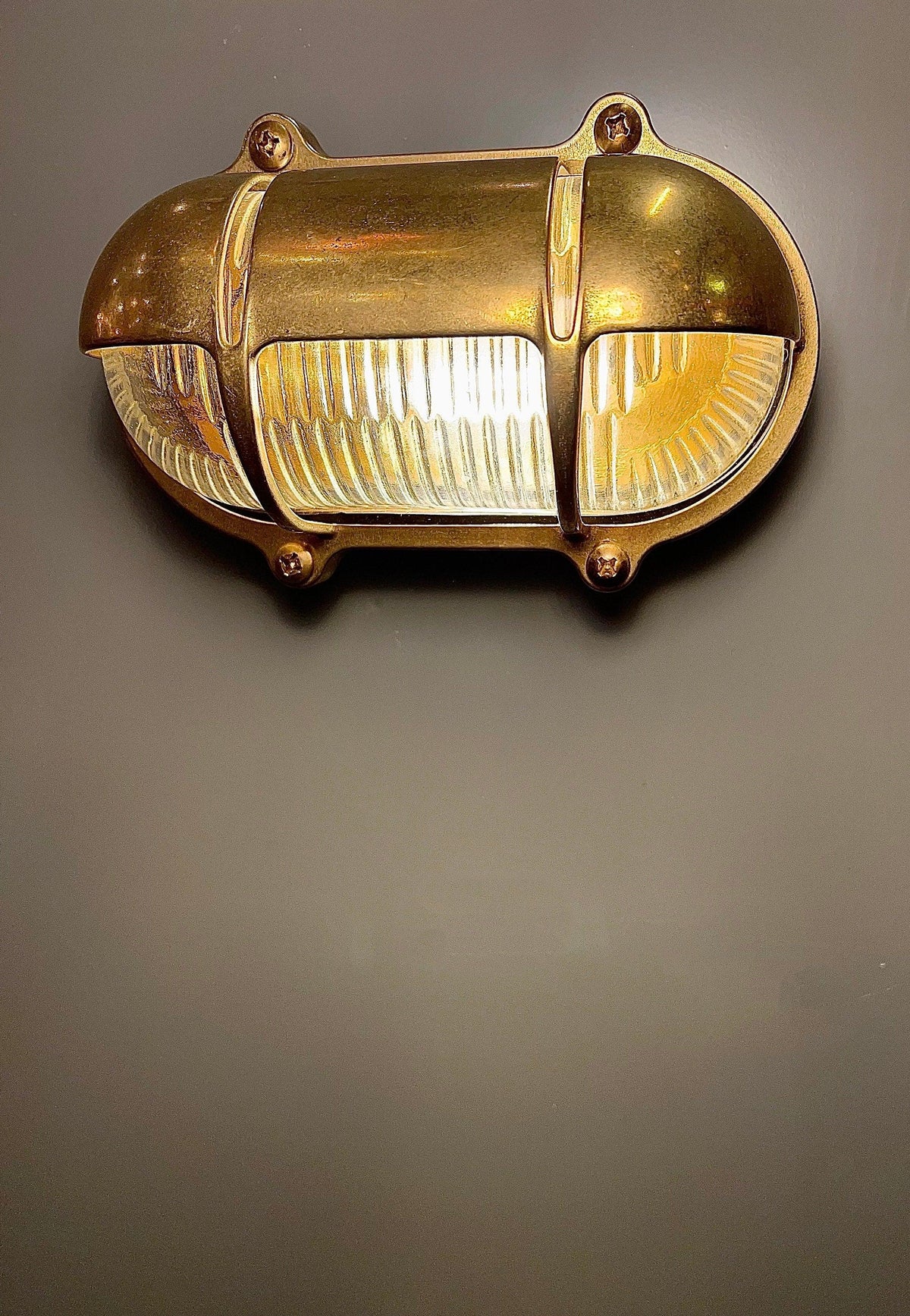
Arel Lighting's nautical and outdoor collection includes more than 70 fixtures rated IP64, all handcrafted in brass, from compact bulkheads like the PATIN MINI to dock-style sconces like the DELSOL MINI and the SLATINA. Every order ships free across the US.
Frequently asked questions
How far from the ocean do you need coastal-rated lighting?
There's no single cutoff, because salt travels further on windy, exposed sites. If you can smell the sea or see salt residue on your car or windows, treat your home as coastal and choose salt-resistant materials. Many lighting manufacturers define their own coastal zone and limit warranties inside it, so check the warranty terms before you buy.
Will solid brass lights turn green near the ocean?
They may develop green tones, especially in crevices and on unlacquered brass. This is copper patina and doesn't weaken the fixture. If you prefer bright brass, polish it periodically; if you like the weathered look, simply rinse it and let it age.
Is black outdoor lighting OK for a beach house?
It depends on what's under the black. Black powder-coated aluminum looks good at first but tends to chip and bubble in salt air. A black finish over solid brass or bronze is far more durable, because the metal underneath won't corrode if the finish is scratched.
Can I use the same lights on a dock as on a porch?
Docks need more protection than porches. A dock light faces direct spray and wind, so choose a higher IP rating (IP65 or above where possible) and a solid marine metal. See our dock and pier lighting guide for placement and fixture styles.
How long should an outdoor light last on the coast?
A plated or powder-coated fixture can show corrosion within one or two seasons in direct salt air. A solid brass or bronze fixture with a sound gasket and the right screws can last for decades. Its glass, gasket, and socket are the parts you may eventually service, not the body.
Related reading
- How to light a coastal or beach house
- IP ratings explained for outdoor and bathroom lighting
- Outdoor brass wall sconces buyer's guide
- Bulkhead vs porthole lights
- Shop nautical & outdoor lights
Handcrafted solid brass · More than 70 IP64-rated nautical fixtures · Free US shipping · Arel Lighting
:%20Which%20Materials%20Survive%20Salt%20Air%0A%0A%0A%20%20Quick%20answer:%20Near%20the%20ocean,%20choose%20fixtures%20made%20from%20solid%20brass,%20bronze,%20or%20316%20marine-grade%20stainless%20steel,%20and%20...)