Gooseneck Outdoor Lights (2026): How to Choose, Size & Mount Them
Quick answer: A gooseneck (or swan neck) outdoor light is a wall light whose arm curves out and down from the wall, so the shade sits forward of the facade and throws light down onto a door, a house number, steps or a sign. Choose one with a wet or damp rating that suits the spot (IP44 or higher under cover, IP64 or higher on an exposed wall), size the arm so the shade clears the door frame and trim, and mount it roughly 66 to 72 inches (170 to 180 cm) above the ground beside an entry.
Gooseneck lights started life on barns, warehouses and harbor buildings, where a light had to reach out over a doorway or a painted sign. Today the same curved-arm shape shows up on farmhouse porches, coastal cottages, garages and shopfronts. The arm is what makes them useful: it pushes the light source away from the wall, so the light lands where people walk instead of washing straight down the brick. Here is how to choose one, where it works best, and how to size and place it.
What is a gooseneck outdoor light?
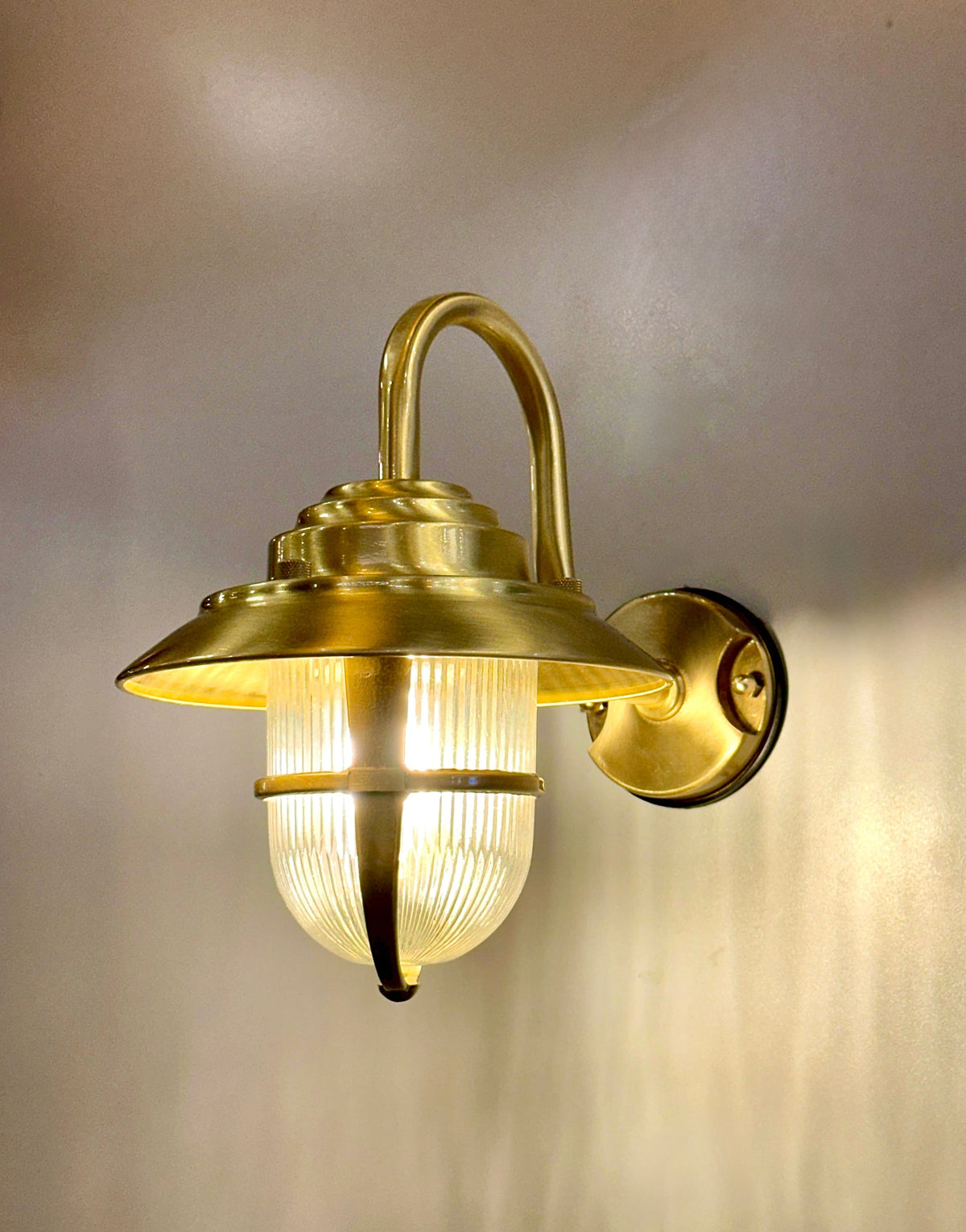
The name comes from the arm. It leaves the wall horizontally, then curves down like the neck of a goose or swan, ending in a shade or a glass enclosure that faces the ground. In the UK the same fixture is often called a swan neck light. Three things define the style:
- A projecting, curved arm that holds the light 8 to 16 inches (20 to 40 cm) away from the wall.
- A downward-facing shade or glass, so most of the light goes onto the ground, the step or the sign below.
- A simple, utilitarian look inherited from barns, ships and warehouses.
A gooseneck is different from a flush bulkhead light, which sits tight against the wall, and from an up and down wall light, which washes the facade in two directions.
Where do gooseneck lights work best?
- Front doors and porches. The arm carries the light over the step so faces and keys are lit, not just the wall.
- Garage doors and barns. A row of goosenecks above a wide door is the classic look and lights the driveway apron.
- House numbers and signs. A downward shade lights a number plaque or a business sign evenly without glare.
- Coastal and nautical homes. Brass goosenecks with ribbed or caged glass have the same harbor-building character as ship lights. See our guide to lighting a coastal home.
- Covered patios and side passages. Where a ceiling light is not an option, a gooseneck reaches out over the path.
Gooseneck vs other outdoor wall lights
| Gooseneck / swan neck | Bulkhead | Lantern | |
|---|---|---|---|
| Projection from wall | Large, light sits forward | Minimal, flush | Medium |
| Where light goes | Down, onto door, step or sign | All around, close to wall | All around |
| Glare | Low, shade hides the bulb | Low to medium | Higher with clear glass |
| Best for | Entries, garages, signs, barns | Narrow passages, exposed walls, bathrooms | Traditional porches |
How to choose the right gooseneck light
1. Check the IP rating for the location. Under a porch roof, IP44 is usually enough. On a wall that takes direct rain, sea spray or a garden sprinkler, look for IP64 or higher. Our IP ratings guide explains the numbers, and our IP64+ collection lists the fixtures rated for exposed walls.
2. Pick a material that will last. Solid brass does not rust; it darkens into a natural patina, which is why it has been used on boats and harbors for generations. Plated steel can look similar on day one but tends to bubble and flake in salt air. More in our coastal durability guide and solid vs plated brass.
3. Measure the projection. The arm should carry the shade clear of door trim, shutters and gutters. Measure from the wall to the edge of the trim and choose an arm that reaches a little past it.
4. Choose the shade and glass. A wide metal shade gives the sharpest downward light and the least glare. Ribbed or frosted glass softens the light and hides the bulb. Clear glass shows off a filament bulb but can glare if mounted low.
5. Match the style to the house. Caged brass and ribbed glass read as nautical and coastal. A plain black or aluminium arm with a glass shade feels modern farmhouse or industrial.
How high and how far apart should you mount them?
- Beside a door: center the light about 66 to 72 inches (170 to 180 cm) above the ground, or roughly one quarter of the way down from the top of the door. Use a pair on wide or double doors.
- Above a garage or barn door: mount above the door frame and space several lights 6 to 8 feet (1.8 to 2.4 m) apart across the width.
- Over a sign: mount the light above the sign so the shade sits slightly in front of it; one light per 3 to 4 feet (about 1 m) of sign width gives even coverage.
Our outdoor wall light height guide covers more situations.
Handmade gooseneck lights to consider
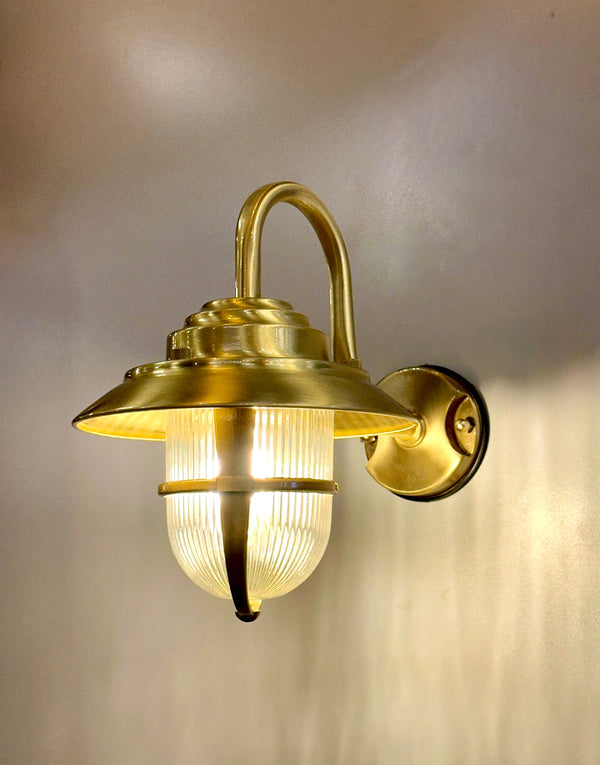
LOCHES: solid brass with a gracefully curved arm, a tiered brass shade and ribbed glass inside a protective frame. Rated IP64, so it suits exposed walls, porches and coastal homes.
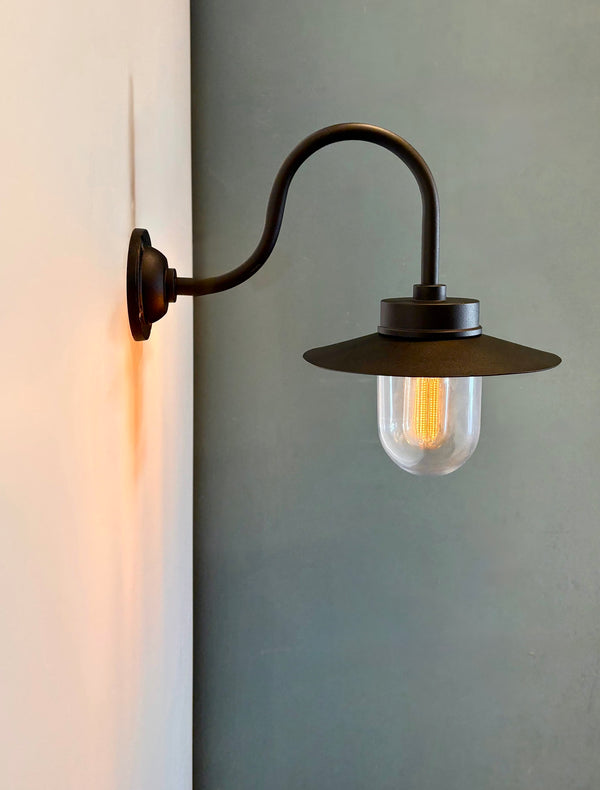
LOTORP: a swan neck arm with a glass shade, available in clear or frosted glass and in a version with a metal shade. Rated IP54, with a clean silhouette that works on modern farmhouse and industrial facades.
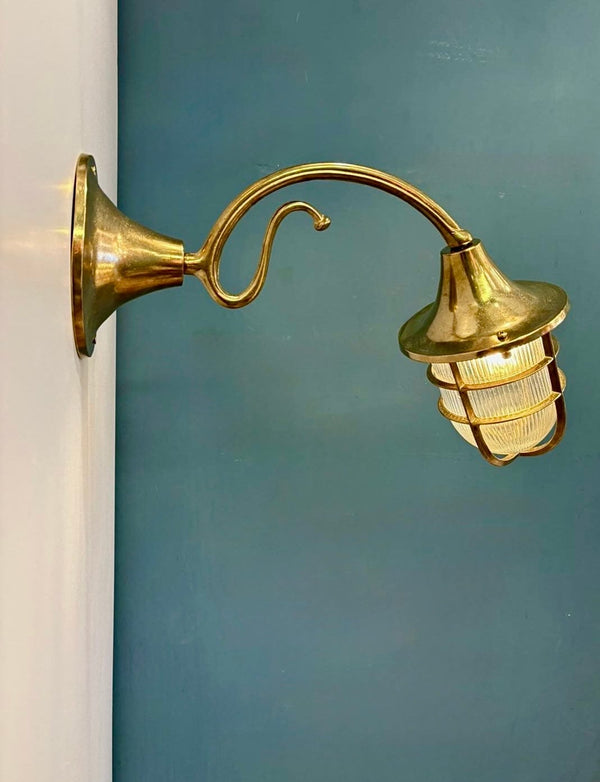
RYBNO: a gracefully arched solid brass arm holding ribbed glass inside a brass guard, like a classic ship lantern. Rated IP44 for covered porches and entries.
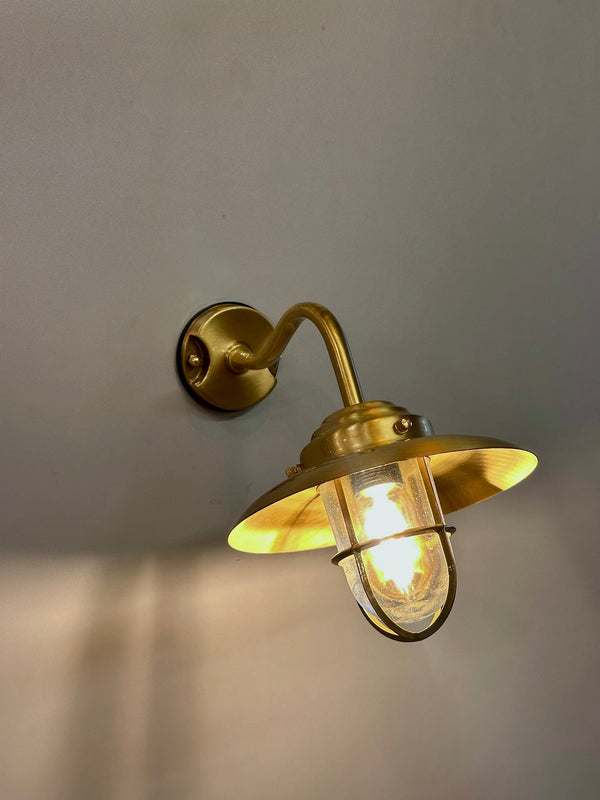
MORLAIX: a curved brass arm with a wide-brimmed shade over a caged clear glass cover. Rated IP43, best under a porch roof or on a sheltered wall.
See the full range in our gooseneck outdoor wall sconces collection.
Frequently asked questions
What is the difference between a gooseneck and a swan neck light?
Nothing practical. Both describe a wall light with a curved arm that reaches out and down. "Gooseneck" is more common in the US, "swan neck" in the UK.
Are gooseneck lights good for a front porch?
Yes. Because the light sits forward of the wall, it lights the step and the person at the door rather than just the siding, with little glare when the shade covers the bulb.
Can I use a gooseneck light on an exposed wall?
Yes, if it is rated IP64 or higher and built from a material that will not rust. Solid brass is a good choice near the sea.
What bulb should I use?
A warm 2700K LED suits brass and glass and makes entries feel welcoming. Use a filament-style LED with clear glass and a standard LED with frosted or ribbed glass. Our color temperature guide has more detail.
How do I care for a brass gooseneck light outdoors?
Rinse it with fresh water now and then if you live near the coast, and let the patina develop, or polish it if you prefer the bright finish. See our brass care guide.
Related reading
- Shop gooseneck outdoor wall sconces
- All outdoor lights
- How to light a front porch
- Bulkhead vs porthole sconces
Handmade brass lighting · Crafted in Istanbul · Free US shipping · Arel Lighting