Artículo: Hallway Lighting Ideas (2026): Long, Narrow & Dark Hallways
Hallway Lighting Ideas (2026): Long, Narrow & Dark Hallways
Quick answer: Light a hallway in layers. Use one flush or semi-flush ceiling fixture roughly every 8 to 10 feet for general light, add wall sconces at about 60 to 66 inches high and 8 to 10 feet apart to create a "runner" of light along the walls, and finish with a picture light on any artwork. Keep wall fixtures slim enough not to catch shoulders in a narrow hall, use warm 2700K bulbs, and put everything on dimmers with switches at both ends.
Hallways are the rooms nobody plans and everybody walks through. They tend to be narrow, windowless and lit by a single builder-grade dome that leaves the ends in shadow. At Arel Lighting we make brass sconces and ceiling lights by hand in our Istanbul workshop, and hallway questions come up all the time. This guide covers long halls, narrow halls and dark halls. If your hallway includes stairs or opens straight off the front door, our staircase lighting guide and entryway and foyer guide go deeper on those spaces.
What is the best lighting for a hallway?
Most hallways look best with two layers working together:
- Ceiling light for general, even illumination so you can see the floor and any steps or thresholds.
- Wall sconces for warmth and rhythm. Light on the walls makes a narrow space feel wider, and it is far more flattering than light coming straight down.
A third, optional layer is accent light: a picture light over art, or a lamp on a console table at the end of the hall. One overhead fixture on its own almost always looks flat. Sconces on their own can work in a short hall with good daylight.
How do you light a long hallway?
The trick with a long hallway is to avoid one bright pool in the middle and dark caves at each end. Think of the light as a series of evenly spaced beats.
- Ceiling fixtures: one every 8 to 10 feet, centered on the hallway width. Start about 3 to 4 feet in from each end so the ends are not left dark.
- Sconces: spaced 8 to 10 feet apart along one wall, or staggered on both walls so the pattern zigzags down the hall.
- The end wall: a long hall that ends in a blank wall is a perfect spot for a single sconce, a piece of art with a picture light, or a mirror. It draws the eye forward and makes the hall feel like it leads somewhere.
Our wall sconce spacing guide has the full math for spacing on longer runs.
What is a "runner" of light?
Just as a rug runner leads you down a corridor, a runner of light is a line of matching sconces at the same height along a hallway wall. Each one throws a soft wash up and down the wall, and the overlapping glows read as one continuous band. It is the single most effective way to make a plain hallway look designed.
A few rules make it work:
- Use the same fixture and the same bulb in every position. Mixed color temperatures break the effect immediately.
- Keep the height consistent, usually 60 to 66 inches from the floor to the center of the fixture.
- Choose sconces that send light both up and down, or through a glass or fabric shade, rather than tight spotlights.
- Wire them to one dimmer so the whole runner can drop to a low glow at night.
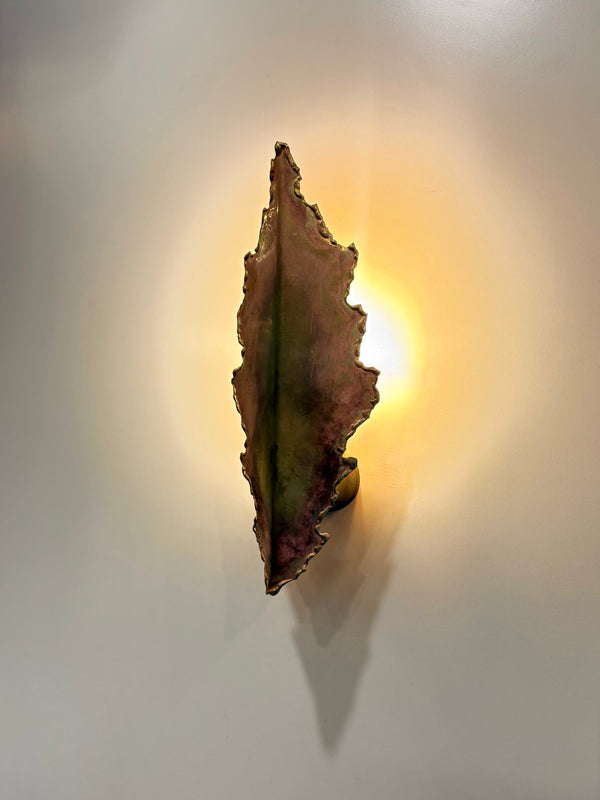
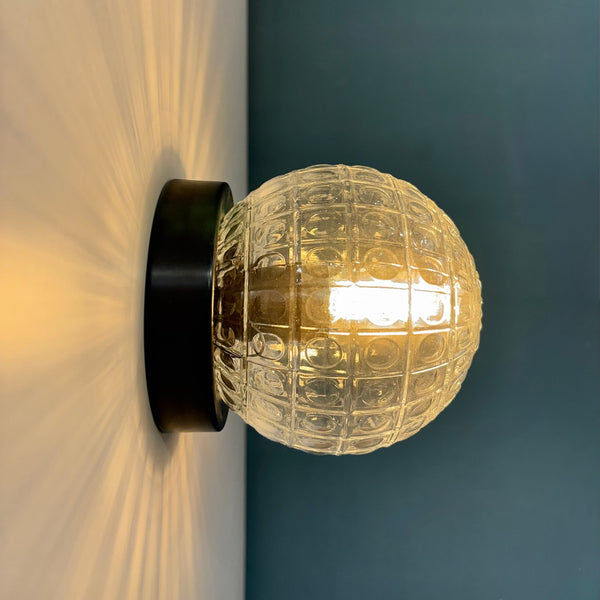
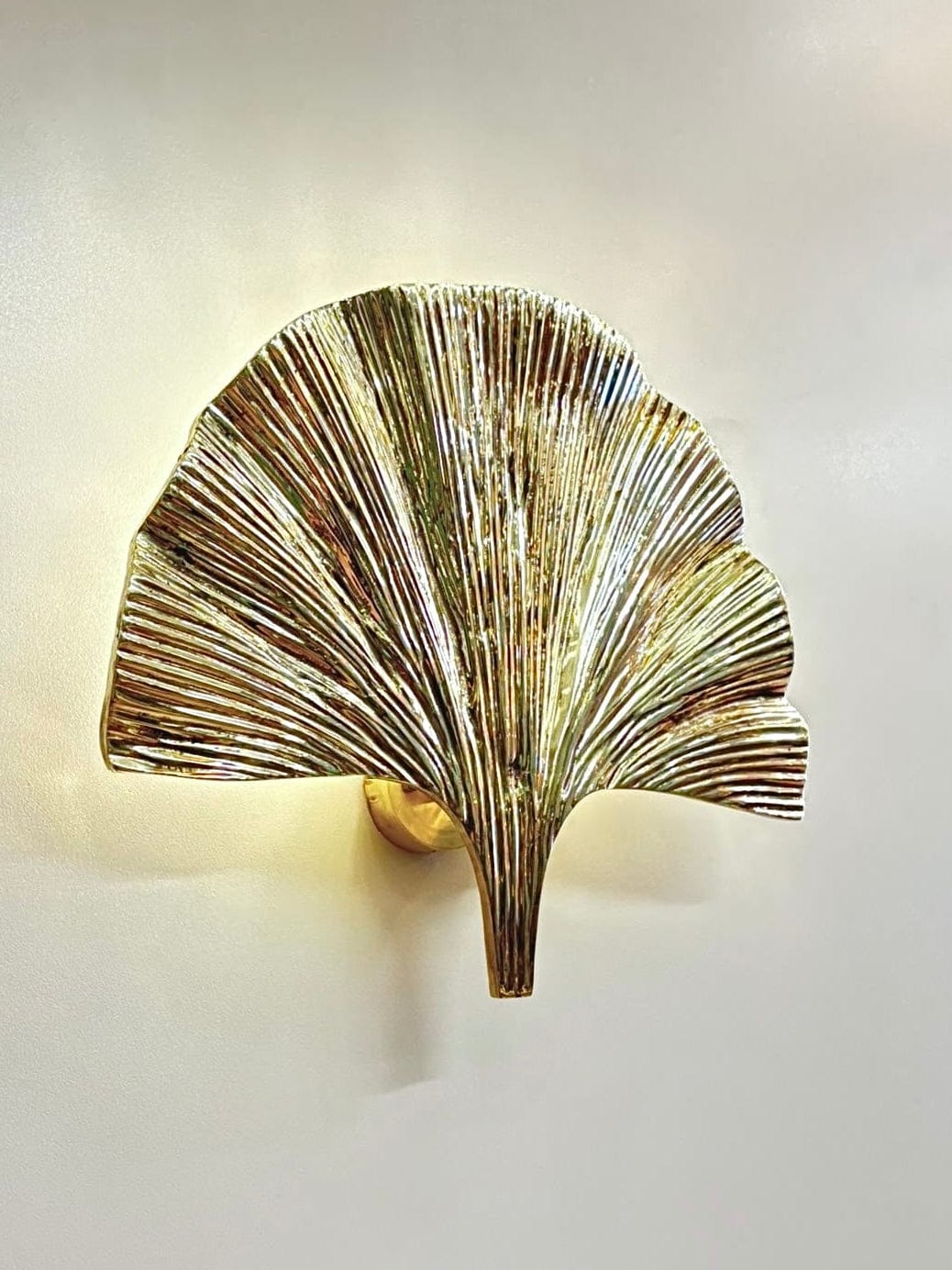
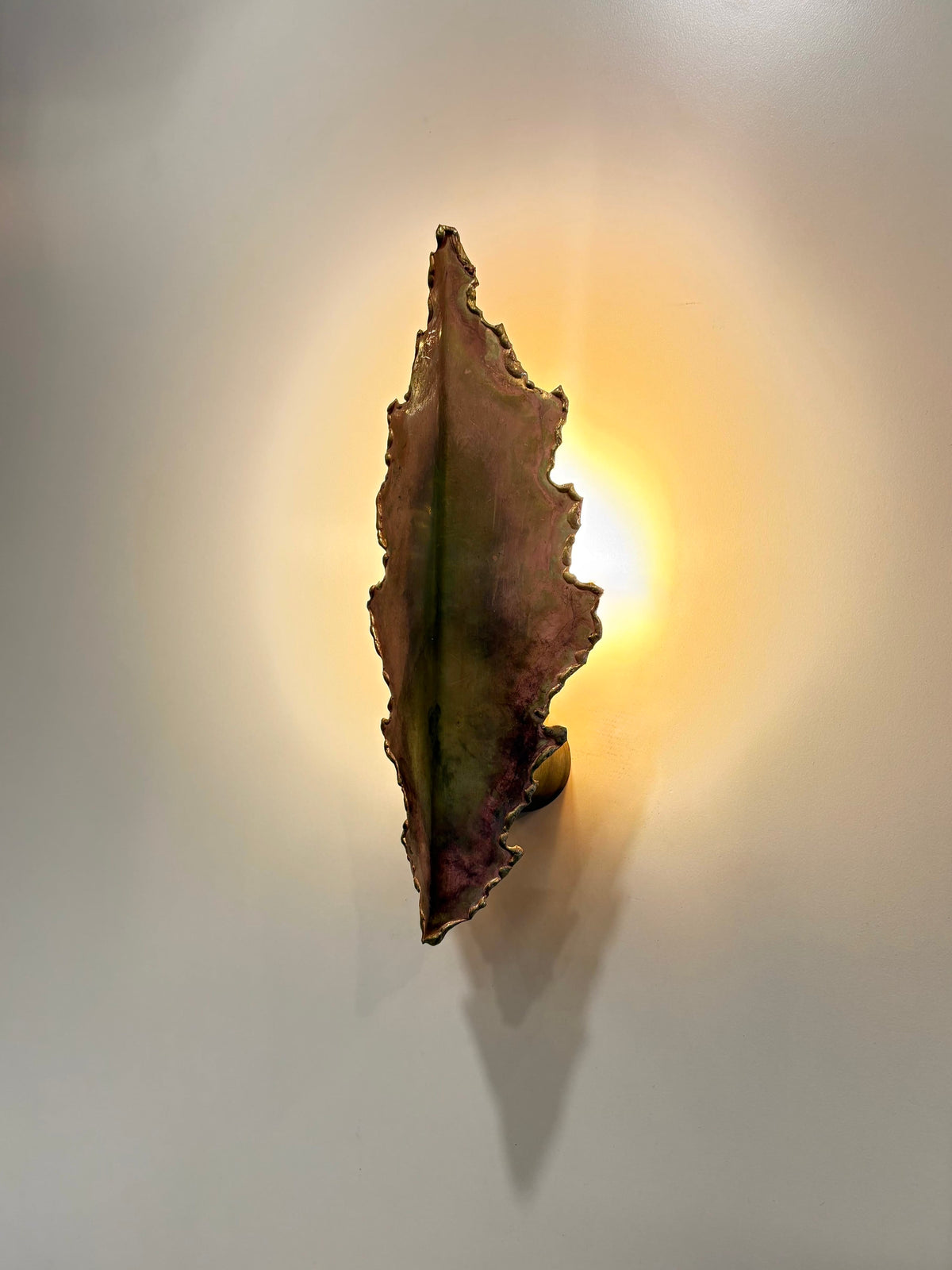
A simple, repeatable brass sconce suits this well. The AUGSBURG SINGLE BRASS WALL SCONCE has a clean shape that reads well in a row, and a globe design like the CARLET MODERN GLOBE WALL SCONCE gives a soft, all-around glow.
How do you light a narrow hallway?
In a narrow hall, depth is everything. A sconce that sticks out too far becomes something to bump into, especially in halls under about 42 inches wide.
- Check projection. In US homes, a common guideline is to keep wall fixtures in a walkway to about 4 inches of projection or less where they sit below 80 inches, which is the limit in the ADA standards for public corridors. It is a sensible rule of thumb at home too. Check the depth listed on each product page before you buy.
- Go to one side. In a very narrow hall, put all the sconces on one wall rather than facing each other. It feels less cramped.
- Use the ceiling. A low flush mount keeps light overhead without taking any width.
- Light the walls, not just the floor. Bright walls push the space outward visually. Pale paint helps a lot.
For tight spots, our guide to mini wall sconces for small spaces covers compact options, and what size wall sconce do I need helps you match fixture size to the wall.
Flush or semi-flush ceiling lights: which suits a hallway?
| Ceiling height | Best choice | Why |
|---|---|---|
| Under 8 ft | Flush mount | Sits tight to the ceiling and keeps head clearance. |
| 8 to 9 ft | Flush or semi-flush | A semi-flush drops a few inches and spreads light wider. |
| 9 ft and up | Semi-flush or small pendant | Brings the light down to a comfortable level and fills the height. |
Whatever you choose, aim for at least 7 feet of clearance under the bottom of the fixture in a walkway. Brass ceiling fixtures add warmth that a plain white dome can't. The BUZUG BRASS CEILING FIXTURE is a good fit for hallways where you want the ceiling light to match brass sconces on the walls.
How do you brighten a dark hallway with no windows?
- Add more sources, not one brighter bulb. Several moderate lights feel better than one glaring one.
- Bounce light off the ceiling. Sconces that throw light upward make a low, dark ceiling feel higher.
- Use mirrors and light paint. A mirror at the end of the hall doubles whatever light you have.
- Plan on lumens. A rough target for hallways is around 5 to 10 lumens per square foot of floor, spread across all fixtures.
Our guide to brightening a dark room has more ideas that apply to windowless halls.
How do you light art in a hallway?
A hallway is often the longest stretch of open wall in the house, which makes it a natural gallery. A picture light mounted above each frame turns a corridor into something worth slowing down for, and it adds accent light without extra ceiling work.
- Choose a picture light about one half to two thirds the width of the frame.
- Mount it a few inches above the top of the frame, angled down onto the art.
- Use a low-output warm LED so the light flatters the art without glare.
The BETTNA PICTURE WALL SCONCE is made for this job. See our picture lights guide for sizing and placement in more detail.
Which bulbs and switches work best in a hallway?
Color temperature: 2700K is the safe choice for most homes, warm and welcoming without looking yellow. Use the same temperature in every hallway fixture, and keep it consistent with the rooms that open off the hall. Our color temperature guide explains the options.
Dimmers: a hallway at night should glow, not blaze. A dimmer lets you run lights low for late trips to the kitchen or bathroom.
Switching: install three-way switches at each end of the hall so you never walk into the dark. Hardwired sconces are the cleanest look here. If rewiring isn't an option, our hardwired vs plug-in sconce guide covers the alternatives. A licensed electrician should handle any new wiring.
Frequently asked questions
How high should hallway sconces be mounted?
Most hallway sconces sit about 60 to 66 inches from the floor to the center of the fixture, roughly eye level. Keep every sconce in the hall at the same height. Our sconce height guide covers adjustments for tall ceilings and different fixture sizes.
How far apart should hallway lights be?
About 8 to 10 feet apart for both ceiling fixtures and sconces is a good starting point. Closer spacing gives more even light; wider spacing creates more defined pools.
Should hallway sconces face each other?
In a wide hallway, facing pairs look formal and balanced. In a narrow hall, putting them on one wall or staggering them feels less crowded.
Can I use only sconces in a hallway, with no ceiling light?
Yes, in a short hall or one with some daylight. Use enough sconces that there are no dark gaps, and choose fixtures that throw light up as well as down.
Related reading
- Shop handcrafted brass wall sconces
- Staircase wall lighting guide
- Entryway and foyer lighting guide
- Wall sconce spacing guide
Handmade brass lighting · Crafted in Istanbul · Free US shipping · Arel Lighting